
Politics Labour Hub
Lula 4: What next?
Last month’s election produced an 81-year old President, a hostile Congress and a defeated opponent, who, like Donald Trump, refuses to recognize the result. Where does Brazil go from here? Jan Rocha
English (original) ·Read in Deutsch ⇄
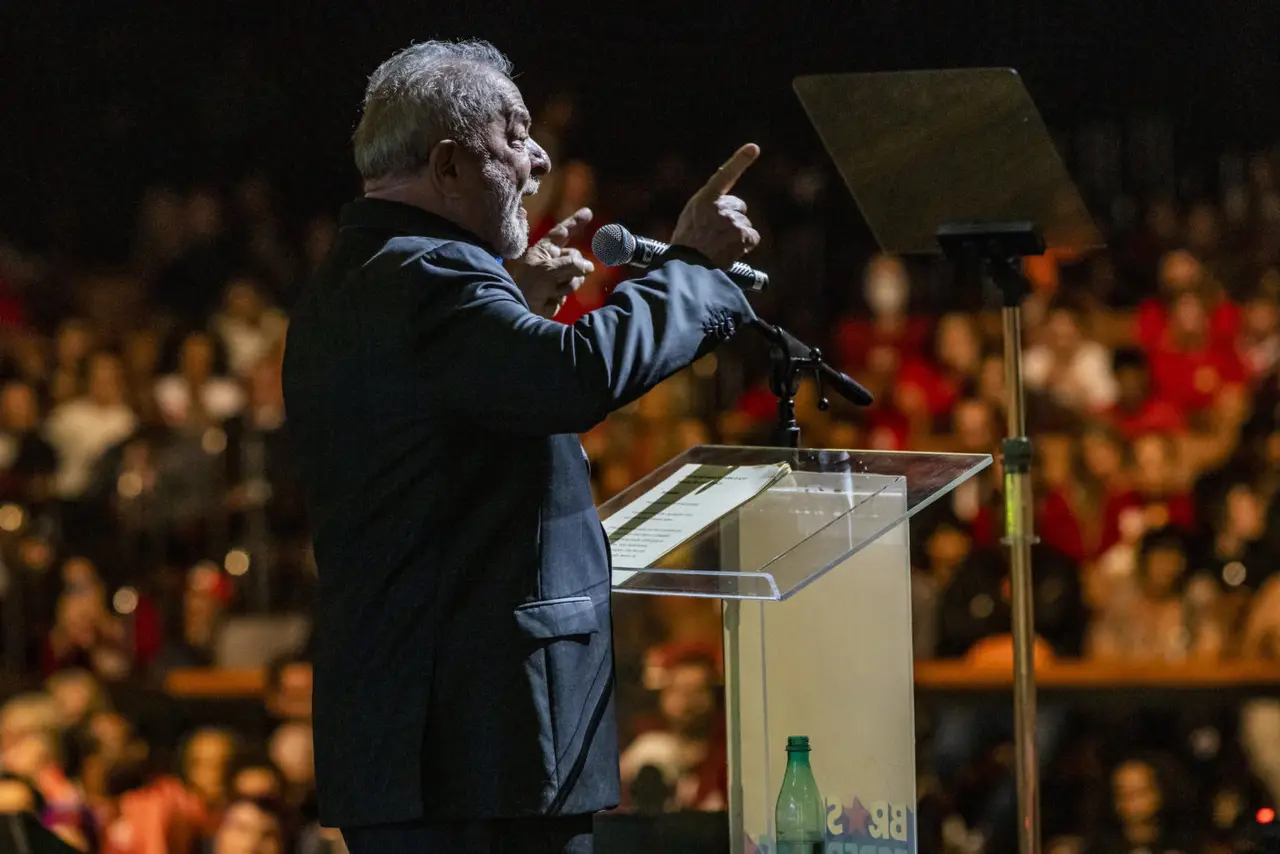
Last month’s election produced an 81-year old President, a hostile Congress and a defeated opponent, who, like Donald Trump, refuses to recognize the result. Where does Brazil go from here? Jan Rocha reports from São Paulo.
While millions of Brazilians basked in the joy of a resounding victory over the far right candidate Flavio Bolsonaro, the stock market took a different view: crashing by a record 18% when the man they had put their money on – ignoring the fact he is being investigated for money laundering and tax evasion, has ties to Rio militia groups and made campaign promises incompatible with the austerity he also promised – failed to deliver.
Luis Inacio Lula da Silva, known universally as Lula, won the second round of the Brazilian presidential elections with a majority of over 4 million votes, confounding the polls which up to the eve of voting had predicted victory for Bolsonaro. This was in spite of the measures taken by pro-Bolsanaro local mayors to sabotage public transport and so prevent poorer electors from voting.
This is Lula’s fourth presidential term, and he has just turned 81, but it was the younger generation, who turned out in massive numbers all over Brazil, that ensured his victory. Students came onto the streets after years of inertia, because they realized that an extreme rightwing government would be a threat to public universities, scientific research, the environmental protection of the Amazon and indigenous areas, and to diversity.
Hard-won workers’ rights would be threatened and the recently approved bill to reduce the working week from 44 to 40 hours and introduce the five-day week – known here as the English week – would be repealed.
They were mobilized by a digital genius called Andre Janones, who created “Lula`s Army” with up to 10 million followers, working day and night on their mobile phones to energize, encourage and organize the vote for Lula.
It was not only the young who came out to vote for Lula. An amazing number of elderly people, in their 80s and 90s also came in their wheelchairs and zimmer frames to vote, because they remembered what it was like during the 21 years of military dictatorship which lasted until 1985, and feared a return to it under the Bolsonaros. Flavio is the son of previous president Jair Bolsonaro, who tried to stage a coup and prevent Lula from taking office when he won the election in 2022. During Jair’s presidency, Amazon deforestation soared, 700,000 died from Covid, many because false cures were peddled instead of vaccines, and Brazil’s policy of multilateralism was abandoned in subservience to Trump.
Now the election is over, Lula faces a new battle over the economic direction of his government, known as Lula 4.
During the campaign he promised to increase benefits and raise the minimum wage above the inflation rate. But the government is already running a huge deficit – 82.5% of GDP – and there is strong pressure on him to adopt austerity measures to reduce it.
But while more orthodox economists insist the only solution is to cut government spending, some respected economists say the solution is to reduce the interest rate set at an extraordinarily high level by the Central Bank and now running at 13.75%, even though inflation has been reduced to less than 5%.
This interest rate is good news for investors, but bad news for a government trying to balance the books without cutting spending on welfare, health and education.
Another cause of the government deficit is the high number of tax exemptions awarded to certain sectors as a result of powerful lobbyists in Congress.
Lula`s party, the PT or Workers Party, is in a minority in both houses, while the party of the defeated candidate, the PL, or Liberal Party, has emerged from the election as the largest in both the Senate and the Chamber of Deputies, a result of the polarization of Brazilian politics which has led to the collapse of moderate parties.
This leaves Lula dependent on the group of parties known as the Centrao, literally Big Centre, the more conventional rightwing parties whose price for support will be ministries in the government and control of departments with big budgets.
Donald Trump had been banking on a Bolsonaro victory to complete his plan for total domination of South America, with subservient rightwing governments toeing the line and allowing the installation of US military bases, access to rare minerals (Brazil has the second largest deposits after China) and support for US foreign policy. The adherence of Brazil would have been the jewel in the crown of his recently created alliance called the Shield of the Americas.
Even when Flavio Bolsonaro was defeated in an unquestionable victory for Lula, who has made a point of saying that Brazil is not America`s backyard, the White House allegedly organized his flight to Miami, via Argentina and Ecuador, so that he could there declare himself a victim of political persecution and the true leader of Brazil.
But it seems that the days of the Bolsonaros are over, the end hastened, rather than enhanced, by Flavio`s flight and manifesto, greeted with ridicule rather than applause. Now supporters are looking for a new leader.
Lula 4 still faces a difficult Congress, where the PL will do everything to prevent his social and environmental policies being approved.
But his election means that the Amazon, where deforestation fell by 70% in the four years of his previous government, has a chance of survival, which is vital for the world`s climate, and Brazil will continue to be a supporter of international organisations, treaties and multilateralism.
For the Brazilian people, who came out in their millions to vote for him, it means a government that puts social justice before privileges, education and health above gun law relaxation, diversity above discrimination.
Jan Rocha is a British-born journalist and writer who was correspondent for the BBC World Service and The Guardian in Brazil from the 1970s to the 1990s and now writes occasional blogs on politics for the Latin America Bureau. Her books about Brazil include Murder in the Rainforest and Cutting the Wire, with Sue Branford. Her other work includes being first coordinator of the Rainforest Journalism Fund of the Pulitzer Center, and coordinator of an ILO project investigating the extent of slave labour in Brazil.
Image: https://dialogue.earth/en/forests/363907-will-lula-be-brazils-environmental-saviour/ Creator: Oliver Kornblihtt / Mídia NINJA, Licence: CC BY NC