
World · Labour Hub · · 3h
Housing Rising declares: “Our community is not for sale” as residents defend Dashwood Social Club
English (original) · Read in Deutsch ⇄
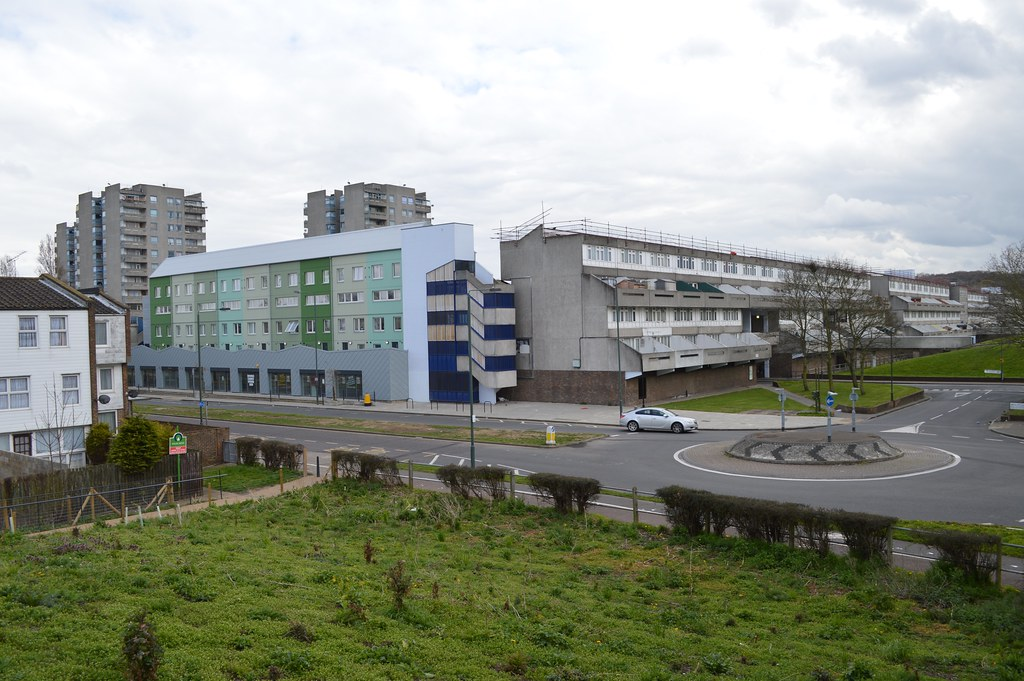
Thamesmead residents and community groups have held a peaceful creative occupation of a Peabody-owned community building as part of their fight against the loss and privatisation of local social space.
Residents, community groups and neighbours in Thamesmead, southeast London, came together under the banner of Housing Rising to occupy the Dashwood Social Club and Nursery, a Peabody-owned building, in defence of community space and collective control over the places where local people live, meet and organise.
The occupation started on 6th September 2025 and ended on 19th September 2026.
It was a direct challenge to the idea that buildings belonging to communities can be treated as assets to be closed, priced out, redeveloped or left empty while the people who depend on them are expected to simply accept the decision.
We are not asking for another consultation. We are demanding community control.
The Dashwood is not merely a building. It is part of the social infrastructure of Thamesmead: a place for children, parents, older residents, neighbours and community organisations to come together.
When these spaces disappear, communities do not simply lose four walls and a roof. They lose somewhere to meet, somewhere to organise, somewhere to build relationships, somewhere to resist isolation.
And when community space is removed from ordinary people while regeneration and redevelopment continue around them, residents are entitled to ask: who is regeneration actually for?
Housing Rising says the occupation was a response to what residents see as a wider pattern of community spaces being closed, made unaffordable, or placed beyond meaningful local control.
Peabody describes its community centres as being “at the heart of our communities.” Residents in Thamesmead are now demanding that those words mean something in practice: “You cannot build a community by destroying the places where that community meets.”
● The Dashwood remains in community use and is accessible to local residents, organisations and groups.
● No closure, eviction or repurposing of community facilities without genuine community consent.
● Transparency from Peabody over the building’s use, costs and future plans.
● Affordable access so that grassroots organisations are not priced out of spaces held by a social housing provider.
● Residents at the centre of decisions concerning the building’s future, including its governance, design and use.
● Equivalent or better community facilities wherever redevelopment threatens existing social infrastructure.
Direct action because consultation is not control
For years, residents have been told that change is necessary, that regeneration will deliver improvements and that communities will be consulted. But consultation without power is not community control.
A meeting does not give residents ownership. A questionnaire does not give residents a veto. A glossy regeneration document does not replace a community centre.
Once a community space is gone, it is incredibly difficult to get it back. That is why Housing Rising chose direct action.
The occupation was intended to keep the building alive, visible and in community use, rather than allowing it to become another empty or inaccessible asset while decisions are made elsewhere: “we are not waiting to be consulted out of existence.”
During the occupation, Housing Rising says residents and supporters organised community activities, meetings, workshops and other peaceful activities demonstrating the continuing need for the space. The group says it documented community use and invited local organisations and residents into the building.
This is not an attack on the community. It is a defence of the community.
Housing Rising says the action remained peaceful, transparent and inclusive, while continuing to invite Peabody, the council and other relevant bodies into dialogue. But dialogue must produce something more than another promise to listen.
The fight for the Dashwood is part of a much bigger question: Who owns the city?
Is community infrastructure something that belongs to the people who use it or an asset controlled from offices far away from the streets where its consequences are felt? Are residents genuine participants in regeneration or are they expected to watch their
neighbourhoods transformed around them? And what does it mean to call a place a ‘community’ when the spaces that allow that community to exist are continually threatened?
Housing Rising says the answer must be community power.
The group is calling on residents, housing campaigners, tenants, trade unionists, mutual-aid groups, community organisations and others to stand in solidarity with the people of Thamesmead.
Our homes are not commodities. Our neighbourhoods are not investment portfolios. Our community spaces are not empty opportunities for profit. The Dashwood belongs to the community that gives it life.
Housing Rising is calling on Peabody to stop treating residents as consultees and start treating them as stakeholders with genuine power over the future of their neighbourhood.
Following the end of the occupation on 19th September 2026, Housing Rising says: “We will keep the space alive. We will defend community use. We will organise. We will not quietly watch our community infrastructure disappear.”
Housing Rising on social media: @housingrising.
Image: https://openverse.org/image/d8af972c-bb94-4050-ae08-8c6a7fd2fde4?q=thamesmead&p=22 “Thamesmead roundabout” by Matt From London is licensed under CC BY 2.0.
Read the full story at the source
Source: Labour Hub