Germany · Lower Class Magazine · 1970-01-01
Who will rule in Saxony-Anhalt - the symbiosis of poster boys and ethnic nationalists
Deutsch (original) · Auto-translated to English
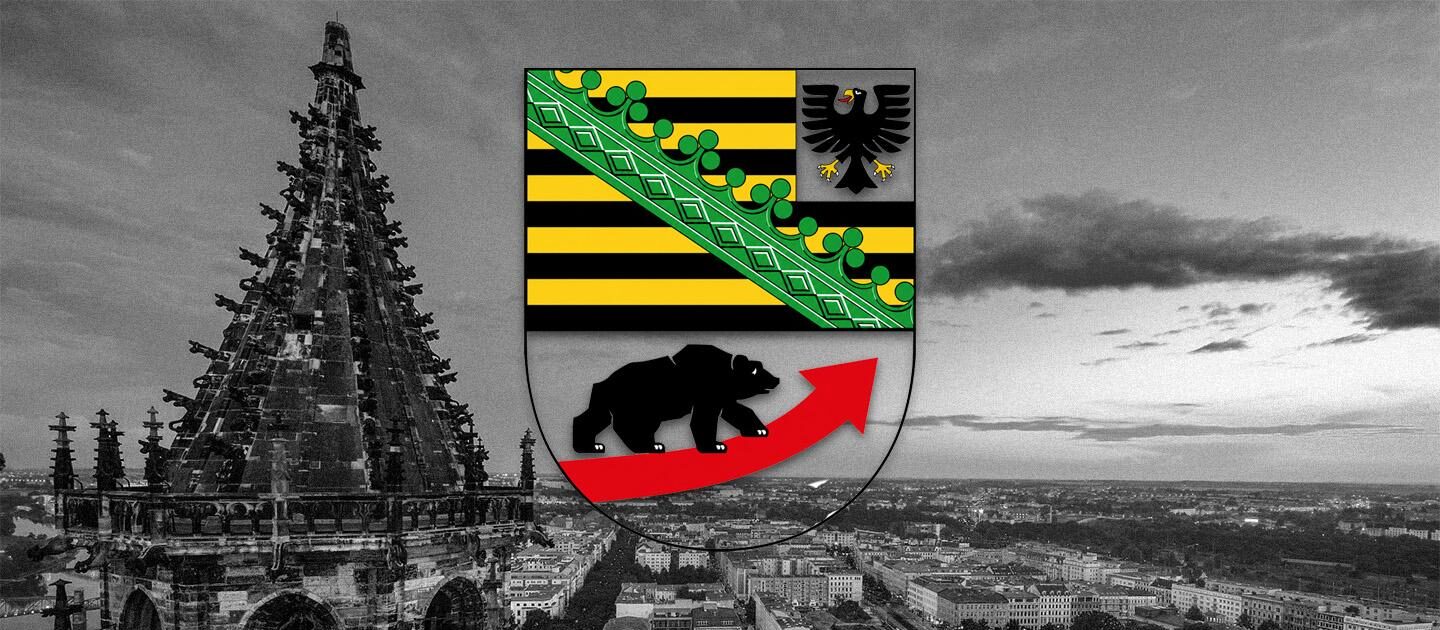
The alternative for Germany could soon rule in Saxony-Anhalt.
The party is currently considered the favorite in surveys and is likely to emerge as the strongest force in the election at the beginning of September.
This would make Saxony-Anhalt the first federal state to be governed by the AfD.
But who leads the AfD in Saxony-Anhalt? by Mathias H.
According to information from the AfD environment, employees have been looking for months to replace up to 200 civil servants 1.
First of all, they should enable the implementation of an immediate program that should take effect in the first 100 days of an AfD-led state government.
A corresponding flyer shows how the regional association imagines these first months.
Promises include, among other things, the end of rainbow flags in schools, immediate deportations and the start of the #deutschdenken campaign as a counter-project to the previous state campaign #modernthinking.
These symbolic projects give a first impression of the direction an AfD government could take.
This impression also characterizes much of the reporting in the run-up to the state elections on June 6th.
September in Saxony-Anhalt.
It seems obvious to them that there is a national association behind this course - but this impression falls short.
A closer look at today's AfD in Saxony-Anhalt paints a different picture.
There are currently two influential figures at the head of the East German regional association: Ulrich Siegmund and Hans-Thomas Tillschneider.
They take on different roles within the party and embody different leadership styles.
What they have in common, however, is their proximity to the extreme right.
A look at the AfD's election campaign in Saxony-Anhalt gives the impression that the top candidate Ulrich Siegmund could be the leading politician in the party.
In the media he appears as an “AfD pop star” 2 and as a “calm front figure of an angry party” 3, speaks to Markus Lanz and appears close to the citizens.
In the party, he has previously primarily served as parliamentary group leader in the state parliament and ensured orderly leadership of the party.
Together with Tobias Rausch, Siegmund belongs to the so-called Münzenmaier network within the AfD.
This was formed as a result of the AfD's 2022 federal party conference, which had to be ended early due to disagreements, and is primarily concerned with organizing and professionalizing the party.
In this tradition, Rausch and Siegmund also take on their tasks in Saxony-Anhalt.
While Rausch was previously responsible for parliamentary coordination, Siegmund acts as the face of the regional association.
He gives the AfD a moderate appearance and portrays it as capable of governing without distancing itself from the right wing of the party.
For example, he rejects immigration, calls for deportation detention and remigration, but acts dismayed when he is asked on a talk show about his connections to the extreme right.
However, Ulrich Siegmund maintains connections to the extreme right and works with relevant actors.
In November 2023, he took part in the conspiratorial meeting in Potsdam at which the Austrian right-wing extremist Martin Sellner presented his master plan for remigration.
In addition, Siegmund is relying on people and organizations from the right wing in the current election campaign.
His campaign shop is run by the Identitarian Movement, while a director from the right-wing association One Percent is responsible for his media work 4 5 .
The image of the modern “TikTok poster boy” 6 that Siegmund enjoys in public does not arise independently of the right wing.
To the outside world, Ulrich Siegmund appears as the face and front figure of the AfD.
However, the leadership of the party is not limited to this - the ideological orientation is supported by a broader network within the party leadership.
This includes the state chairman Martin Reichardt, who recently made headlines with an alleged Hitler salute, as well as the deputy chairman Hans-Thomas Tillschneider and the assessor Oliver Kirchner.
All three were considered important supporters of the formally dissolved wing around Björn Höcke, who played a key role in shaping the ethnic-nationalist course within the AfD.
The most influential among them, however, is Hans-Thomas Tillschneider.
He joined the AfD in 2013 and founded the Patriotic Platform association a year later.
With the aim of steering the AfD's political course in a ethnic-nationalist direction, it was of particular importance for the party's development, especially in the early years.
Outside the party, Tillschneider supported the right-wing campaign association One Percent and is said to maintain close contacts with the Identitarian Movement 7 .
Tillschneider's influence can be seen most clearly in the AfD's government program for Saxony-Anhalt.
Program 8, largely written by Tillschneider, bears the hallmarks of ethnic nationalism.
Corresponding positions emerge particularly in family, migration and cultural policy.
The party calls, among other things, for the promotion of heterosexual family models, the end of “culturally alien mass migration” 9 and the combating or criminalization of so-called “anti-German art” 10.
In addition to this ethnic content on family or migration policy, the AfD also promises a neoliberal economic policy.
It propagates the free market as a counter-model to an alleged “planned economy” 11 of the old parties and as a response to the “climate dictatorship” 12 it claims and as a motor for re-industrialization of Saxony-Anhalt.
This connection reveals the two-track nature of the AfD.
On the one hand, it mobilizes with ethnic-nationalist enemy images against a supposed external enemy and channels social discontent into cultural and ethnic conflicts.
On the other hand, its economic policy orientation largely follows the established order and thus appears more capable of governing.
Instead of solving the social causes of precarization or regional structural change, it relies on market-liberal concepts.
In doing so, it relies on the economic doctrines that contributed to the current circumstances of East Germany in the first place - and thereby becomes the ethnic reincarnation of the old parties.
Unlike these, it does not cover up class conflicts exclusively through the devaluation of supposedly lazy workers, as Friedrich Merz does, but above all through ethnic-racist politics.
In this sense, it functions as a new political force in an old guise that tries to stabilize existing economic power relations at the expense of people with a migration history.
The leadership styles of Siegmund and Tillschneider illustrate the two-track nature of the AfD in Saxony-Anhalt, as shown here.
The different focuses and networks within the party do not lead to an open dispute over direction, but rather to a strategic symbiosis.
While politicians from Münzenmaier's network conduct the election campaign with a comparatively moderate external appearance and present the party as capable of governing, actors such as Hans-Thomas Tillschneider and Martin Reichardt take over the ideological orientation of the regional association.
It is precisely this distribution of roles that enables the AfD to appeal to different groups of voters without foregoing its ethnic-nationalist program.
MDR (2026): Exchange of officials - AfD plans intimidation tactics, from June 17, 2026. ︎ Nejezchleba, Martin (2026): “I’m Uli, hi!”, in: ZEIT No. 27/2026. ︎ Gelinsky, Katja (2026): The AfD pop star, in: Frankfurter Allgemeine. ︎ Merkel, Jana/Daniel Salpius (2026): AfD top candidate Siegmund has his campaign shop run by right-wing extremists, mdr from January 30, 2026. ︎ Joswig, Gareth (2026): Racism, but in a good mood! taz from June 28, 2026. ︎ Laaf, Meike (2024): The Tik-Tok poster boy of the AfD, in: ZEIT from January 22nd, 2024. ︎ Frehse, Lea/Paul Middelhoff (2018): None!
Meter!
Switch!, in: ZEIT No. 15/2018. ︎ Hähnig, Anne/Eva Ricarda Lautsch/August Modersohn/Martin Nejezchleba/Christian Parth/Alisa Schellenberg/Tilman Steffen (2026): The day after, in: ZEIT No. 30/2026. ︎ Alternative for Germany (2026): Government program of the AfD Saxony-Anhalt. ︎ Ibid. ︎ Ibid. ︎ Ibid. ︎ The post Who will rule in Saxony-Anhalt – The symbiosis of poster boys and ethnic nationalists appeared first on Lower Class Magazine.
Read the full story at the source →
Source: Lower Class Magazine