
Germany · Lower Class Magazine · · 3h
Who is afraid of the GDR?
Deutsch (original) · Auto-translated to English
Discussion opener on the need for a scientific reference to one's own, socialist history for the communist development organizations of the Federal Republic of Germany
Debate contribution byRed turnaround Leipzig
From the revolutionary social democracy of Liebknecht and Bebel to the USPD and KPD through the historical turning point of the fascist mass murder of German communists to the so-called “K groups” of the 1970s and 1980s - this is how the historical self-regulation of the communist movement can be read in a recently published LCM article, in which there is also a lot of talk about the so-called “continuity problem” of red groups, which are alive developing, political reference points from our own country were virtually lost when the KPD was banned in 1956. The author is by no means alone in this: it was only in the summer of this year that we were astonished to learn from a presentation by a nationwide communist structure that, unfortunately, in Germany there are no direct historical reference points to socialism. There could not have been a more striking example of how “nationwide” remains in most cases a synonym for “West German” in our movement.
The fact that there was a socialist state in Germany from 1949 to 1990 is deliberately left out of public contributions and discussions with most red organizations. The relationship between our emerging movement and our own socialist history is largely characterized by an astonishing level of ignorance. This ignorance is not a coincidence, but rather a consequence of over 35 years of hard anti-communist work: In addition to the total economic and political annexation of the GDR, tons of books and archive material were destroyed after 1990, proud GDR citizens were removed from all leadership positions in the cultural sector, education and the media landscape, and hundreds of symbolic buildings as well as simple residential areas were demolished in the cities, and in some cases the impression of the pre-war period was deliberately restored architecturally (e.g. downtown Dresden, Museum Island Berlin).
The “democratic success project of German unity” was at the same time an extremely successful program by the Federal Republic of Germany monopoly capital to deny the successes of socialism in their own country as quickly as possible and to make them disappear (in the literal sense). As for our comrades in other countries of the world, the political fight for the party, revolution and socialism must begin where it was historically last fought. And in Germany this was done neither by the KPD nor by the West German “K groups” of the 1970s, but until 1990 by a socialist, East German state with a 40-year history.
Objectively speaking, this was a success story, but unfortunately it is rarely viewed objectively. Anyone who wants to deny that the GDR was a successful socialist state because of reservations about Honecker, the Stasi, the Wall, etc. is not arguing in a Marxist way, but rather like a work-shy Left Party fan who likes to start serious arguments with “But in my socialism there is…”. The fact is that the GDR has practically proven that what we are putting on the streets today as quite abstract economic demands works within German conditions: socialist ownership, worker-owned businesses and a state-controlled and extremely productive planned economy - all of this existed in our own country until 1990.
Communists in other countries would sell their kidneys for the practical and ideological possibilities that come with not having to build socialism in their own country, but being able to rebuild it. German communists still write texts about “problems of continuity.”
But why do they do that? Contrary to the popular opinion of many (West German) comrades, the categorical rejection of the GDR among those who actually experienced it is a rather rare attitude. Even behind a polemical “we don't want to go back“Most East German authors do not have a firmly anti-communist stance, but rather a combination of some subjective dissatisfaction from the GDR era with the results of the powerful West German ideology production.
However, even today, elements of an East German identity still emerge, which was shaped just as materially by the annexation and the associated loss of livelihoods as by countless positive memories of “back then” and which is primarily defined in contrast to the hyper-individualized capitalism of West German style. The fact that the legacy of the GDR has so far hardly expressed any affinity for contemporary communist politics in the minds of its former residents and their descendants is not due to East German minds, but primarily to contemporary communist politics. A movement that is so extremely oriented towards what the new hot shit is at West German left-wing universities and embodies a lot of things, from A for Anglicisms to V for Veganism, that East German proles see as the epitome of West German aloofness, will never be able to organize this proletariat and therefore not be able to use its historical influence for itself.
An essential element in harnessing the often more instinctive than politically conscious opposition of millions of East Germans to today's Federal Republic of Germany is a simple argument from our movement that sometimes falls behind because of all the technical debates: the good life. Securing the highest possible standard of living for the working class was the state goal of the GDR, housing, education and health systems were practical answers to some of the most pressing social questions of our time. Examples such as the needs-based healthcare system or the more than twice as many apartments per 10,000 inhabitants than today (with 3-5% of income as rent) fall under the already given argument of the GDR as historical proof of the truth of communist theory. “The good life” can be used even more easily as a political argument: people were better off under socialism, and consequently they will also be better off in a socialism that still has to be fought for.
The level at which we can use this argument to persuade people to identify with socialist politics does not require a historical (e.g. Russia 1917) or internationalist (e.g. “just look at Rojava”) abstraction from their everyday experience. It is the level of the most basic everyday needs: social security and no homelessness. Culture, sport and work are closely linked in company sports communities and cultural centers, neighborly collectivity instead of isolation and loneliness, youth organizations instead of social media addiction, etc.
The legacy of the GDR, vivid in the memories of its contemporary witnesses, is not only a historical example of the economic and socio-political successes of socialism, but also of why it is worth fighting for for every single worker, especially today.
Between our current party-building efforts and the possibility of understanding the legacy of the GDR as a common historical commitment of all German communists to socialist reconstruction, there is neither an anti-GDR dogmatism assumed by the masses nor inaccurately argued analyzes about a supposed “exploiter class” of SED functionaries. What separates us from this desirable goal is primarily ignorance and secondarily political cowardice. Ignorance of all the successes of GDR socialism, its actual political and economic nature and its correspondence with our current political demands. But also political cowardice to face the fact that one's own uninformedness or misinformedness is often not a "deviant analysis" but, on the contrary, the desired result of anti-communist propaganda, which one thereby actively spreads.
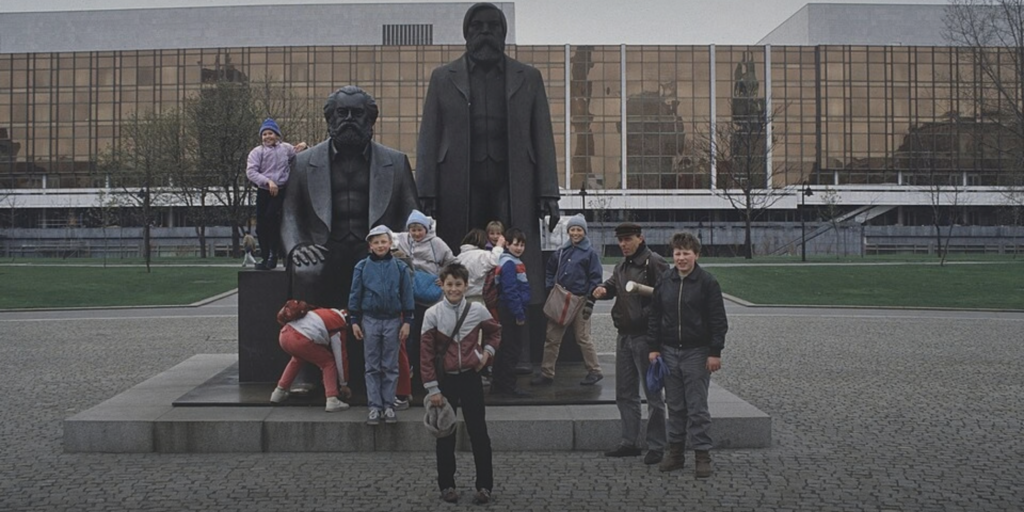
To draw the line to the beginning of our article at this point: It is not only isolated misanalyses by communist groups on the subject of the GDR that are indirectly guilty of contributing to the FRG ideological apparatus. In fact, we are most likely to just please the ruling class if we don't even mention the GDR. Tearing down the Palace of the Republic was child's play for FRG anti-communism, making even self-described socialists forget 40 years of socialist rule in their own country was his masterpiece. One of our historical tasks in the party building process is to close the artificially created gap between our movement and these 40 years of socialist rule - far away from lingering nostalgia and ignorant demonization.
Anyone who does not want to learn from the GDR and use its legacy for themselves should remain silent about the development of socialism in Germany.
The postWho is afraid of the GDR?appeared firstLower Class Magazines.
Read the full story at the source
Source: Lower Class Magazine