
Germany · Lower Class Magazine · · 3h
Theodor W. Adorno - Studies on the authoritarian character
Deutsch (original) · Auto-translated to English
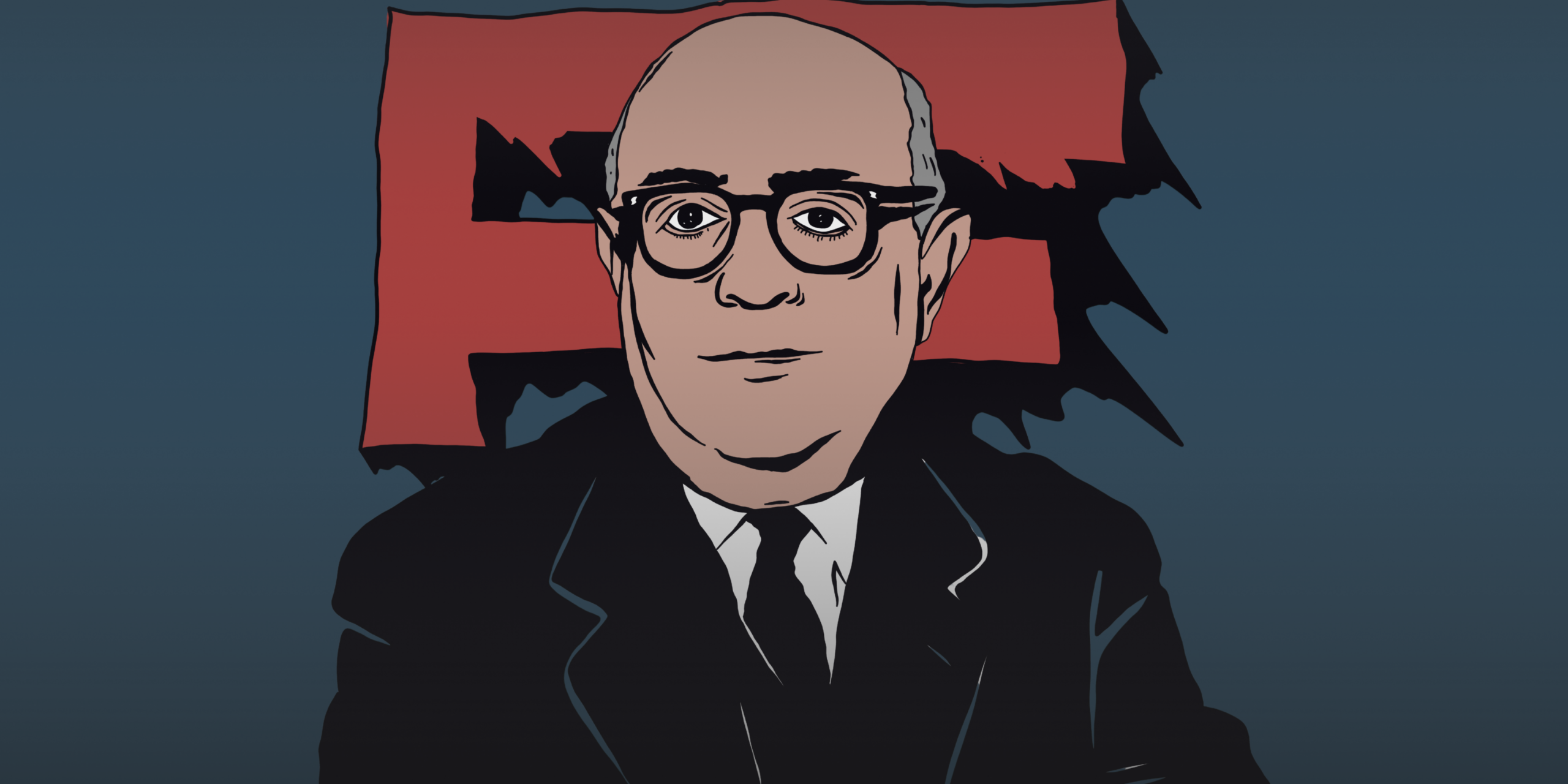
(Part 1): The development of the F-scale for examining the potentially fascist individual
“But experience and history teach us that peoples and governments have never learned anything from history and have never acted on the lessons that could have been learned from it.” Hegel sums up in his lectures on the philosophy of history about the relationship of current practice to its own past. This not only applies to that part of society that now seems to be seeking happiness again in devotion to the German national community, but can also be observed in the reactions of the bourgeois public, which once again cannot understand why on earth fascism is now around the corner again. The AFD seems to have suddenly fallen from the sky and is now threatening our democratic society, in which everything has generally been going well until now. Monchi, the singer of a punk band, reminds the German population that we don't live in Bangladesh after all, while Friedrich Merz ponders how he could better engage people emotionally by bringing their standard of living closer to that of Bangladesh. Secretly, all political actors have long since agreed that the refugees themselves are the causal “problem” and the solution now seems to be to simply implement the AFD’s racist demands themselves. Between Olaf Scholz's announcement in 2023 that he would finally deport on a large scale, to the AFD's election slogan - "We will deport until the runway glows." - that helped her win the election barely fits a sheet of paper.“Control migration before the wrong people do it.” The FDP summed up this policy very succinctly in its 2024 European election campaign, which could hardly make it clearer that the qualitative difference between fascism and civil society is relative - fascization is a process. “The womb from which it crawled is still fertile,” says a play by Bertolt Brecht. The most comprehensive study of the social psychological womb of fascism in bourgeois society is probably the studies of authoritarian character conducted in the United States in response to German National Socialism. There is no way around them if we really want to understand the social-psychological foundation of our present.
The studies on the authoritarian character
The systematic nature of the studies on the authoritarian character is a masterpiece of dialectical thinking, which, when read, allows you to understand what it means to understand an object analytically instead of dwelling on a superficial observation. In their systematic elaboration, they also stand out from Adorno's other writings on psychoanalysis, in which he often makes quite eclectic references to Freud's writings. This may be primarily due to the collaboration with the three other authors of the study, whose involvement in the study is mostly ignored in today's reception. The studies were carried out in California between 1944 and 1949 under the direction of Else Frenkel-Brunswik, Daniel J. Levinson, R. Nevitt Sanford and Theodor W. Adorno in a multi-stage process that combined questionnaires, empirical surveys, detailed interviews and psychoanalytic interpretation procedures. Contrary to a very widespread prejudice against the concept of “authoritarian character”, the studies, just like those of Reich or Fromm, are not about declaring the consciousness of individuals to be the actual driving force of history.In the introduction, the authors unequivocally distance themselves from such psychologization: “Today people seem to be well aware that it depends primarily on the situation of the powerful economic interest groups whether anti-democratic propaganda will play a dominant role in this country or not, and whether they, with forethought or not, use this instrument to maintain their position of power.” (Adorno et al.) Even today, the fascistation of the ruling class serves to assert its interests against a large part of the population. The powerful economic interest group of Silicon Valley, embodied by madmen like Elon Musk and Peter Thiel, leaves not the slightest doubt about this. The fact that the studies are limited to the analysis of individual psychology in order to explain how fascism became a mass phenomenon does not mean that the primary importance of the forces at work in history is denied.
Another misunderstanding, which has been cultivated over a long time, especially in the anti-German reception, lies in the narrowing of the subject of the studies to the question of anti-Semitism. The research interest is “the potentially fascist individual, an individual whose structure makes him particularly susceptible to anti-democratic propaganda” (Adorno et al.). The aim of the studies is not just to examine those people who openly represent anti-Semitic positions, but rather to understand the aspects of the character structure that make individuals susceptible to fascist positions, which find expression in a hostile attitude towards all minorities. It is about examining the xenophobic subject, whose object is variable over the course of history. “The willingness to accept hostile statements towards minorities can very well be seen as a more or less uniform trait.” (Adorno et al.) Racist ideologies also have a time core. Since the studies were carried out in the 1940s, anti-Semitism naturally plays a central role in the studies. The location of the surveys is also specific. Since the studies were carried out on a US population, the question of anti-Semitism is closely linked to the question of accepting refugees. The negative attitude towards Jewish refugees expressed by many of those involved was entirely in line with US immigration policy. According to the US Holocaust Memorial Museum, hundreds of thousands of Jewish people were denied entry into the US during the Nazi era.A large number of them were later murdered in German concentration camps. Today we would probably call this US practice “managing migration”.
The method of the study
In their studies, the authors of the study assumed that authoritarian character traits in US society, in keeping with the self-image of a free society, are only rarely expressed through an open commitment to fascist positions. The space of what can be said is defined by the social climate, which was different in the post-war USA than at the last Nazi party rally in Germany. It could therefore be assumed that the participants would censor themselves in their statements in accordance with social conventions. Therefore, “special techniques were required to be able to observe surface opinions, attitudes and values, to reveal ideological trends that only come to the surface in indirect manifestations, to bring to light the character forces at work in the unconscious.” (Adorno et al.) In order to grasp the “potentially fascist individual,” psychoanalytic interpretation became the essential instrument of the investigation. For this purpose, questionnaires were initially developed that were intended to record anti-Semitism, ethnocentrism and political-economic conservatism in order to narrow down the pool of suitable people for detailed interviews.
In clinical interviews, participants were later selected who were among the 25% with the highest and the 25% with the lowest scores on the ethnocentrism scale. These interviews were conducted with the intention of more accurately assessing the psychodynamics of participants with strong authoritarian traits; participants with low scores were therefore considered the most suitable comparison group. “The interview was conducted in such a way that the material acquired allowed conclusions to be drawn about the deeper layers of the interviewee’s character structure.” (Adorno et al.) In the ideological part of the interview, the participants should be encouraged to express themselves as spontaneously and freely as possible on topics such as politics, religion, minorities, income and profession. In the clinical-genetic part of the interview, more detailed information about the current situation and the past of the participants should be requested. They were also given the opportunity to express themselves freely about their own feelings, wishes and fears, their relationships with parents and other people, as well as ideas about their own childhood and environmental conditions.
The F scale
From the questionnaires and interviews, the famous F scale was finally developed as a tool for measuring potentially anti-democratic character. It measures the character structure that genetically underlies the expressions on the anti-Semitism, ethnocentrism and political-economic conservatism scales, i.e. can be found at a deeper level of character structure. The authors emphasize that “one can speak of a character structure only to the extent that the coherence of the sets of scales can be better explained on the basis of an internal structure than on that of external association.” (Adorno et al.). Character is understood to be “a more or less constant organization of forces within the individual that determine their reactions in various situations and thus largely their consistent behavior – whether verbal or physical” (Adorno et al.). The character structure develops in childhood and remains largely resistant to change in adulthood.
The F scale is defined by a total of nine variables with which “a trend hidden in the character structure” (Adorno et al.) can be measured, which have an empirically clearly proven connection with the adoption of anti-Semitic, racist and fascist positions. According to the psychoanalytic theory of the importance of early childhood experiences, these character traits are acquired through family upbringing and experiences with important caregivers as the child develops. The authors build on the findings of Marxist social psychology on the family as a “structural and ideological factory” (Wilhelm Reich) or “psychological agency of society” (Erich Fromm). The patriarchal family structure is the “germ cell of fascism” (Max Horkheimer), in which authoritarian character traits mature.
Conventionalism, anti-intraception, stereotypy and superstition
The authoritarian character's perception of the world is simple, similar to that of the small child. He only has a poorly developed body of conscience that would be able to examine reality according to differentiated internal norms and develop a critical relationship with his own environment. Instead, he clings to the conventional norms of society, to which he conforms unconditionally. Anyone who deviates from this is suspect. “[T]he most conformist therefore harbor the strongest prejudices” (Adorno et al.). This is particularly “characteristic of the middle class” (Adorno et al.). He rejects dealing with his own emotional life, emotions, fantasies and longings because they could endanger the rigid categories of his perception of the world. "That's why he doesn't like 'curiosity', he doesn't want to know what people feel and think and he rejects unnecessary 'chatter'." (Adorno et al.) Everything human is devalued. In the demand to “deport on a large scale” (Olaf Scholz), the reification of everything human into a maneuvering mass becomes clear, which is typical of the authoritarian character. The AFD and the “bourgeois middle” are currently only arguing about the quantities of their remigration fantasies, not about a qualitative difference in the question of how interpersonal coexistence should be organized according to moral standards. The lack of ability to reflect on one's own inner life is often compensated for by a tendency towards stereotypy and superstition. “Stereotypy is a form of narrowness, especially in psychological and social issues.” (Adorno et al.) Anything that does not fit into this scheme must be repressed from the inner life and is often projected into the outside world.In superstition, this creates “a source of bizarre ideas about the behavior of others and the derivation of events from natural facts.” (Adorno et al.) Even today, extremely bizarre ideas about religion are making a very frightening comeback around the world.
Sexuality, destructiveness and cynicism, projectivity
The results of the studies revealed that the authoritarian character was excessively concerned with certain issues of sexuality. The authors understand the variable as sexuality that is alien to me, which in principle represents the opposite of an enlightened relationship to sexuality. “The strong drive to chastise violators of the sexual code (homosexuals, moral offenders) can express a general penal addiction that is based on identification with authorities in the in-group, but which also suggests that the individual's own sexual drives are being suppressed and are in danger of slipping out of his control.” (Adorno et al.)
The right's current obsession with the supposed perversions of the queer community speaks volumes about the relevance of this syndrome. According to psychoanalytic theory, the suppression of one's own instinctual gratification leads to strong aggressive impulses. On the one hand, these lead to a cynical relationship with the world, through which the authoritarian character absolves himself of a certain responsibility for the consequences of his actions. On the other hand, this aggression is the origin of the destructiveness of human action, the path to which is paved under authoritarian rule. What needs to be suppressed is projected. Projection is “a means of keeping id drives alien to the ego and can be viewed as a sign of the inadequacy of the ego to fulfill its functions.” It is the origin of all genocidal politics.
Power thinking and “power-mealing”, authoritarian submissiveness, authoritarian aggression
For the authoritarian character, the simplified perception of the world is based on the principle of power. “Step down, buck up” is the common characterization of his relationship with his fellow human beings. For him, interpersonal relationships are characterized by a constant struggle for power and are viewed “under categories such as strong – weak, superior – inferior, leader – followers, ‘hammer and anvil’” (Adorno et al.). Just as he worships power, he despises weakness. His self remained weak into adulthood. According to his own experiences with chastising parents, he finds the opportunity to repeat this relationship pattern in leaders and other authorities. Just as he once did with his father, he can now set about serving the people and leaders when he grows up. The masochistic submission is compensated by sadism towards the weaker ones. As the authors of the study emphasize, this is not just about a superficial “search for the scapegoat”, but about a deeper dynamic in the character structure. “According to the theory of repressionmustthe authoritarian directs his aggression against the out-group out of inner necessity.” (Adorno et al.) Since this dynamic usually remains unconscious, it is superficially rationalized by the morally stunted authority of conscience. “Once the individual has become convinced that there are people who should be punished, he has found a path into which he can channel his deepest aggressive impulses and still consider himself to be thoroughly moral.” (Adorno et al.) This is the functional character of projection. The Germans therefore did not kill innocent people in the concentration camps, but rather the “poisoners of wells” and “pests of the people”. Soldiers don't kill children in wars, they kill "future terrorists." Within just a few years, the Afghans living in Germany went from being victims of the Taliban regime who had to be protected to being potential “knife murderers”. One's own aggressions are rationalized by projecting them onto the victims. The perpetrators imagine themselves as the real victims.
The importance of potentiality for the internal dynamics of fascisation
The importance of the findings that emerge from the studies on authoritarian character for an analysis of the fascistization of our time can hardly be overestimated. In response to the AFD's election victory, various statistics were spread on social media indicating that a large proportion of Germans to this daynotwho voted for the AFD and would therefore still belong to the “good” part of society. Apart from this rather arbitrary definition of the “good” part of society, there should be – and this seems to be one of the central findings of studies on authoritarian character – less cause for reassurance than we would like today. The spread of authoritarian character structures cannot be measured comprehensively by how many people vote for a fascist party, nor by how many people openly agree with racist positions. In the studies on authoritarian character, the aim is to use the F scale to determine the “potentiallyTo identify fascist individuals", i.e. those people who would easily be prepared to represent fascist and racist positions in the future if, due to a changed political climate, there is no longer any fear of their own disadvantage. Only under certain political conditions do the authoritarian character traits find expression in openly racist positions. Applied to our time, it is not just about the self-confessed neo-Nazi of the 3rd way, but about an authoritarian character structure that is also widespread in the "bourgeois middle" today whose womb, to use Brecht's words, is becoming more fertile every day.
The migrant is marked as an enemy across all parties and the AFD's main demands have been adopted into its own programs. Meanwhile, Ulrich Siegmund is openly debating whether the AFD's incompatibility decisions with any neo-Nazi groups are really still up to date. Martin Sellner's book on "remigration" is deliberately formulated as a "suggestion" that leaves the door open to brutalizing one's own politics if there are surprising complications with the "voluntary return" and the deportations of "asylum seekers" and other non-Germans to the "model city" in North Africa that he would like to build. The tactic of “provocation” prescribed by Götz Kubitschek, which consists of constantly expanding the space of what can be said, works because it resonates with parts of the population's character structure, which has been fed daily in recent years by the constant propaganda about criminal foreigners by the mass media. The potentiality harbors the danger of an internal dynamic of escalation that appears to be in full swing on both sides of the firewall. Thanks to the politics of the ruling parties of the “turning point”, if the AFD is successful, it will not only find a completely militarized state apparatus, but also a forcefully recruited youth and a population that is ideologically indoctrinated to be war-ready and which will blame foreigners for the resulting impoverishment. In a moral wickedness that is unparalleled, the ruling class, under the guise of the fight against anti-Semitism, is fueling anti-Muslim racism, which is helping the AFD to achieve its electoral victories.The public reactions to the election victory of the Left in Berlin, from the leader of the Green Party to Ulf Poschardt, speak volumes about the spiritual brutalization of the bourgeoisie. The fight against fascism is not based on the “firewall”, but rather on the real political questions of our time, ultimately on the question of whether we want to organize our coexistence according to the standards of morality and reason or those of competition, exclusion and violence. Socialism or barbarism. The findings of social psychology must be made fruitful for these struggles, because they are ultimately decided in schools, factories and on the streets and Wilhelm Reich, Erich Fromm and Theodor W. Adorno made that clear again and again: not on the couch.
Further texts by Christoph Morich:
Wilhelm Reich: The material violence of ideology - Why socialism is so difficult to achieve
Erich Fromm: The authoritarian character - step down, buck up
The postTheodor W. Adorno - Studies on the authoritarian characterappeared firstLower Class Magazines.
Read the full story at the source
Source: Lower Class Magazine