
Politics · Lower Class Magazine · 1970-01-01
The Conditions of Peace - An Analysis by the Communist Party of Sudan on the Country's Future
Deutsch (original) · Auto-translated to English
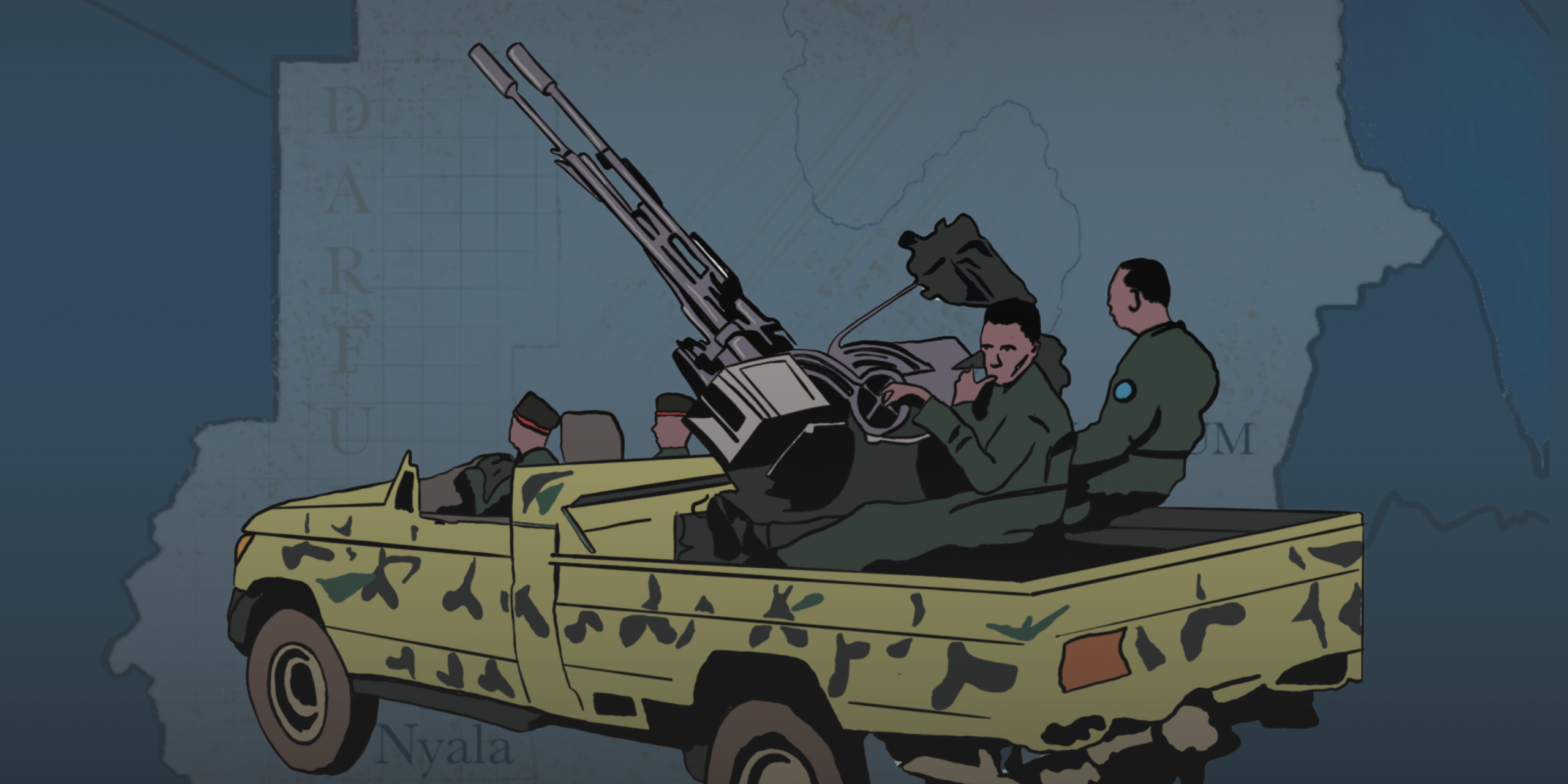
The war in Sudan, which has been ongoing since April 2023, has not only triggered one of the most serious humanitarian crises of our time, but has also sparked a fundamental debate about the causes of political instability and the future of the Sudanese state.
While numerous regional and international mediation initiatives aim to end hostilities and restart a political transition process, there are significant differences within the Sudanese political landscape regarding the assessment of these approaches and the prerequisites for sustainable peace.
Against this background, the statements of the Sudanese political parties are particularly important.
They reflect different interpretations of the causes of the war, the role of state and social actors, and possible ways to overcome the crisis.
The Sudanese Communist Party (SKP) takes one of the clearest and at the same time most fundamental positions.
In her declaration on the political pact of the “Forces of the Declaration of Principles”, she not only develops a criticism of a concrete political agreement, but also formulates a comprehensive analysis of the historical development of the Sudanese state, the causes of the current war and the conditions for a democratic and peaceful reconstruction of the country.
The present analysis examines the central lines of argument in this explanation.
The focus is on the SKP's understanding of the structural causes of the war, its assessment of the political pact of the “Forces of the Declaration of Principles”, its analysis of regional and international influence, and its economic and socio-political conclusions.
The aim is to trace the political logic of the declaration and to place it in the larger context of the programmatic positions of the Sudanese Communist Party, without making a normative assessment of its political demands.
By members of the SCP in Germany An analysis of the political position of the Sudanese Communist Party on the political pact of the “Forces of the Declaration of Principles” Forces of the Declaration of Principles / The Forces of the Declaration of Principles pact are a political and civil society alliance that was formed in the course of the Sudanese war.
It brings together a large number of political parties, civil forces, professional associations, civil society organizations and independent national personalities.
The alliance was first publicly presented in December 2025; its expanded charter was adopted in May 2026.
The aim of the alliance is to present a political vision to end the war and rebuild the Sudanese state based on a civil and democratic order.
The alliance includes, among others, the Sudanese Congress Party, the National Umma Party, the Unionist Gathering Party, the United National Unionist Party, the Sudanese National Alliance, the Republican Party and several nationalist and left-wing parties.
In addition, the Sudan Liberation Movement/Army under the leadership of Abdel Wahid Mohamed al-Nur, the Sudan People's Liberation Movement - Democratic Revolutionary Current, various forces of the "Sumoud" alliance as well as professional associations, civil society organizations and independent personalities are taking part.
Despite the political diversity of its members, the alliance is united by a number of commonly formulated principles.
These include, in particular, the goal of an immediate end to the war, the rejection of a military solution, the protection of the civilian population and the initiation of a political process that should lead to a civilian democratic transition and the re-establishment of the Sudanese state.
At the same time, the pact has sparked widespread political debate since its publication.
The focus is on questions about the composition of the alliance, its claim to representation within the Sudanese political landscape and the different positions of its member forces on fundamental constitutional and political questions.
The Statement of the Politburo of the Sudanese Communist Party on the Forces of Principles Political Pact represents an attempt to formulate a comprehensive political interpretation of the current war in Sudan and the proposed paths to ending it.
The statement does not limit itself to rejecting the pact, but develops a broader analysis of the Sudanese crisis and its historical, social and political causes.
The current war is seen as an expression of a profound crisis in the Sudanese state since independence.
The statement is based on the fundamental assumption that the current war is not simply a military conflict between the Sudan Armed Forces (SAF) and the Rapid Support Forces (RSF).
Rather, it is seen as an expression of a structural crisis in the state that has developed over decades.
According to the party, this crisis is the result of economic and social marginalization, the failure of national development projects, the dominance of military and economic elites, and the recurring military coups that have hindered the democratic development process.
From this perspective, political agreements or limited security policy arrangements cannot solve the crisis as long as its root causes remain untouched.
Against this background, the party fundamentally criticizes the political pact of the forces of the Declaration of Principles.
She sees it as a continuation of the political compromise course that already characterized the transition period after the revolution.
According to the party, this approach was based on power-sharing with military power centers rather than eliminating their political influence.
This ultimately contributed to the failure of the democratic transition and the outbreak of war.
Therefore, the party sees the pact as a departure from the central demands of the December Revolution for full civilian rule, accountability and justice.
The pact opens up the possibility of renewing previous partnerships with actors who, in the party's view, bear direct or indirect responsibility for the coup and the current war.
Another central aspect of the political analysis concerns the regional and international dimensions of the conflict.
The declaration considers external intervention not as a minor factor, but as an essential element in prolonging and intensifying the war.
For this reason, the party criticizes different forms of regional influence and argues that various external actors support the parties to the conflict according to their economic and geopolitical interests.
This results in the demand for the defense of national sovereignty and the independence of Sudanese decision-making processes as an indispensable prerequisite for a sustainable solution to the crisis.
In the area of economic policy, the declaration formulates a clear criticism of the neoliberal policies that the party believes have been pursued in recent decades.
The economic crisis is not seen solely as a result of the war, but rather as a result of liberalization measures, privatization and increasing dependence on international financial institutions.
These policies have contributed to the weakening of productive sectors of the economy, the decline of public services and the expansion of poverty.
This has deepened social contradictions and further increased political instability.
The party therefore links the issue of peace with that of social justice and believes that stability can only be achieved through production-oriented economic policies, balanced development and a greater role of the state in the management of strategic resources.
The close connection between the end of the war and democratic change is also particularly important.
The party rejects the idea that lasting peace can be achieved through agreements between armed elites alone.
Instead, it calls for a comprehensive political project based on the participation of the population and civil forces and aimed at rebuilding the state on democratic foundations.
In this context, it proposes ending the war, disbanding the militias, establishing a professional national army under civilian control and establishing an interim civilian government.
This is intended to initiate a constitutional process that redefines the state structure, the government system and the relationships between the center and the regions.
In summary, the statement presents an analysis that understands the current crisis in Sudan not only as a crisis of war, but also as a crisis of the state, the political system and the economic development model.
From this perspective, solutions that focus exclusively on ending hostilities without addressing the root causes of the conflict are rejected.
The party believes that any political settlement that is not linked to a project of democratic change, social justice and the restoration of national sovereignty risks reproducing the crisis in a new form.
The essence of their position is therefore the defense and completion of the goals of the December Revolution, which are seen as a necessary prerequisite for a lasting peace and the democratic reconstruction of the Sudanese state.
As an introduction to the topic, see also: From Germany to Sudan - Part I "What is hidden is greater" - From Germany to Sudan Part II "The revolution is unfinished, but not defeated" - About the war and the revolution in Sudan The post The conditions of peace - An analysis by the Communist Party of Sudan on the country's future appeared first on Lower Class Magazine .
Read the full story at the source →
Source: Lower Class Magazine