
Editorial · Kommando 161 · · 2h
Libya's Warlord Just Brought Back the Firing Squad — And Called It Justice
English (original) · Read in Deutsch ⇄
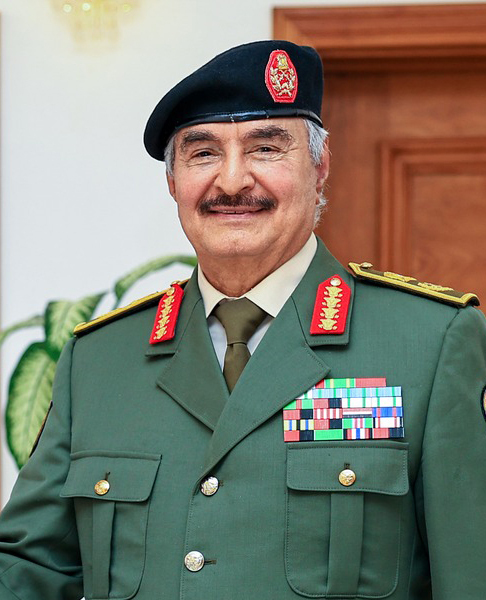
Libya had not executed anyone since 2010. That ended on August 23, when Khalifa Haftar's Libyan Arab Armed Forces (LAAF) began putting people in front of firing squads again. Amnesty International has confirmed at least 30 executions since then, with at least 50 more men currently under sentence of death and, per the organization's own words, at "imminent risk." The trials that produced these sentences were, in Amnesty's assessment, secretive, torture-tainted, and conducted before military courts that have no business trying civilians at all.
The charges trace back to Libya's 2014-2018 civil war -- the campaign Haftar himself launched and branded Operation Dignity, ostensibly to purge "terrorism" from Benghazi and Derna. Years later, men convicted in connection with that conflict are being marched out and shot, many of them, according to Amnesty, after confessions extracted under torture by the same LAAF-affiliated forces that arrested them. Anas El-Gomati of the Sadeq Institute put the structural rot plainly to The New Arab: "Who arrests, who interrogates, who prosecutes, who judges, who fires? Same institution, every time." That is not a judiciary. That is an armed faction wearing a judiciary's clothes.
It gets more absurd. Libya's own Constitutional Chamber ruled in 2025 that the law underpinning these military trials of civilians -- Law No. 4/2017, passed by a rump parliament allied with Haftar during the civil war -- is unconstitutional. The ruling changed nothing on the ground in the east. Haftar's military courts kept trying and executing people anyway, because in the territory the LAAF controls, a court ruling from Tripoli is a suggestion, not a limit. This is what "rule of law" means under a warlord: law is whatever the man with the firing squad decides it is that week.
The timing matters. Libya is currently the subject of yet another round of internationally brokered "reunification" talks aimed at merging the rival administrations in Tripoli and the east, with elections dangled at the end of a 24-month runway that has been dangled before, repeatedly, since 2011. El-Gomati's warning cuts to the point: you cannot paper over the existence of two entirely separate justice systems with a power-sharing deal on ministries. "Reunification on these terms wouldn't dissolve the military justice apparatus, it would nationalise it, so everyone lives under it." Western diplomats chasing a unity photo-op have every incentive to look past a firing squad if it keeps Haftar, who controls the oil-rich east and Libya's biggest militia, at the table.
None of this is happening in the dark. Amnesty's urgent action is public, dated, and unambiguous, and still nothing has forced a halt. That is the actual lesson of eastern Libya in 2026: a decade-plus of Western partnership with Haftar as a "stabilizing" counterterrorism partner produces exactly this -- militarized courts, secret trials, torture as evidence-gathering, and executions revived the moment the cameras look elsewhere. The firing squads did not resume despite the reunification process. They resumed inside it, and no one negotiating that process has made stopping them a precondition of anything.
Sources
The New Arab: Libya's military courts threaten dozens with execution
Amnesty International: Libya -- Dozens Executed, Scores Remain at Imminent Risk
Amnesty Canada: Libya -- Dozens executed, many more at imminent risk
Read the full story at the source
Source: Kommando 161