
Editorial Kommando 161
“Gen Z regulates”: When protest becomes a security issue even before the first step
Even before the demonstrations take place on October 31st, warnings of violence, racist rhetoric and authoritarian claims to power are shaping the public debate for a generation that are actually only being heard
Deutsch (original) ·Auto-translated to English

A generation takes to the streets. And politicians are talking about riots.
It's remarkable what Germany is talking about these days.
On October 31, 2026, young people want under the name“Gen Z rules”demonstrate in numerous German cities. Their issues are not exactly complicated: broken schools, lack of prospects, rising costs of living, social inequality, climate protection, mental health and compulsory military service.
It's about your own future. The question is why a generation should bear the consequences of political decisions in which they are hardly involved.
But rather than seriously addressing these concerns, a significant portion of the public debate focuses on another question: How dangerous could these demonstrations become?
Suddenly it's about burning cars, looting, extremist groups, alleged infiltration and French conditions. Politicians are warning of violent crowds, police unions are talking about possible riots and security authorities are preparing for operations.
Of course, possible dangers must be taken seriously. Nobody has to defend violence against people or damage to property as a legitimate means of protest. But there is a huge difference between responsible security planning and the premature criminalization of an entire protest movement.
“Riot migrants”: When racism becomes part of the security debate

One of the most problematic moments in this debate comes from Jochen Kopelke, the federal chairman of the police union (GdP).
In an interview with BILD, he warned that young people, whom he described as “riot migrants,” could mingle with the protesting students. About these potential disruptors he said:
"These are young riot migrants who are keen on violence against the police. We have to keep them in check and they can't expect any mercy from us."Jochen Kopelke, quoted by BILD and later dpa reporting
An editorial correction from the taz is important here: Kopelke did not generally describe the initiative or all participants as “riot migrants”. He warned that such people could join the protest. This distinction must be maintained.
However, it does not make the choice of words unproblematic. The term combines migration, youth and willingness to use violence in a single keyword. It directs attention to the origins of a suspected group instead of focusing on concrete actions and verifiable clues.
Kopelke also referred to information that the GdP is said to have received from chat groups and Muslim communities. However, publicly available reporting does not provide verifiable news, specific groups, or robust information about the scope of such plans. The allegations should therefore be treated as statements by the GdP chairman, not as independently confirmed facts.
What is particularly problematic is the announcement that those affected should not expect “any mercy”. Anyone who talks about police violence and state power should be able to expect language that is aimed at de-escalation and the rule of law, especially from a high-ranking police union member.
The police have no mandate for personal retaliation. It has no authority to treat people based on their origin or political affiliation. Police actions must be measured by legality and proportionality.
The Berlin lawyer and university lecturer Michael Plöse criticized in the taz interview that such threats could prevent peaceful people from exercising their right to demonstrate. His assessment is a legal classification, not a court ruling.
“No Mercy”: A Dangerous Understanding of State Power
The phrase “no mercy” deserves its own consideration. The police have significant powers. It can arrest people, restrict gatherings under certain conditions and use physical force, provided the legal conditions are met.
This is precisely why clear boundaries and consistent control are needed. Police measures must not depend on personal attitudes, political sympathies or the origin of the people concerned.
Anyone who commits violence must be held responsible. This applies to demonstrators as well as to police officers. A democratic society must not accept that the announcement of uncompromising police violence is sold as a strength.
Plöse argues that such statements can also deter peaceful people. Intimidation doesn't only work when someone is actually injured or arrested. It can lead to people staying at home out of fear in advance.
Politics paints a picture of an impending escalation
The rhetoric also became sharper at the political level. Baden-Württemberg's Interior Minister Manuel Hagel (CDU) warned of a violent mob and declared that Baden-Württemberg was "the wrong place" for them. He also announced that he would strike back with “all the rigor of the rule of law”.

Such statements are politically effective. They influence how the public perceives a demonstration before it even takes place. A student with a poster for better schools becomes part of a debate in which the talk is primarily about mobs, extremists and violence.
Brandenburg's Interior Minister Jan Redmann (CDU) also referred to calls from the left-wing radical scene and the possible importance of Halloween masks for enforcing the ban on masking.
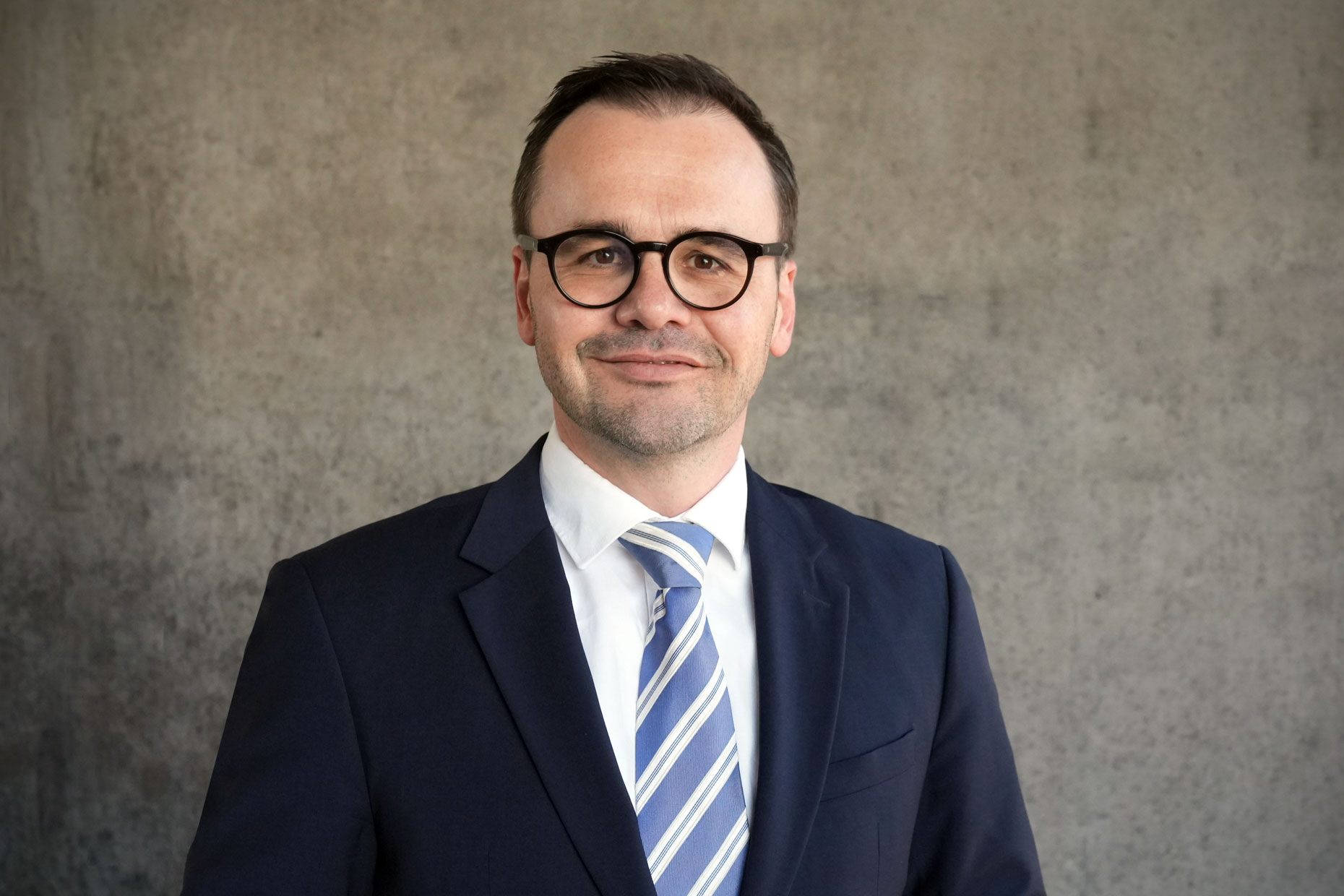
Concerns about crime cannot be ignored. But a comparison with France or the possibility of people wearing masks does not replace a concrete forecast of danger. Freedom of assembly is a fundamental right. It must not be restricted simply because politicians consider a demonstration to be unpleasant, radical or potentially problematic.
What do the security authorities actually say?
The debate becomes particularly insightful when you look at the specific statements made by local security authorities. Because the scenario of an impending escalation is not shared everywhere.
Lower Saxony: No signs of a significant threat
On October 29th, the NDR reported on the assessment of the Lower Saxony Ministry of the Interior. Accordingly, the ministry saw no signs of a significant threat from the announced demonstrations and warned against scaremongering. Young people must be allowed to take to the streets for their concerns.
According to the report, the police in Hanover also had no reports of riots or looting. According to the Office for the Protection of the Constitution, major mobilization activities by the left-wing extremist scene were also not noticed. According to the organizers, almost 400 people registered online in Göttingen. The ministry emphasized that online commitments cannot be reliably converted into actual numbers of participants.

Stuttgart: City and police with different updates
The city of Stuttgart stated on October 27th that there was no indication that the registered demonstration could be unpeaceful. There is currently no legal basis for a ban. In a later statement, police said updated intelligence indicated possible disturbances. How intense this could be is still a matter of clarification. At the same time, the police welcomed the fact that people close to the organizers rejected violence and called for peaceful protest.
This is not a necessary contradiction: an assessment of the situation can change with new information. It is crucial that possible local disruptions are not automatically equated with nationwide riots.
Hesse: Warning of possible infiltration
On October 29th, the Hessian Ministry of the Interior warned of the danger that left-wing extremists with the potential for violence could infiltrate the protests in Frankfurt. Interior Minister Roman Poseck presented the operational preparations together with Frankfurt law enforcement and police representatives.

This warning should be understood as an official assessment by the Hessian authorities. However, it is also not a statement that the entire demonstration will be violent. The different regional assessments show why a nationwide portrayal of an imminent wave of violence is not supported by the publicly known information.
Infiltration is not the same as an extremist protest movement
A recurring argument is the possible infiltration of the demonstrations by extremist groups. There are indications of mobilization attempts from parts of the left-wing extremist scene. This cannot be kept secret.
However, observing extremist mobilization is not automatically evidence of an organized takeover of an entire protest movement. The Lower Saxony State Student Council distanced itself due to a lack of transparency among those responsible and fear of political capture. This criticism deserves to be taken seriously.
At the same time, an unclear organizational structure does not automatically mean that a movement is extremist. What is crucial is which people actually mobilize, which actions can be verified and how the organizers behave towards extremist and violent activities.
When young people protest, people suddenly talk about order
Meanwhile, the real problems don't go away. Schools are in need of renovation. Teachers are missing. Housing is becoming more and more expensive. Many young people can hardly afford to live independently despite training or work. Although psychological stress is increasingly being discussed, care remains inadequate in many places.
At the same time, a possible return to compulsory military service is being discussed. A generation that already feels little influence on political decisions may also have to have control over its own time and life planning.
It is not surprising that this leads to protest. The reaction to this should be a political debate. Instead, there is always talk about police presence, water cannons and possible looting.
The problem is not that security agencies are doing their job. The problem arises when the political discussion about young people is conducted almost exclusively from the perspective of possible dangers.
Antifascism also means questioning state power
Anyone who thinks anti-fascist should be particularly attentive when certain population groups are generally portrayed as dangerous and state harshness is sold as a political virtue.
Racist rhetoric does not always have to appear in openly extremist slogans. It can also manifest itself in seemingly casual terms, blanket suspicions and the repeated linking of migration and crime. “Riot Migrants” is a typical example of this.
This does not mean that every conservative position is fascist. Likewise, criticizing the police does not mean ignoring actual violence or automatically justifying every action at a demonstration.
But a democratic society should be particularly critical when people are placed under general suspicion because of their origins or when the threat of state violence becomes normal political communication.
Antifascism doesn't just mean opposing right-wing extremist parties and organizations. It also means recognizing and countering authoritarian developments, racism and the normalization of intimidation in everyday life.
This includes a police force that can be controlled and whose actions are not outside of social criticism. The state's monopoly on violence is not a license.
A generation that wants to be heard should not have to be feared
The demonstrations on October 31st can be peaceful. Individual disruptions cannot be ruled out. However, the publicly available information does not justify presenting nationwide riots as a fixed or inevitable scenario.
What the debate is already showing is a problematic imbalance. Young people talk about education, social justice, affordable living, self-determination and their future. Some of the loudest political voices are talking about how to control them.
A democratic state should be able to tolerate protest. He should protect freedom of assembly instead of undermining it through political threats. People with a migration history must not be placed under a blanket suspicion of violence. Young people must not be treated as a security problem because of their political demands. And the police, like any other state institution, must allow themselves to be criticized and controlled.
Anyone who commits violence must answer for it. Anyone who abuses state power is the same.
The generation that will inherit this country deserves to be heard before they begin to be feared.
Perhaps that would be exactly the most sensible question for October 31st: Why is it so much easier for politicians to talk about controlling young people than to give them a future?
Sources and further articles
- BILD, October 21, 2026: “Top police officer warns rioters in Germany”[RIGHT DIRECTED]. Original interview with Jochen Kopelke and origin of the quote.
- Tagesspiegel / dpa, October 29, 2026: “What to expect from the protest Saturday”. Reproduction of the Kopelke quote and overview of the announced demonstrations.
- taz, October 27, 2026: “Who governs Gen Z and what do they want?”. Background to the initiative and editorial correction to the wording “riot migrants”.
- taz, October 28, 2026: Interview with Michael Plöse. Legal classification of threats and their possible intimidating effect.
- NDR Lower Saxony, October 29, 2026: “What protests should Lower Saxony expect?”. Assessments by the Ministry of the Interior and information on Hanover and Göttingen.
- State capital Stuttgart, October 27, 2026: “There are currently no indications of unpeaceful Gen Z demonstrations”.
- Stuttgart Police Headquarters, October 27th and 28th, 2026: Preparation for the demonstration on October 31st.
- Hessian Ministry of the Interior, October 29, 2026: “Police are preparing for the Generation Z protest movement”.
- Police union: press photos by Jochen Kopelke. The GdP declares that these portrait photos may be used free of charge. Photo credit: GdP Federal Executive Board.
- Ministry of the Interior Baden-Württemberg: Portrait pictures of Manuel Hagel. Photo credit: Marcel Ditrich.
- Ministry of the Interior and Municipal Affairs Brandenburg: Portrait of Jan Redmann. Photo credit: MIK.
Original reporting by Faultline / Kommando 161 — share it freely.