
World Jacobin
Inside the Epic Battle Over Control of a CA Grocery Union
For over 40 years, one family has controlled (and reaped the spoils from) a 23,000-member California union. Rank-and-file workers are trying to change that — and say they are facing surveillance, inti
English (original) ·Read in Deutsch ⇄
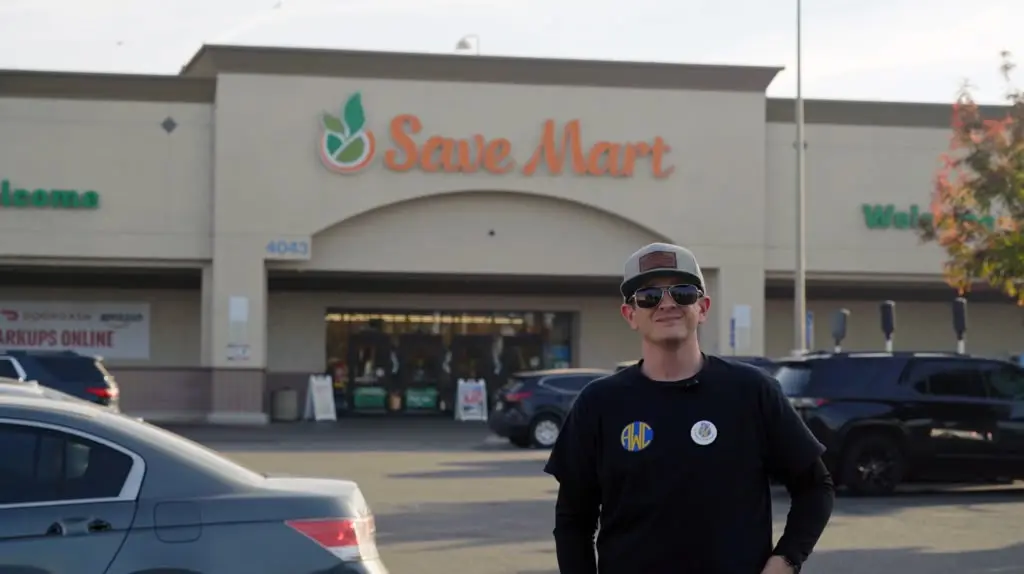
Eric Marcuz is one of the most naturally gifted rank-and-file organizers I have ever met. Overflowing with passion for his union, love for his coworkers, and C4 Energy drinks, he has been spending what little time he has outside of working full time as a dairy clerk at a Safeway grocery store in Redding, California, driving for hours to visit grocery stores across the state and talk with his fellow union members.
Marcuz is running for president of United Food and Commercial Workers (UFCW) Local 8–Golden State as part of the At What Cost slate, a group of seven rank-and-file grocery workers who are committed to giving their coworkers something that should be taken for granted: an opportunity to choose who leads their union. Standing in their way are staff supporters of Jacques Loveall, the local’s longtime president, whose family has maintained tight control over the union for more than four decades.
Loveall inherited the presidency from his father, Jack, in 2004, through an appointment by the union’s executive board. Neither father nor son ever faced a contested election for the presidency, and the union’s top officers and executive board have been filled through appointments rather than competitive elections. The Lovealls seem straight out of central casting for a Hollywood depiction of out-of-touch, self-serving business unionists, complete with exorbitant salaries, palatial offices, a private jet, and even a bronze bust of the family patriarch.
The At What Cost slate is fighting to introduce real democracy into their union. To do that, they must first collect hundreds of signatures from their fellow union members scattered across California. They have until November 17 to collect and deliver the required number of signatures. If they are successful, ballots will be mailed on November 21 and counted on December 7. The reformers have only the next few weeks during one of the grocery industry’s busiest times of year to campaign — if the union’s staff and leadership don’t stop them.
The UFCW is one of the largest private sector unions in North America, representing more than a million workers, primarily in grocery stores, retail, meatpacking, and food processing. These are some of the lowest-paid and most exploited workers in the labor movement, but also some of the most indispensable to daily life, as the COVID-19 pandemic made painfully clear. Nearly everyone comes face-to-face with a grocery worker every week. This gives grocery workers a strategically important position in an increasingly concentrated industry where powerful corporations squeeze workers through understaffing, speedup, and automation while consumers struggle with rising grocery bills.
Fights for democracy within megalocals — often the combination of multiple small union locals to create huge bodies that are difficult for rank-and-file workers to have real democratic say in, like UFCW Local 8 — have the potential to connect the fight for better wages and working conditions at companies like Albertsons, Kroger, Vons, Save Mart, and Safeway to the broader working-class struggle against runaway inequality. The stakes of this local election extend far beyond who will run the union. It raises the question of what kind of power tens of thousands of grocery workers could exercise if they were organized and mobilized to fight together.
Which is why, after donating to their campaign, I traveled to California to spend a few days observing Marcuz and other slate members as they crisscrossed the state gathering signatures, visiting nearly twenty grocery stores in multiple towns and speaking with dozens of unionized grocery workers. I heard firsthand how grocery workers are being crushed by the rising cost of living and stagnating wages, how excited many are at the possibility of new union leadership, and how terrified some of them are of the union’s current leaders and staff.
Dozens of workers described how union staff have been openly sharing their plans to harass and intimidate the At What Cost slate members as they try to gather signatures. Staff are also following behind At What Cost slate members and pressuring the workers they have spoken with into withdrawing their signatures to get them on the ballot, using a special form the staff have made specifically for this purpose.
One grocery worker, who asked to remain anonymous out of fear of retaliation, described how union staff were openly discussing efforts to prevent Marcuz from qualifying for the ballot. Staff explained that if Marcuz failed to collect the required 443 signatures, there would be no contested election and Jacques Loveall would remain president. Staff were out doing everything they could to keep him from reaching that threshold.
One produce clerk who has been a union member for over thirty years described Local 8’s well-known use of intimidation tactics to crush union democracy as “Jim Crow unionism.” He refused to sign Marcuz’s petition because he didn’t want “to end up in a ditch” for crossing staff.
The heavy-handed intimidation tactics I’ve seen here are clearly having the intended effect on some union members. But for others, watching their own union’s staff try to stop a fellow worker from running for office has backfired. Ryan Crahm, a longtime Save Mart employee, said he wasn’t going to get involved until he saw four union staff representatives swarm Marcuz in his store.
“It was straight up intimidation, and it made me pissed,” said Crahm. “I want to ask Jacques Loveall why he is so afraid to have someone run against him. And I want to know why it is that we never saw any staff reps before, but now that there might be an election, they’re in our stores all the time.”
At What Cost
Donning a baseball cap and a backpack filled with petitions, flyers, stickers, and homemade bandanas, the forty-three-year-old Marcuz is excited, urgent, and confident. Visiting store after store from 5 in the morning to 11 at night, he takes his time, listening, asking questions, and sharing his own experiences. His approach to petitioning resembles deep canvassing — a patient, open, and story-driven approach to sharing experiences while engaging with workers during a union drive or voters during an election campaign shown to be effective at winning hearts and changing minds — more than typical rapid-fire signature gathering. Few of his conversations run less than twenty minutes, and they typically cover a range of topics.
Workers repeatedly open up to Marcuz about their frustration with the union contract’s pay scale and how the basic building blocks of the good life — home ownership, a reliable vehicle, vacations — feel increasingly out of reach. California fast food workers have a $20 minimum wage, but under Local 8’s contract, it takes members working full time about five years to reach that hourly rate. Since many grocery workers struggle to get full-time hours, it takes many of them seven or eight years, even in the delis and in-store Starbucks franchises, to earn what they could be making on their first day working at a neighboring In-N-Out Burger.
Members also described unpredictable schedules, chronic understaffing, and the chaos caused by new artificial-intelligence-assisted inventory systems. Many were frustrated not only by the erosion of their contracts but also by how little say they had in negotiating them. There are no elected bargaining teams, and contracts are negotiated exclusively by the president and other appointed leaders and staff.
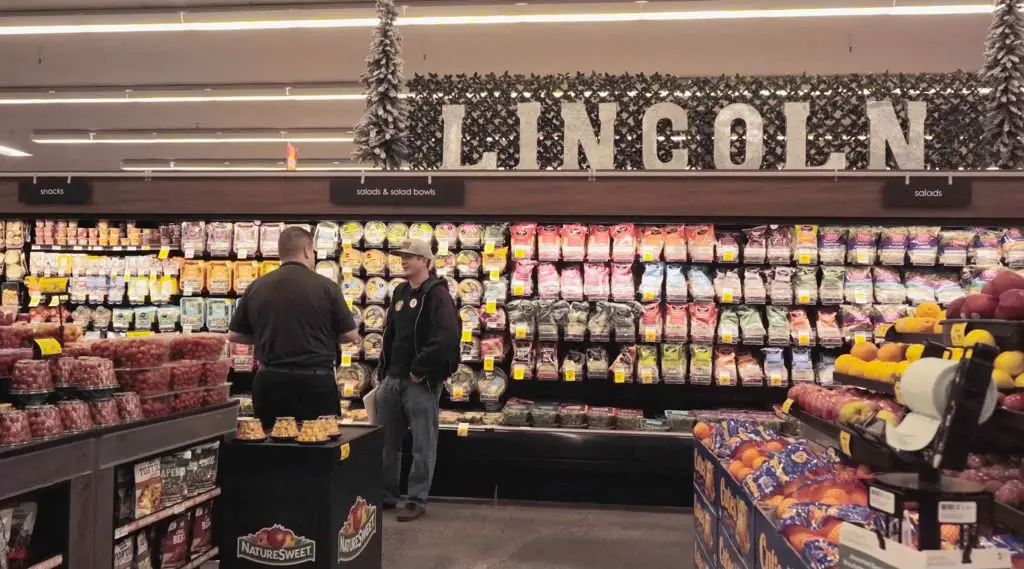
Members, including several stewards, repeatedly complained about union staff who are rarely in the stores, don’t return phone calls, can’t answer questions about the contract, and are seemingly never around when members need them. The local’s website doesn’t provide information on the twenty-plus appointed vice presidents who allegedly represent members, or which staff representatives service their stores and how to contact them. The local also refuses to provide members with digital copies of their contracts.
Remarkably, despite talking to dozens of union members, including more than a few who had worked in these stores for decades, I couldn’t find a single Local 8 member who had actually met Jacques Loveall. If the union was primarily known for anything, it is for its absence.
“My mind was blown by how little visibility we had into our contracts, union negotiations, and the leadership’s decision making,” said Marcuz. “I started driving down to the union meetings in Sacramento. They’re two and a half hours from my house and held once a quarter at 8 at night. I went to my first meeting, and it literally lasted five minutes. I was the only member there.”
Marcuz says he spoke up at a different meeting and asked whether, given the vast jurisdiction the local covers, quarterly meetings could rotate between different cities across the state to encourage more members to attend. He says the staff laughed him out of the room.
So Marcuz started a petition, collecting three hundred signatures from grocery workers in his area demanding that the meetings at least be live streamed over Zoom so members could listen in. This time, he says, staff angrily shouted him out of the room.
“Every time we tried to get involved, to make our union more responsive to the membership, we got smacked down. And once we start losing faith in our own union, we are on the road to no longer having one,” said Marcuz.
The At What Cost slate is proposing sweeping changes in how the union functions. They want elected bargaining teams, open negotiations that members can attend, local meetings that encourage member participation, a $20 minimum wage in grocery, and aggressive contract campaigns backed by leadership that isn’t afraid to strike over ambitious demands.
Marcuz and his small rebel army want to elect new officers, win better contracts, and fundamentally change who is exercising power inside their union, transforming members from mere spectators into active participants in the fight to better their working conditions and lives.
Not a Union, but a Family Business
The Loveall family has held tight control over UFCW Local 8–Golden State and its predecessor, UFCW Local 588, for more than four decades. Jack Loveall was first appointed president of the union in 1984 and ran it continuously until he retired in 2004, when his son Jacques was appointed by the union’s executive board to succeed him. At the time he retired, Jack Loveall was one of the highest-paid union officials in the country, making over $1 million a year in today’s money. The local owned a twin-engine business jet and had two pilots on staff to shuttle Loveall around the state. He oversaw the construction of a new union headquarters in Roseville, near his personal residence, which featured an 1,100-square-foot presidential office, the size of a modest house, complete with a sauna and marble wet bar.
The local also paid $28,000 a year to cover the cost of Loveall’s membership in an exclusive Roseville country club, an expense the union president justified to the press by stressing that it was a place to talk business with employers. During his final year in office, there were seven Loveall family members on staff, comprising a quarter of the union’s payroll.
Loveall built his empire through a series of mergers that expanded the union’s membership and assets while consolidating his control over its leadership. According to a 2004 investigation by the Contra Costa Times, critics accused Loveall of securing mergers by rewarding the officers of absorbed locals with lucrative positions in his administration.
When Local 498, a Sacramento meatcutters’ union with 1,600 members and $2.3 million in assets, merged into Local 588, its former president saw his annual pay jump from roughly $12,500 to $85,000, while its former treasurer’s pay increased from less than $11,000 to nearly $76,000. The mergers helped Loveall build an increasingly loyal staff and executive board, with well-paid positions that extended to the relatives of some officers.
But Loveall wasn’t always successful. Members of Local 1179 put a halt to a proposed merger with Local 588 by organizing an opposition campaign centered on Loveall’s pay and perks, arguing their dues would be better spent if their local remained independent rather than contributing to Loveall’s lavish lifestyle.
Responding to these criticisms, Loveall told the press, “Just because we run a union doesn’t mean we’re supposed to be paupers” and said that “my members don’t want me driving around in a stagecoach or working in some shithouse office.” The elder Loveall also bragged about how tightly he controlled the union membership, saying that members were “ready to do what I tell them to do.”
Jacques Loveall took over the top spot in 2004 but kept his father on the payroll earning more than $70,000 a year as a consultant, on top of his pension, until the elder Loveall died in 2020. Jacques is also chair of the Loveall Foundation for Children, a nonprofit founded in honor of his father and described on their website as being founded and run by “the staff, family and friends of UFCW 8–Golden State.” The union has financially supported the nonprofit for years, including $25,000 in 2025 alone, and at least one major collective bargaining agreement negotiated by Loveall obligates the employer to contribute three cents for every hour employees work directly to the Loveall Foundation.
The salary of the president is set by the union’s top officers and vice presidents, all of whom were appointed over time by other top officers and vice presidents as vacancies arose. At no point over the past four decades have any of the Local’s top officers or the twenty-plus vice presidents actually been elected by union’s membership.
Discussing this reality with other union members, Marcuz is blunt: “Our local hasn’t been acting like a union. It’s been run like a family business.”
A Long History of Schemes and Intimidation
There have been past attempts by union members to challenge the Lovealls’ tight control over the union. But those who have tried have repeatedly encountered a familiar combination of intimidation, interference, and mergers that postponed or eliminated the possibility of a contested election.
Union activists in UFCW Local 1179 who were active in the effort to block the proposed merger with Local 588 reportedly experienced aggressive intimidation and surveillance from Loveall’s associates. According to an investigation by the Contra Costa Times, union staff began following reform activist Michael Ross-Smith, staking out his home and trailing him in union vehicles. In June 1994, three Local 588 business agents following Ross-Smith rear-ended his car in Walnut Creek, an incident documented in a police traffic collision report.
A union representative acknowledged to the press that staff had been following Ross-Smith but defended the practice as a legitimate effort to investigate Loveall’s political opponents.
In 1997, Raley’s grocery clerk Jack Nordby attempted to challenge Jack Loveall for the presidency. Nordby wanted to cut the excessive salaries of union officers and open contract negotiations to the membership. Following his announced run for office, Nordby alleges that union representatives followed him and his family, harassed him while he collected nomination signatures, and pressured workers into withdrawing their signatures from his petition. So many signatures were withdrawn that Nordby failed to qualify for the ballot.
Another reformer, Lorna Greenlee, described similar intimidation. Greenlee said two union representatives confronted her while she collected signatures, then berated her for hours. She and her daughter also reported seeing union representatives watching their home. Although Greenlee said she had nearly collected enough signatures to run against Loveall, she eventually withdrew out of fear.
The Lovealls have also benefited from mergers that postponed contested elections. In 2006, another reform slate, led by longtime meatcutter Doug Slaydon, was preparing to challenge Jacques Loveall. But before members could vote, Local 588 merged with Local 1288 to create UFCW Local 8–Golden State, postponing the election until 2008. Slaydon, who was fired from Safeway shortly after his attempted run for local union office, believed the merger was designed to prevent his challenge.
Nearly two decades later, the same maneuvers again threatened to derail the current election. In October, Local 8 members received an election notice announcing that ballots would be mailed in November. But buried in the notice was a provision stating that the election would be canceled if the local completed a merger with an organization called Staffing Agencies Federated Employees (SAFE).
None of the rank-and-file members of the At What Cost slate had ever heard of SAFE. The organization claimed to represent thousands of workers, but there was no evidence of where those workers were organized or what contracts SAFE had negotiated. What they did find were more connections to Loveall: a family member was listed as SAFE’s president on its initial federal filing just eight months before the election.
The At What Cost slate, working with the UFCW reform organization Essential Workers for Democracy, on which Marcuz serves on the organizing committee, challenged the proposed merger and called for a Department of Labor investigation. After a federal investigator began asking questions, Local 8 announced that the merger had been postponed indefinitely, five days after it was announced.
The election was back on. But that doesn’t mean the rank-and-file reformers would be allowed to campaign without interference.
Fear and Intimidation on the Campaign Trail
On November 2, Marcuz drove to the union’s headquarters in Roseville to pick up the nomination petitions that he and his slate needed to start collecting the hundreds of signatures required to qualify for the ballot. From there, he headed south toward Fresno to begin collecting signatures from grocery workers.
But shortly after leaving the union headquarters, where a bronze bust of Jack Loveall stands in the central hallway, Marcuz noticed a black pickup truck following him. When he stopped for gas, the truck stopped too. He recognized the driver as Jeff Berns, a senior Local 8 staff representative whose brother, Mark Berns, was appointed by Jaques Loveall to chair the election.
Multiple members of the Berns family have been on the local’s payroll going back decades. Mark Berns is currently the highest paid nonofficer staff member at the local, earning more than most of the vice presidents. He has repeatedly served as the local’s election chair, including in 2009, when the Department of Labor found that Local 8 had violated federal labor law by burying an election notice inside a union newsletter, mailed just a week after another issue with a nearly identical cover. The notice was so inconspicuous that members could easily have mistaken the second mailing for a duplicate and thrown it away without realizing an election was approaching.
Despite finding that the local had violated federal labor law, because investigators couldn’t identify any member who said they would have run for office against Loveall, the department concluded that the violation had not affected the election’s outcome and took no further action.
According to Marcuz, Jeff Berns told him that he intended to follow him throughout the day to make sure workers heard the Loveall team’s side of the election. And that’s exactly what he did. Berns followed Marcuz to a Save Mart in Fresno, where Marcuz and fellow slate member Mike Romero say three union representatives, including longtime Vice President John Micheletti, confronted them and interfered with their attempts to collect signatures. According to Marcuz, Berns threatened to invalidate every signature his slate collected.
This behavior continued as Marcuz left Fresno and traveled to meet Silas Saldivar, a twenty-six-year UFCW member and head clerk, at the Safeway where he worked in Modesto. Marcuz became so concerned for his safety that he called Saldivar, and they agreed to instead meet at Saldivar’s house.
I traveled with Marcuz to the Safeway in Modesto, where Saldivar recounted the story to me.
“I walked outside into my driveway to meet Eric and saw Jeff Berns pull up in front of my house in his truck. John Micheletti parked in front of my neighbor’s house and then got out of his car and started walking toward us. I looked at Eric and said, ‘Dude, is this guy serious right now?’ Those two guys sat outside and watched my house for over an hour,” said Saldivar. “I didn’t feel safe. I still don’t, honestly.”
While Saldivar was recounting this story to me, two union staff showed up at his Safeway. They kept their distance but made it clear that they were watching us. One pulled out his phone and began recording us.
Marcuz estimated that he had been followed for seven hours and roughly three hundred miles on November 2. The following morning, he filed a police report alleging stalking and harassment.
The intimidation hasn’t been limited to Marcuz and the other candidates. Less than a week later, Mike Denham, a Local 8 staff representative, showed up at the Perfect Union cannabis dispensary in Shasta Lake, California, where Marcuz had recently visited and received overwhelming support from members. Many workers were frustrated that they had never seen a copy of their union contract and couldn’t get one from the local. One supporter had asked Marcuz to leave a nomination petition so workers on other shifts could sign it, planning to return it to him later.
According to multiple workers who asked to remain anonymous out of fear of retaliation from their union, Denham, the union staffer assigned to the dispensary, subsequently arrived and demanded that they either destroy the petition or turn it over to him so he could destroy it himself.
According to several members, Denham repeatedly insisted that Marcuz had acted “illegally” by leaving the petition with workers at the store. When workers refused to turn it over, Denham eventually left in frustration.
“It’s absolutely insane that our own union staff would come into our workplace to intimidate us to stop us from participating in our own union,” one worker told me.
Federal labor law guarantees the right of union members to participate in democratic elections. The conduct of Local 8’s leadership and staff could have legal consequences.
“The quantity and variety of the efforts by Loveall’s team are not only shocking, but likely unlawful, and could lead to the Department of Labor having to step in and rerun the election,” said Will Bloom, law professor at City University of New York and board member of the Association for Union Democracy.
Discouraging Participation Is Anti-Union
At a Vons grocery store in Fresno, multiple workers confessed to us that their union staff representative, Justin Putney, aggressively pressured them to sign the Loveall slate’s nomination petition. Workers told me Putney had forcefully instructed them to call him if Marcuz or anyone else from the At What Cost slate showed up so that he could come down and run them out of the store. It wasn’t long before that happened.
Members working in the Starbucks kiosk were signing Marcuz’s petition when Putney came running up. “There he is,” Putney announced. “I wish I could say it was nice to meet you, but it isn’t.”
Putney proceeded to lecture Marcuz about how “there is a right way and a wrong way to do things.” Putney, he said, had done things the right way. He had worked his way up through the union, starting as a steward before being appointed to a member advisory committee, then the executive board, and finally landing a position on staff.
Putney failed to mention that his father is also a longtime paid executive board member in the union — a point Marcuz raised and Putney didn’t dispute. According to Putney, Marcuz, by contrast, was doing it wrong. “You’re like someone who has been playing rec league soccer saying he wants to jump into the big leagues and play professional soccer.”
Marcuz responded that he believed democracy was the right way for members to decide who should lead their union.
“And I don’t think you should have the right to run for a job that you have no qualifications for,” Putney shot back.
Marcuz challenged Putney over the union’s bargaining record. “Our last contract was horrible,” Marcuz said. “It only provided a dollar raise for topped-out, high-seniority clerks. Nobody else got anything. We are barely able to survive on our wages. I can’t afford a house for my family. I can’t buy a truck. We can’t afford to shop in the stores where we work.”
“You can’t show me anywhere in the country where grocery workers have a better contract,” Putney insisted.
“Any contract that the membership fights for and wins together is better than one that is delivered from on high without our involvement,” Marcuz replied. “Members should be in the room when negotiating is happening. We should own the outcome.”
I introduced myself as a journalist following Marcuz’s campaign and asked Putney why he had rushed down to the store to confront him.
“He is a threat to the future of our members,” Putney told me. “It’s my job to protect the membership, and he represents a threat to that.”
I asked whether he thought it was appropriate for union staff to confront members who were exercising their democratic rights, and whether he had been instructing workers to alert him whenever Marcuz showed up so he could interfere with his campaigning.
“Yes,” Putney acknowledged.
Marcuz was incredulous. “How am I supposed to exercise my rights if everywhere I go I’m being accosted by people on the union’s payroll?” he asked. “I have a right to speak with members, and you’re showing up here just to stop that from happening.”
Putney maintained that he was simply encouraging workers to be cautious about what they signed. Marcuz wasn’t buying it.
“Discouraging people from participating in the democratic process of a union election is anti-union. This process should strengthen us as a union, because it should cause the incumbent union leadership to state and defend their platform. We should debate our visions and what we are fighting for, and the members should get to vote on the best ideas,” said Marcuz.
“But that is not what is happening. What’s happening is that I’m being followed, my conversations are being interrupted, and I’m being harassed by staff who have no honest interest in what I have to say and are only trying to stop others from hearing what I have to say. Let’s be honest. Your goal is to make sure that we don’t have a choice.”
Putney denied the accusation, but Marcuz continued.
“You tried to merge with a fake union that doesn’t really exist and that Jacques Loveall put his cousin in charge of. Staff followed me three hundred miles and sat in front of a member’s house for over an hour to try to intimidate me from participating. You have encouraged people in this store to report to you that I’m here so that you can come here and interfere with my campaigning,” he said. “None of these actions are to prove to the membership that your vision for our union is better. All of those actions are to prevent democracy in our union.”
As the exchange continued, a crowd of grocery workers were gathering to listen. Eventually, a distraught-looking manager approached Putney and asked to speak with him privately. Marcuz took that as his cue. We left the store so he could continue gathering signatures, hoping that he wouldn’t be followed.
“Solidarity Works”
Loveall and the executive board members supporting him are running together on the “Solidarity Works Team” slate. And their materials look deceptively similar to official communications from the union. “Solidarity Works” has been Local 8’s slogan for at least fifteen years, appearing regularly in union communications, especially those concerning contract negotiations. Loveall himself has described it “as the motto of UFCW 8–Golden State.”
A recent Solidarity Works Team mailer sent to every Local 8 union member’s personal address is virtually indistinguishable from an ordinary union communication. For one, the return address on the mailers is the union headquarters. For another, it features Loveall’s photograph and title as union president, invokes the local’s record of bargaining victories, and describes the Solidarity Works Team as a “network of member contacts” that lays “the groundwork for the solidarity, communication, and mobilization that will be needed when bargaining begins.”
A QR code on the mailer links to the Solidarity Works Team website, where members are encouraged to join the team by providing their contact information. What the mailer and website don’t mention is that the Solidarity Works Team is running for reelection. There is no information on any of the slate’s candidates other than Loveall, and the word “election” doesn’t appear anywhere on the mailer or the slate’s website.
The website is carefully crafted to lead members to believe they are signing up as part of the process of preparing for contract bargaining, not agreeing to receive information to vote in support of the current leadership in an election that isn’t mentioned anywhere.
While out visiting stores, multiple grocery workers told me that the union staff representatives had asked them to update their contact information to prepare for upcoming negotiations. The representatives handed workers their phones and had them fill out a sign-up page, only for the workers to later discover it was to receive messages from the Solidarity Works Team slate. Those members subsequently received text messages notifying them that “petition signing is under way” and warning, “Reminder: DO NOT sign anything for anyone you don’t know. Solidarity Works!”
The Loveall slate’s materials also issue stark warnings about “anti-union campaigns” and “attempts to weaken your bargaining power and possibly your benefits package.” In a video posted on the slate’s website, staff warn: “Be very careful with your signatures. Do not sign petitions. Do not sign cards. Do not trust the word of people who say they are with our union that you are not familiar with. Again, you should not be signing anything for anyone you do not know.”
Anyone who has organized a union will recognize these talking points. They’re the same warnings employers routinely deploy during union-busting campaigns: beware of outsiders, don’t trust anyone asking for your signature, don’t believe their promises, and don’t risk the wages and benefits you already have. Only this time, these warnings aren’t coming from an employer but from the union’s own leadership.
Jacques Lovall did not respond to an interview request for this story.
“We Are at War”
At a Safeway in Lincoln, a suburb outside Sacramento, I meet Mary MacDonnell, who has worked in the grocery industry for over thirty years and supports the At What Cost slate. The night before we met, John Micheletti arrived at her store and began badgering her and others to sign the Solidarity Works Team slate’s petition. Micheletti loudly announced to a group of members gathered near her that “we are at war. The union is under attack. That is why I am here.”
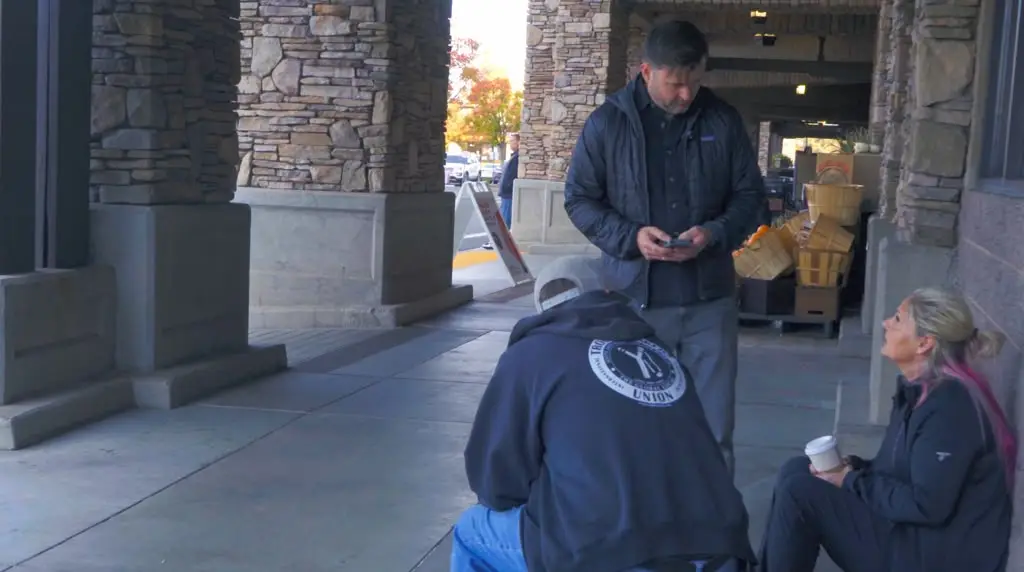
MacDonnell has just finished her shift, and Marcuz and I are sitting on the bench outside the front entrance of the grocery store talking with her. She is emphatic that her union should be an organization of workers, run by workers, to fight for workers. That can’t happen if the union’s leadership is completely insulated from the membership and the staff and executive board are packed with relatives and appointed loyalists.
She says she was drawn to the At What Cost slate because they practiced what they preached. The slate is encouraging members to talk and listen to each other, to build relationships, to be courageous and more ambitious, and to see greater member involvement as a source of strength for the union, not a threat to be mocked or ham-fistedly suppressed.
As we are talking, one of the Loveall slate supporters from the night before arrives. He posts up with his back against the brick wall on the other side of the store’s entrance, conspicuously watching us.
“This has been hella intimidating,” MacDonnell sighs as she eyes the man. But then her resolve seems to harden. “I respect Eric, but at the end of the day, this is bigger than any particular candidate. I want a choice. And I’m just not going to allow them to take that away from us.”
This article originally appeared in Jacobin, a democratic socialist magazine publishing long-form essays and analysis on politics, economics, and culture. Subscribe to the print edition for $20 a year.