
World Jacobin
Anwar Shaikh Gave Us an Emancipatory Economics
Anwar Shaikh, who died in October at 80, showed how capitalism really works: profit drives it, competition is a war, and crisis is the norm. Economist Clara Mattei argues that his work remains a guide
English (original) ·Read in Deutsch ⇄
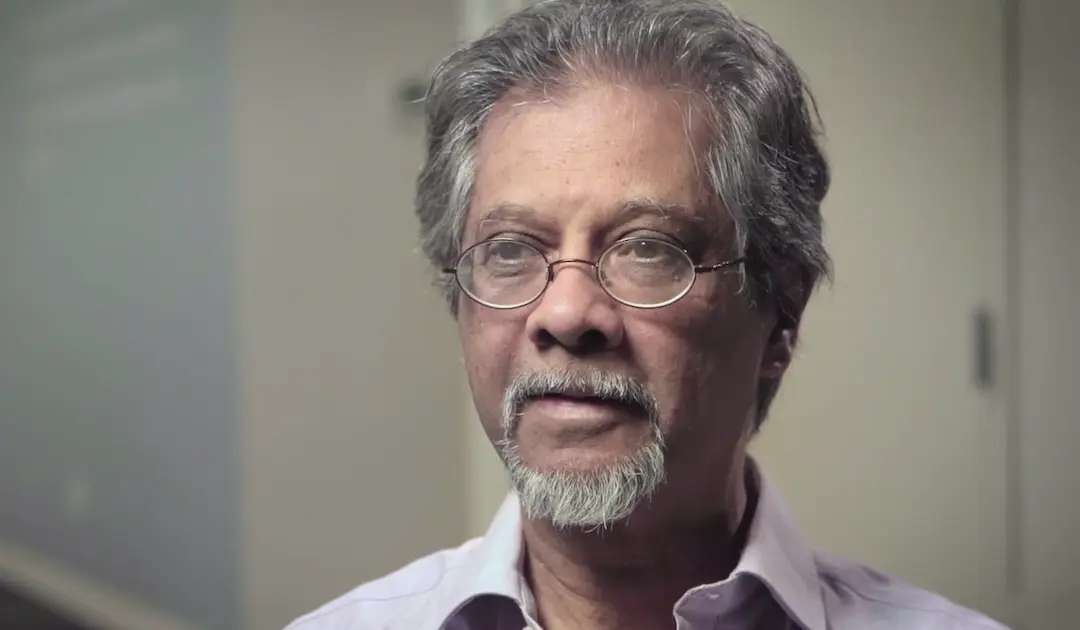
Writing about someone who has changed your life and to whom you owe so much is much more difficult than I would have thought. It is impossible to feel capable of delivering even a fraction of what it would take to fully honor the human and intellectual memory of Anwar Shaikh.
I met Anwar at a moment of great intellectual insecurity for myself that he helped me overcome. Now, in front of this blank page, that insecurity is back. At the same time, this state of mind allows me to fully reconnect with the memories of our first encounters and the development of a mentorship and friendship that has deeply shaped me as a scholar and as a person.
Grounding Theory in Historical Analysis
It was 2015, and I was struggling to pursue the research for my economics PhD in Pisa, Italy. It had been a tough couple of years: after a five-year university degree in philosophy and history, the doctoral program had thrown me into hardcore economics courses. There were intense examinations in mathematics, econometrics, statistics, microeconomics, and game theory, which I had survived by studying nonstop and memorizing formulas that I would obsess over at night, half awake, half in my dreams. After so many examinations and so much peer pressure, it took me a while to find a subject I could feel passionate about.
Economics, as my course textbooks presented it, was a dry, abstract discipline, all about technique and not much about intellectual stimulation. I felt demotivated and especially out of place. Was I ever going to be fit for this?
I cared deeply about social justice and critique of the system — I read Karl Marx’s Economic and Philosophic Manuscripts and Karl Polanyi’s The Great Transformation — but none of it seemed to fit the current canon of scientificity. My supervisor, Giovanni Dosi, suggested I work on austerity, and I agreed, but I could not find an approach that was not so deeply economistic, focused only on debt and growth.
Finally, while desperately roaming the library, I found an article on Fascist economics in 1920s Italy. I realized its deep affinity with contemporary economic policies in Europe, especially Italy. That day, I had a moment of awakening and decided to embark on archival research to trace the genesis of these policies in the thought of the economists who were advising Benito Mussolini.
The research was challenging. I adhered to no specific methodological framework. To make sense of things, I realized I had to surpass the narrow limits of what history of economic thought, economic history, or economics meant for the profession.
In my scholarly journey, I had found supportive mentors — Nicola Giocoli, Alessandro Nuvolari, and George Peden, for example — but there was clearly not much space for me in Italian academia, especially within economics. I was not doing enough of what economics was supposed to look like, but to maintain my motivation, I could not conform.
This is when an email from Anwar changed my life forever. It read: “Dear Clara, I could not stop reading your paper once I started! It is excellent, and I hope you continue to pursue the parallels between the post-WWI rationale for austerity and the subsequent reincarnations in the 1980s and again now. Congratulations on a fine piece of work.” I remember gasping with happiness and a sense of recognition that I had never felt before. Really? A scholar like Anwar was taking my research seriously? And in an economics department?
In his role as chair of the Economics Department at the New School for Social Research, Anwar was responding to an exploratory email I had sent just a week earlier, inquiring about a visiting scholar position. I had only recently discovered the existence of a department where Marxian economics was part of the canon, where economics seemed to be about substance as well as technique. In that email, I had attached a chapter of my dissertation, but I had no expectation whatsoever that Anwar was going to open the file.
But he did, and from then on he would continue to make clear the importance of understanding the history of economic thought as integral to the analysis of capitalism itself. He wrote again inviting me both as a visiting scholar and to give a talk on my work to the department. That email exchange was a real turning point in my life’s journey.
When I arrived in New York City in September 2015, I went to Anwar’s office hours. His wisdom and generosity were traits that struck me immediately. He was not teaching that semester, but I would stop by his office to get his feedback on some ideas.
The week before my scheduled department talk, he told me: “You know, we are hiring, and you should apply.” The message was implicit: take this talk as an opportunity to showcase your work. At that point, I was exhilarated. The amount of adrenaline I felt leading up to that 4 p.m. Tuesday seminar was something I would never experience again.
Anwar fought hard for the department to hire me. I only learned this after I had begun working as an assistant professor of economics at the New School. He believed in me so strongly. I still have a hard time understanding why and have never felt worthy of such high esteem.
My dear colleague Ying Chen, whom the department hired at the same time as me, and I were both so lucky to have his support. We will miss those lunches, sharing different varieties of spicy Chinese food over conversations both fun and serious.
A Life’s Mission
In the summer of 2016, right before I moved to New York to start teaching, I helped organize a couple of stops for Anwar’s book launch in Italy. The stops were at the International University College of Turin and at my alma mater, the Sant’Anna School of Advanced Studies in Pisa. Anwar had just published his masterpiece, Capitalism: Competition, Conflict, Crises.
There is one conversation with him I will remember forever: We were sitting at a café on the Po River, and he started telling me about the commitment and devotion it had taken him to produce his book. It had taken him over thirty years to completely reset the foundations of economics and the study of capitalism. He told me that escaping the traps of dominant economic theory was a sacrosanct mission to change the world, that deep study carried enormous transformational weight, and that it required sacrificing a lot of worldly distractions.
He emphasized that he had supported me so strongly because he had seen potential in my research and in my devotion to it. He believed I could make a critical contribution to the study of capitalism and the political dimensions of economics. The connection between so-called pure economics and fascism that I was unveiling was for him key to unsettling some accepted truths about our economic system.
It was then that I promised him I would persevere. And in times of demotivation, his words are always there to motivate me.
I spent another six years developing my book, The Capital Order. I always wondered whether the final result lived up to his expectations, but luckily, he did seem proud.
It was really thanks to Anwar’s influence and mentorship that I was able to give a sturdy theoretical foundation to the archival research, tracing its roots in the deep tendencies of our economic system. I also wanted the archival research to bolster the systemic analysis, especially of the deeply political forces that shape our economy. More generally, the book is the product of the intellectual milieu of the department Anwar introduced me to. The intellectual stimulation and methodological insights I received, including from colleagues like Duncan Foley, completely transformed it.
I remember the long conversations on the phone with Anwar during the COVID-19 lockdown, in which he meticulously commented on my interpretation of Ralph Hawtrey’s theory of inflation and explained how best to measure rates of exploitation and profit. His comments, often critical, were not easily digestible, and I would take them bit by bit and dissect them with Aditya Singh, my loyal research assistant, who was also Anwar’s student.
Neither the Perfect Nor the Imperfect but the Real
What Anwar has gifted us all is his formidable lens through which to interpret capitalism and challenge the mainstream. He offered a lucidity about the systemic tendencies of our economic system and a holistic approach that, as many, including Vivek Chibber, have already stated, bears comparison with that of Karl Marx himself.
In my years working at the New School, I attended two of Anwar’s graduate courses. I experienced firsthand how he was able to translate the titanic amount of knowledge in his book into effective pedagogical tools.
His story of the chicken pot pie, for example, embodies his capacity to convey the nature of capitalism in an intuitive and lasting way. Once Mary sold her chicken pot pie hobby to a business, it did not matter what was in the pies, which became full of hormone-treated chicken; what mattered was their price. With an image that stuck, Anwar explained the fundamental logic of value as being completely detached from use value, from those qualities that made the chicken pot pie so good.
Anwar delivered, like no one else, the antibodies against bourgeois economics, against those “theories” that only help hide rather than explain. In his book, as in his classes, students learned to wear different lenses through which to look at the economic world. They came to understand the slick capacity of the “perfectionist” and “imperfectionist” approaches to idealize markets, competition, and progress.
Shifting from one framework to another, examining their explanations of inflation, profits, and unemployment and their policy implications, Anwar was able to deliver a scathing critique of both neoclassical (perfectionist) and Keynesian (imperfectionist) economics. He tore down the edifice not just of neoclassical economics but also of its supposed Keynesian alternative with grace and precision. He unmasked how they shared much more than one would think, especially a common backbone of idealization and an urge to get back to perfection, which Keynesians thought state intervention could achieve.
As he put it in his brilliant interview with the Institute for New Economic Thinking: “The notion of imperfection is a dual of perfection; you can’t speak of imperfection unless you are implicitly paying allegiance to perfection, and I do not want to be trapped in that space.” He also recalled something I had felt deeply myself: “When I started as a graduate student, I was surprised to discover that the representation of the world was an idealized fictitious form that makes no sense to me, and that as an economist you had to accept that, then spend your time showing how the world is imperfect.”
That is why his blackboard did not have just these two possibilities: next to the perfectionist and the imperfectionist, there was a third column that had vastly more explanatory power. Anwar was not content with merely modifying the existing framework but spent thirty years rebuilding the foundations of economics from scratch. What he built was revelatory. And it had to start from real observation, from confronting the naked reality of capitalism.
Real economics, he liked to call it: an approach that vindicated and expanded, both theoretically and empirically, the most important intuitions of Adam Smith’s, David Ricardo’s, and especially Marx’s analysis, without calling it Marxist. In this, Anwar was adamant and would not accept compromises. He thought it important to get out of the niche, to avoid the self-sectarianism typical of heterodox economists.
As a matter of fact, he disliked the term “heterodox” for exactly that same reason: identifying yourself as an antithesis to the orthodoxy weakens the capacity of real economics to stand on its own feet and gain hegemony. As he wrote in the introduction to his book: “Its object of investigation is neither the perfect nor the imperfect but the real.”
Profit as the Engine
Anwar’s whole economic edifice rested on one crucial intuition that, paradoxically, the perfectionist and imperfectionist paradigms had disregarded: profit drives all the system’s dynamics; it is the engine of the whole economic system.
The incessant quest for profits drives investment and economic growth. Profit shapes supply (firms produce with the goal of making a profit) and aggregate demand (purchases of inputs, plant, and equipment, and the hiring of workers and their capacity to consume). As he put it concisely in the slides he shared with me: “The profit motive always remains central, and its dominance creates the force field that shapes and channels microeconomic and macroeconomic outcomes. This is the proper meaning of the invisible hand.”
He reappropriated the meaning of Smith’s invisible hand not as a metaphysical myth of the eternal efficiency of the market but as the expression of those profit imperatives that operated through real competition. Through the lens of the profit motive, Anwar drew a few fundamental intuitions.
First, class struggle is at the heart of the system, and technological dynamism is one of its expressions. Modern economic analysis reduces capital to durable wealth and understands profit as a reward for abstinence and entrepreneurial search. Against this, Anwar reminded us that capital had nothing to do with the qualities of the commodity. Instead, it had everything to do with capitalism’s specific historical process — potentially infinite accumulation — and the class strugglethat grounds it.
Indeed, profit mirrors surplus labor, and as he says, the existence of surplus labor is a “social outcome.” He writes: “Surplus product only arises when the length of the working day exceeds the working time to reproduce the standard of living of the employed worker, that is, only when surplus labor is performed.” Technological progress is no proof of the fairy tale that capitalism exists to maximize consumer satisfaction with ever better commodities. To the contrary, firms invest in new technology to squeeze more surplus out of their workers and to cut costs below their rivals’. In real competition, firms that fail to do so don’t survive.
Second, the real rests on a conflictual structure, precisely the one that neoclassical economists seek to erase in favor of a harmonious scheme that persuades us to believe we live in the best of all possible worlds. Far from the “ballet” of perfect competition, it is a war of all against all.
The business literature showcased extremely well how the profit motive played out through real competition. In Anwar’s words, “Firms set prices; they try to survive; some win; some don’t; they use tools to attack each other. Roughly 70 percent of firms die within the first three years.”
As Chibber has pointedly discussed, this theory led Anwar to deconstruct traditional leftist understandings of the dysfunctions of capitalism. Capitalism’s violent outcomes do not stem from monopoly power “corrupting” competition; they arise precisely out of a system working as it should, driven solely by the quest for profit.
Third, crisis is the norm under capitalism, an expression of crucial recurrent patterns or “gravitational tendencies” that emerge out of the very dominance of the profit motive itself. As Anwar put it, “The history of market systems reveals recurrent patterns of booms and busts over centuries, emanating precisely from the developed world.” These include the great depressions of the 1840s, the Long Depression of 1873–1896, the Great Depression of the 1930s, the stagflation crises of the 1970s, and the great global crises of the 2010s. In this long-run perspective, excessive financialization was merely the trigger of the 2008 crash; its underlying cause was a crisis of profitability.
Anwar’s real economic framework can also explain other devastating features of our economic system, including the structural economic plunder of the Global South and permanent warfare as a stimulus to profitability that does not risk subordinating the profit motive to social goals. Such subordination is correctly seen as a threat to the capitalist order and labeled “socialistic.” My work on austerity’s structural role in managing capitalism — by repressing wages and preserving the social relations underpinning profitability — is charged by this theoretical insight. Indeed, it underscores how capitalist governments must find the “right” stimulus policies — those that do not challenge market dependence or the command of private investment.
Turbulent Gravitation
These observations are important to avoid easy misunderstandings. Anwar was not a determinist. The patterns he discovered were important to guide systemic knowledge but did not eliminate agency.
Rather, Anwar developed a multidimensional structure of influence that is at once hierarchical and deeply historical. This is the significance of turbulent gravitation: a relatively small set of operative principles can explain a great variety of economic phenomena, without reducing the dynamics of capitalism to mechanical laws. There are observable patterns in the system — but humans can organize and change the system through political action.
This is the deeply historical and political approach that runs through Anwar’s analysis. He repudiated the bourgeois distinction between, on the one hand, “ahistorical laws” and, on the other, the “contingencies” of history. One must understand that classes, through their historical agency, create the very imperatives upon which they act, even as those imperatives bind them.
This is particularly important when it comes to the “gain-seeking behavior” that defines capitalism as a particular social form. The imperatives of profitability are not simply external laws bearing down on historical actors, nor are they merely the outcome of individual choices. Class relations and competition produce them historically, even as they confront those actors as real constraints that shape their actions. The beauty of Anwar’s economic analysis is that he could identify the underlying regularities of capitalism without abstracting them from the historical relations of class and agency through which actors continually reproduce them.
This also speaks to Anwar’s particular relationship to empirical data. He was emphatically empirical, but not a positivist. His argument was that classical assumptions are consistent with empirical reality.
He understood that data are never innocent. Data are not simply a collection of preexisting facts waiting for an observer. As he writes, “Theory intervenes not merely in the interpretation of events but in their very representation (and occasionally in their suppression, as we know only too well).”
His example of unemployment is particularly telling: the official definition counts someone as employed if they did any work at all for pay or profit. Such a definition masks a much bleaker picture of the realities of unemployment and underemployment as structural features of the system.
Anwar’s historical proclivity, expressed in his attention to social relations, is particularly clear in his passion for Michał Kalecki’s famous 1943 article, “Political Aspects of Full Employment,” which we discussed at length on many occasions. He thought this was one of the most important pieces of political economy ever written, as it clearly stressed one of the strongest Marxian intuitions: capital not only produces unemployment — it fundamentally depends on it.
Keynesian economics, with its utopian delirium of ignoring exploitation, had depoliticized the economy. It failed to realize that its goal — full employment — was technically possible, but that only a fascist dictatorship could achieve it without undermining capitalism. Indeed, only under fascism can you forgo the impersonal discipline of unemployment because political discipline is firmly in place.
I draw heavily on these conversations in my most recent book, Escape From Capitalism. Anwar reviewed it in detail and wrote a final blurb for it: “A book for the times. Mattei takes aim at the notion that the forces which regulate market and social outcomes are socially neutral. Mattei argues that we need to reject this framework, to ‘politicize our lives to participate in the transformation of the material and social reality around us’ at the local and global level.”
Anwar’s approach deeply inspired the book, and I try to bring it to life for a broader, nonacademic audience. I carry forward his conviction that economics is a social science and therefore a historical and political science.
I especially carry forward what I understand to be the fundamental Shaikhian spirit: it is only by explaining how capitalism really works that we can sharpen our tools to overcome it. Indeed, Anwar’s work has inspired generations of young people and won international acclaim.
“Don’t Give It Up”
Anwar was extremely supportive of my embarking on the journey to the University of Tulsa. He gave a brilliant opening lecture at the inaugural conference of the Center for Heterodox Economics there, which I had organized. He remained deeply supportive throughout the turbulent times at the university and when I began setting up the independent Forum for Real Economic Emancipation (FREE).
I helped organize a wonderful retirement celebration for Anwar, which produced a special issue on his work in The New School Economic Review. Afterward Anwar enjoyed his new home at the lake in Amherst, writing, fishing, cooking, and visiting friends like Robert Pollin.
We spoke on the phone often. Anwar had helped create the intellectual ethos of the New School for Social Research Economics Department and had opposed academic hierarchies all his life. He was appalled at the administration’s attacks, like firing tenured and untenured faculty members and blocking PhD admissions, which were effectively dismantling the department.
His recorded words at the retirement party ring true to all of us:
The important thing about democracy is that you have a voice. It does not mean you have to agree with me. You have to have a voice, and you constantly need to protect it, and you have to act on it. Look around you — no department anywhere has this kind of voice. So don’t give it up. No matter what they do. They are going to try to make you give it up. Don’t give it up. Go and strike if you have to. Close the place down.
Carrying the Work Forward
Iremember the shock of that phone call in which he told me he had cancer. I pretended it wasn’t real: his voice was so combative that it seemed impossible that anything could beat him. To the very end, as he heroically fought his devastating illness, he remained focused on his scholarship and on the possibility of delivering an abbreviated version of his masterpiece, updated with new empirical data.
Anwar’s archives at Bard College reveal letters that Joan Robinson and Nicholas Kaldor wrote to him in the 1970s, already recognizing the power of his work. Fortunately, Anwar leaves behind a considerable number of students, now spread across the world. A recent piece by Nikos Chatzarakis perfectly exemplifies their power to speak of his breakthroughs. As his former student Juan Santarcángelo, now a professor in Argentina, has forcefully put it, “Anwar will never truly die; he will live on in each of us and in those who were lucky enough to know him.”
It is our task to carry his paradigm forward, advance it, and spread it widely, publishing and making his work available in many different forms. This is something to which I intend to devote considerable energy in the coming years.
Anwar was one of the most powerful thinkers of our time. His legacy finds an especially important place in this historical moment, when the violence of capitalism is rampant and the thirst for radical political change so strong. The massive archive that his youngest student, Nicholas Anderson, has digitized, now held at Bard College, is a treasure that we need to cultivate and explore in detail.
It is Anwar’s real economics, and its potential for full emancipation, that we need to keep alive as a guide to collective action and the possibility of change. This is what we are trying to do at FREE, an assembly-based project for empowering education and concrete postcapitalist alternatives that is spreading globally. I hope many more people will join us in this collective endeavor for a humane, profit-liberated future.
This article originally appeared in Jacobin, a democratic socialist magazine publishing long-form essays and analysis on politics, economics, and culture. Subscribe to the print edition for $20 a year.