
World In Defence of Marxism
Hottest year on record: bosses prepare for chaos and youth unrest stirs
2026 is already set to be the hottest year on record so far, surpassing the record of 2024, which in turn had surpassed 2023. Europe, the world’s fastest-warming continent, was hit by four intense hea
English (original) ·Read in Deutsch ⇄
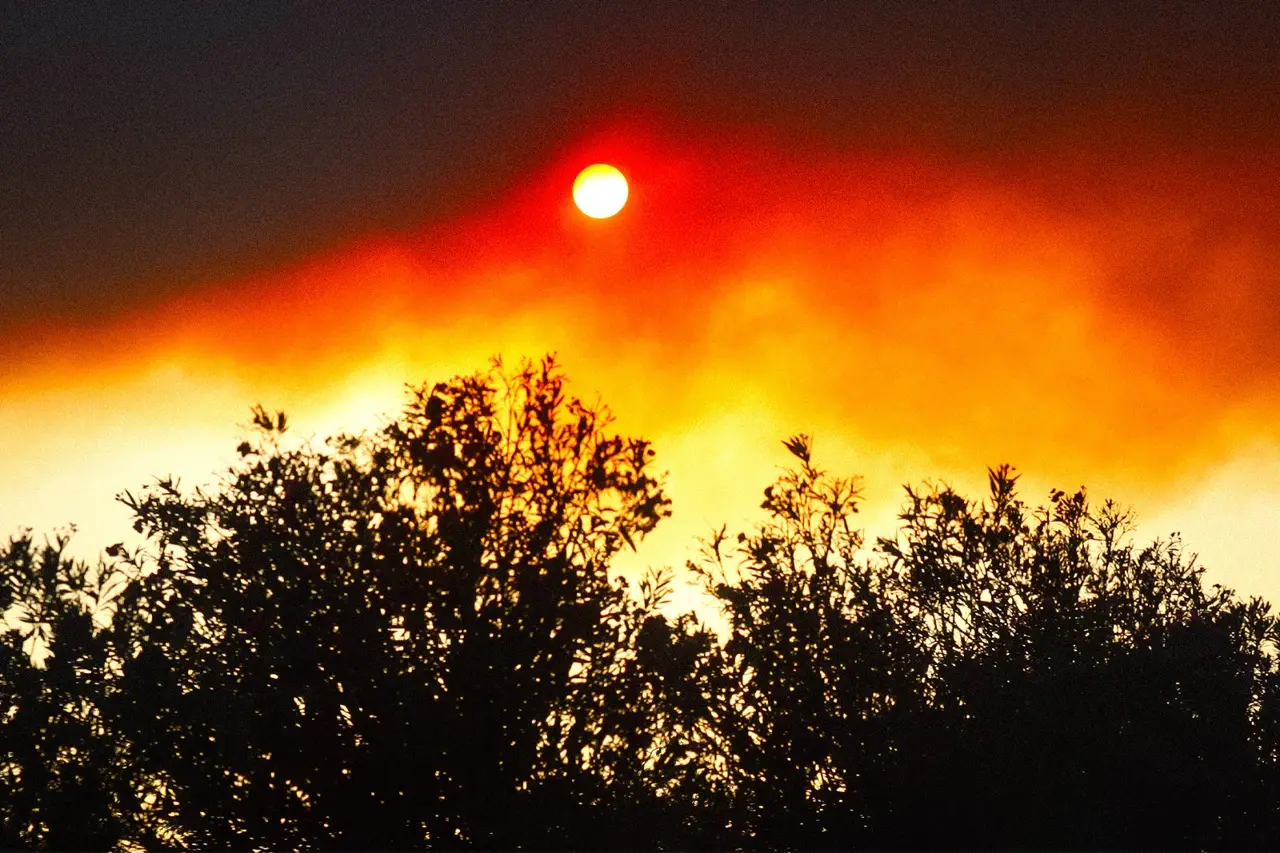
2026 is already set to be the hottest year on record so far, surpassing the record of 2024, which in turn had surpassed 2023. Europe, the world’s fastest-warming continent, was hit by four intense heatwaves this summer, coinciding with 35,000 ‘excess deaths’ above the average rate.
According to the World Health Organisation, in Europe 175,000 people already die every year due to heat-related causes. The additional 35,000 figure actually underestimates the excess deaths this year, as it only includes half of Europe, and doesn’t include figures from August, the true figure is said to be much higher.
This year, extreme wildfires have been responsible for burning nearly twice as many hectares as the 20-year average. In France, wildfires reached the edge of Paris for the first time, and in Gironde, the largest evacuation since the end of World War Two took place after an area of pine forest four times the size of Paris went up in flames.
Scientists are recording the highest-ever levels of sea surface temperatures across the world’s oceans, and ice is melting at record rates, piling up towards ‘tipping points’ where abrupt, irreversible changes to Earth’s ecosystem will happen. They are talking about the collapse of entire ecosystems.
These tipping points can interact and trigger another, sparking a domino effect within the environment. For example, the melting of the world’s permafrost regions releases trapped carbon dioxide and methane into the atmosphere, which fuels more warming in turn.
This is combined with the beginning of the El Niño weather pattern, where waters in the Eastern Pacific cyclically heat up and cause further heating around the planet. Climate change is causing this pattern to become more frequent and intense. This round is already set to be the strongest on record, and scientists predict that, as a result, 2027 will be the hottest year yet.
Then there are the events in Nepal. “The flooding in Nepal is like end of the world stuff. 100 foot wall of water just wiping everything out”. A short comment on social media aptly sums up the apocalyptic scenes that emerged at the end of August.
A section of glacier and bedrock seven football fields wide broke off from high on the Langtang Lirung peak, crashing thousands of feet to the valley floor. Water, ice, mud and rock churned into a maelstrom of liquid concrete which obliterated existing river gauges and weather stations, which might otherwise have warned communities downstream of the calamity coming.
This tsunami of mud could not be outrun. More than 1,400 people have been killed, and over 6,000 are still missing and may never be found, buried metres below mud or washed away as far as India. It destroyed hydropower stations responsible for at least 10 percent of Nepal’s total power generation – a key part of the economy. At least 20,000 homes now need to be rebuilt.
Thousands have been thrown into homelessness, destitution, and unthinkable personal calamity. “I feel life is meaningless now. Surviving feels miserable. I do not know where to eat or where to go”, said a survivor. Yet, this tragedy was avoidable.
Mountainous regions warm at a higher rate than surrounding lowlands, and the Himalayas are no exception: they have lost a third of their ice coverage in the last 30 years, and are warming 50 percent faster than the rest of the world. That is rapidly accelerating the melting of glaciers, many of which are perched high above steep river valleys lined with human settlements. In the region, 210 glacial lakes have been identified as a threat to settlements, as they are prone to overflow or collapse, leading to flash floods. But scientists say more lakes need to be added to this list.
Thousands have been thrown into homelessness, destitution, and unthinkable personal calamity / Image: fair use
In other words: the warning signs were clear that a disaster was just waiting to happen, and others are already in the making.
This is climate change transforming the planet before our very eyes. And it is poor countries, subservient to the interests of imperialist powers and predatory global financial institutions, who are being forced to bear the brunt of disasters with poverty and underdevelopment directly impacting the survivability of these disasters.
Many are absolutely disgusted by the inertia of politicians in the West who struggle to lift a finger to tackle the existential question facing humanity around climate change. But make no mistake: it is not because they simply haven’t heard enough about it or lack the political will to tackle it.
The ruling classes have been consciously preparing for this as the new normal, accepting the fate of millions of people and future generations to come. What we have witnessed in Nepal will not be a shock to these creatures.
Nepal is responsible for less than 0.1 percent of the world’s greenhouse gas emissions, yet it is now facing over $5 billion in repairing and rebuilding costs. Meanwhile, 100 fossil fuel producers are responsible for 71 percent of global greenhouse gas emissions. The United States alone is responsible for 24 percent of cumulative emissions since the Industrial Revolution, more than any other country.
So where does that leave Nepal? Supposedly, the UN ‘Loss and Damage Fund’ is here to help. But only $20 million (a fraction of what is needed) could be given to Nepal to cope with the damage, one board member of the fund scandalously suggested it turn to the World Bank for loans instead!
The absurdity of this is that the World Bank and Asian Development Bank account for 80 percent of Nepal’s debt to global financial creditors. So the ‘solution’ is for Nepal to take on more debt to the very institutions it is already indebted to, leaving even less room in the budget to spend on disaster relief.
Under capitalism, the people of Nepal – as in all dominated nations – are made to suffer all the more extensively because of these parasites.
Millions will be affected as these environmental shocks cascade. Droughts and reduced rainfall this year have already weakened harvests, and El Niño will exacerbate the problem, pushing a further 50 million people into ‘acute hunger’ from food prices soaring. In fact, a recent report predicts that this ‘super’ El Niño will be responsible for 450,000 deaths worldwide between the months of September 2026 and February 2027 alone.
It is hard to capture how devastating this situation is, coming on top of a tumultuous set of economic and social crises, where the poorest across society have already been facing increasing hardship. The Iran War, for instance, sparked price rises which have hit South East Asia the hardest so far – and this El Nino’s effects are going to be concentrated in this region.
What we have witnessed this year will therefore seem less dramatic compared to what lies ahead of us.
People are living through such climate disasters directly, or watching the footage online. The political establishment’s passivity in response is fuelling a growing anger and desire for revenge. A 17-year-old interviewed in France captured this mood back in July, speaking for millions of teenagers and young people: “I’m angry… There’s death everywhere, and no political action”.
A few months later, those same teenagers have done waiting for political action. Having sat through months of lessons in sweltering 40 degree heat, in overcrowded classes, without teachers, without air conditioning, without shade, watching death unfold in Nepal, able to smell ancient forests burning beyond the city limits – now these youth are taking matters into their own hands.
Meanwhile, the establishment in the West is more aware than ever of the threat posed to society by the climate crisis. But aware that no one believes them when they pretend they are doing something to halt climate change or mitigate its effect, they have stopped pretending. This is something that will be left in the past, just one more piece of the liberal establishment’s veneer is stripped away. They are busy instead preparing to protect their profits.
They have been warned for decades and didn’t do anything. Even at the supposedly ‘groundbreaking’ Paris Agreement negotiations, the goal of limiting global temperature rise to 1.5 degrees above pre-industrial levels was accepted, despite warnings that this very threshold, in and of itself, risked triggering multiple climate tipping points – risks that would only increase with every additional fraction of a degree! But they have largely stopped talking about this now.
Any semblance of international cooperation is being abandoned and replaced by a survival-of-the-fittest competition, with capital at the front.
The establishment in the West is more aware than ever of the threat posed to society by the climate crisis / Image: Janak Bhatta, Wikimedia Commons
JPMorgan – one of the world’s biggest banks – has a global head of climate advisory, whose leading article is summarised in the subtitle: “Climate tipping points are deeply uncertain but can have highly impactful consequences. How can they be better priced into financial decision-making?” This question, by the way, is all the more unsavoury when you consider that the bank is the largest financier of fossil fuel companies.
The UK’s largest pension fund, Nest, is investigating how tipping points will impact ‘portfolio resilience’ to review how it allocates its assets. Insurers are moving to secure their profits by hiking up their rates on the one hand, and on the other hand ditching ‘risky’ homes and tightening contract terms.
The picture is the same across the board: the capitalist class is concerned about the disruption climate change will cause within the global economy, hoping to shore themselves up against severe economic instability. It is just another thorn in their side, at a time when they are trying to protect their profits amidst deep instability and dislocation in the economy, with a slump on the cards.
In turn, governments are panicking and factoring in the effects of the climate crisis as ‘national security threats’: mass migration, conflicts over resources, political polarisation and the threat of social upheavals.
The former head of USAID is speaking about militarised borders:
“The United States is safer when the world is more stable… If the world is unstable, there are more refugees trying to cross borders, and eventually, maybe ours. Maybe American troops have to deploy. So dealing with natural and man-made disasters before they get out of hand is in the interests of the United States”
The British intelligence services released a redacted version of a report – months after it was blocked from publication at the last minute. This warns how exposed Britain’s food and fertiliser supplies are to global markets, it points out that “the UK does not have enough land to feed its population and rear livestock: a wholesale change in consumer diets would be required.”
It goes on to explain that, should food supplies become more scarce, there is a heightened risk of different states intervening to ensure their own food security, leading to greater “securitisation of and conflict over food and water”. Whilst it doesn’t explicitly say it – perhaps the non-redacted version does – the message of this report is clear: climate-related restrictions on food and other resources is a national security issue, and that military intervention may be necessary:
“All countries are exposed to the risks of ecosystem collapse within and beyond their borders. Some will be exposed sooner than others and are likely to act to secure their interests, particularly water and food security.”
It is not just the British intelligence services thinking like this. More than 70 percent of the world’s countries have listed climate change as a national security problem, and are undoubtedly factoring this into defence strategies. Indeed, the National Defence Strategy under Biden – before Trump came along and put climate change into inverted commas again – did just this:
“Insecurity and instability related to climate change may tax governance capacity in some countries while heightening tensions between others, risking new armed conflicts and increasing demands for stabilization activities.”
All of these examples show the real attitude of the ruling class. Whilst many of their political representatives pay lip service to tackling the crisis, the ruling class is fully aware of the impacts of the climate crisis and are actively preparing for it. They are preparing to maintain control – and keep a steady flow of profits – whilst facing deep economic, social, and political turmoil, all exacerbated by climate change.
But as the climate crisis gets worse, the ability of politicians to keep up a pretence of caring will be reduced as their hypocrisy is exposed further. For example, British Prime Minister Andy Burnham has been forced to pay lip service to fighting the climate crisis due to the events of this summer, but is also on the brink of approving a major oil drilling project in the North Sea, with his energy secretary saying:
“The North Sea remains a vital national asset, supporting jobs, growth and the UK’s energy security. We are clear that oil and gas will continue to play an important role in our energy system for decades to come, alongside transitioning to clean power to protect jobs and tackle the climate crisis”.
The establishment is walking on a tightrope. They can speak all they like about preparing for the future, but they will find it difficult to maintain control as the crisis deepens.
Climate anxiety is now a mass feeling amongst the youth. 60 percent of young people aged 16-25 are extremely worried about it, and 75 percent think the future is frightening. As a psychotherapist who specialises in climate anxiety put it:
“The younger generation can no longer envision the future, immersed in a world of successive crises – climate-related, but also geopolitical and social: it’s as if they have to mourn the loss of the future.”
These fears are only going to increase as the scale of calamity ahead becomes clearer. They are also wrapped up with all the other problems that people are thinking about: the cost of living crisis, Palestine, imperialist war, right-wing demagogues, and so on.
This mood has been forced to the surface before. The Fridays for Future movement, initially sparked by Greta Thunberg, galvanised 14 million people to take part. Direct action initiatives like Just Stop Oil and Extinction Rebellion also sprang up, with many brave and honest people who wanted to take matters into their own hands, rather than relying on politicians.
The struggle for a liveable planet for humanity is a clear part of the struggle for communism / Image: own work
The reason why these initiatives evaporated is because they were limited to ‘raising awareness’, ‘putting pressure on politicians’, demanding fossil fuel companies divest, and so on. This means morally pleading to the capitalists and their political ilk to come to the table for discussion – the very same people who have been busy signing the planet’s death warrant.
The root of the problem is the capitalist system, which is destroying the planet for the enrichment of a parasitic minority, whilst the rest suffer the dire consequences. The wealth exists to avoid all of this death and suffering; it is locked away in the banks and private tax havens of the ruling class.
That wealth could go a very long way in mitigating the human impact of these disasters – stronger early warning and mass communication systems, specialised disaster response units and better equipment to carry out prompt, well-coordinated rescue missions, are just some examples of what was denied to Nepal.
By expropriating this wealth held by the capitalists, the working class could plan the economy on the basis of need and begin to tackle the broader climate catastrophe. This is how we must make the ruling class pay for the destruction it has caused; not through moral appeals, but through taking the resources out of their hands. As we have previously written, this could be used to facilitate a green energy revolution to get rid of fossil fuels entirely and meet society’s needs without destroying the environment.
The struggle for a liveable planet for humanity is a clear part of the struggle for communism. With this perspective, the overthrow of capitalism will start to tackle the problem.