
World · In Defence of Marxism · · 1h
France: in the wake of 6 October – how can we win?
English (original) · Read in Deutsch ⇄
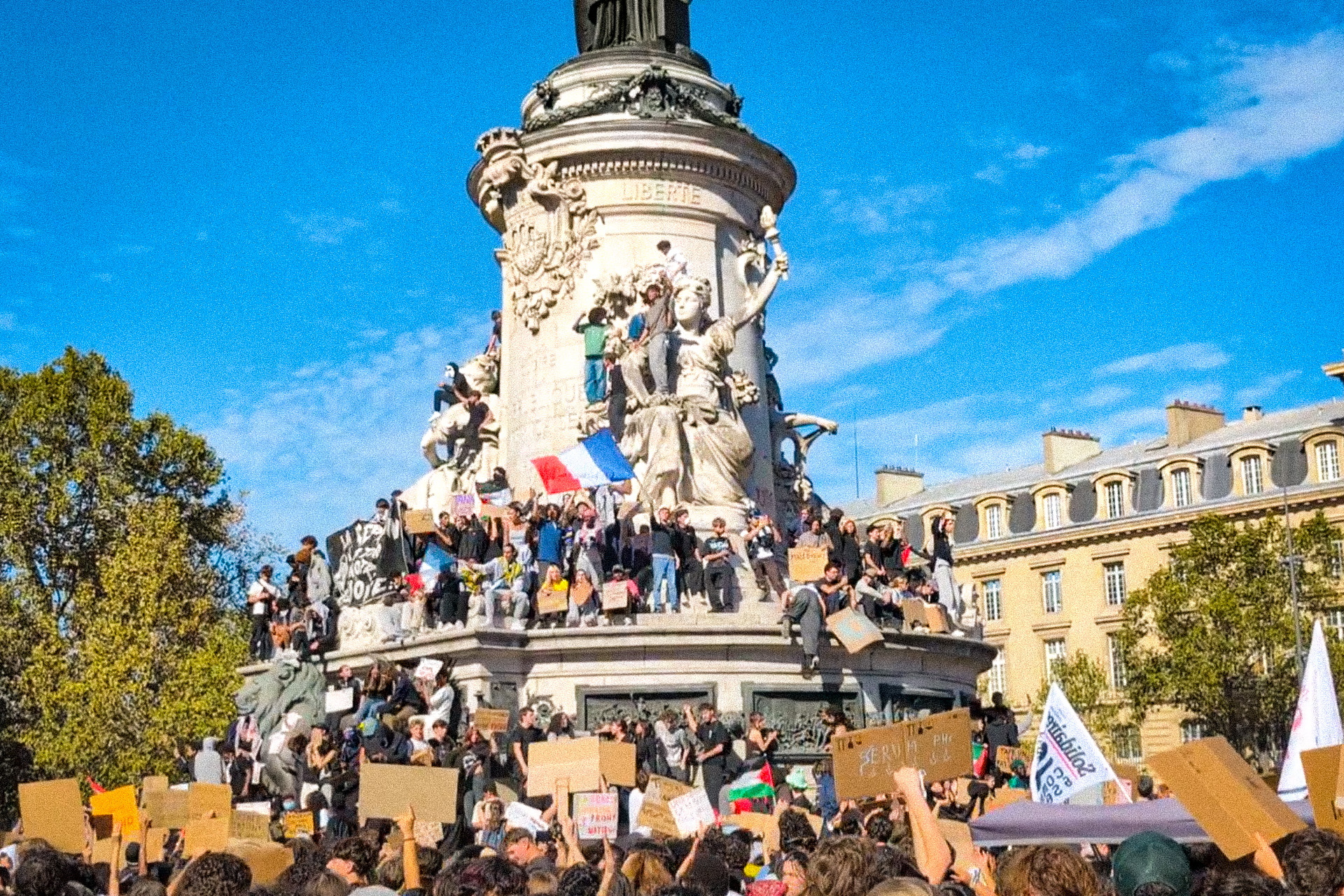
The demonstrations on 6 October were massive and highly radical. The hundreds of thousands of young people who mobilised across the country demonstrated that their movement is far from having exhausted its reserves of fighting spirit. The workers and parents of students present in the marches contributed to making this day a true show of strength.
[Originally published in French at marxiste.org]
A new general mobilisation is planned for 8 October. For its part, the government is demanding the swift organisation of a ‘half-day of non-curricular activities’ in high schools, in order to foster ‘student democracy’. Outraged by the police brutality of the last two weeks, many teachers and headteachers take a very dim view of these ‘democratic’ directives from Prime Minister Lecornu and Education Minister Geffray.
A half-day of ‘student democracy’ imposed with truncheons and ‘flash-balls’ as pupils leave school would be an unprecedented provocation. Whilst discussions may indeed be organised in some high schools, these will often take the form of general assemblies preparing the next stages of the struggle.
In the coming days, the government will combine this sort of manoeuvre with empty promises, symbolic ‘concessions’, and relentless police repression. In other words, it will play the waiting game, hoping the movement will wear down until the school holidays.
We must face the facts and fully appreciate the balance of power at stake. Either the high school and university student movement is backed by a mobilisation of the working class through a powerful movement of renewable strikes, or this magnificent mobilisation of young people will eventually peter out without having secured any of its fundamental demands.
Any other prospect is illusory in a context where the government has only one thing on its mind: trying to contain the public debt crisis by demonstrating to the financial markets that it is capable of imposing a drastic austerity programme.
The hundreds of thousands of young people who mobilised across the country demonstrated that their movement is far from having exhausted its reserves of fighting spirit
The ball is therefore in the court of the major organisations of the labour movement. Yet once again, their official leaders are doing everything they can to not mobilise the workers. On the eve of 6 October, the leaders of the main trade union confederations signed a joint call “to strike and demonstrate on”… 5 November!
This is exactly what the government expected of them: a call for a cross-sector mobilisation set far enough in the future to isolate the youth movement for the time being. Another favour done for the government: the statements from trade union leaders still make no mention of 17 October – a date everyone has in mind, and which could mark a fundamental step in the development of the struggle.
The CGT leadership states that, between now and 5 November, it “will continue to stand alongside young people and to increase mobilisations”. In other words, it will call on workers to join this or that demonstration by school pupils and students.
But how can workers – and not just union activists and staff – take part en masse in the youth mobilisations if they are not themselves on strike? Sophie Binet (CGT) does not ask this question, because the fact is that she doesn’t want to mobilise workers.
The date of 5 November has only one purpose: to try to prevent the youth movement from spreading to the main forces of the working class in the coming days. Many young people, workers, and trade union activists understand that this is nothing short of sabotage. They already had the bitter experience of this in September 2025, when trade union leaders did everything in their power to contain the ‘let’s block everything!’ movement – and they succeeded.
The only way to prevent them from succeeding again is to develop grassroots organisations of struggle, on the initiative of the most militant elements of the youth, the left, and the trade union movement.
Faced with deliberate sabotage by the trade union leadership, cross-sector general assemblies involving mobilised young people would make it possible to draw a growing number of workers into the struggle.
In universities, general assemblies open to high school students and workers must aim to broaden the movement’s base and practically organise the mobilisation of young people towards workplaces, railway stations, public services, and so on, with the aim of encouraging employees to take action. During the major movement against the First Employment Contract (CPE) in 2006, this strategy was one of the keys to victory.
The student movement must urgently return to these methods of struggle!
Read the full story at the source
Source: In Defence of Marxism