
World · In Defence of Marxism · · 2h
2nd Congress of the Revolutionary Communists of Chile: a major step forward
English (original) · Read in Deutsch ⇄
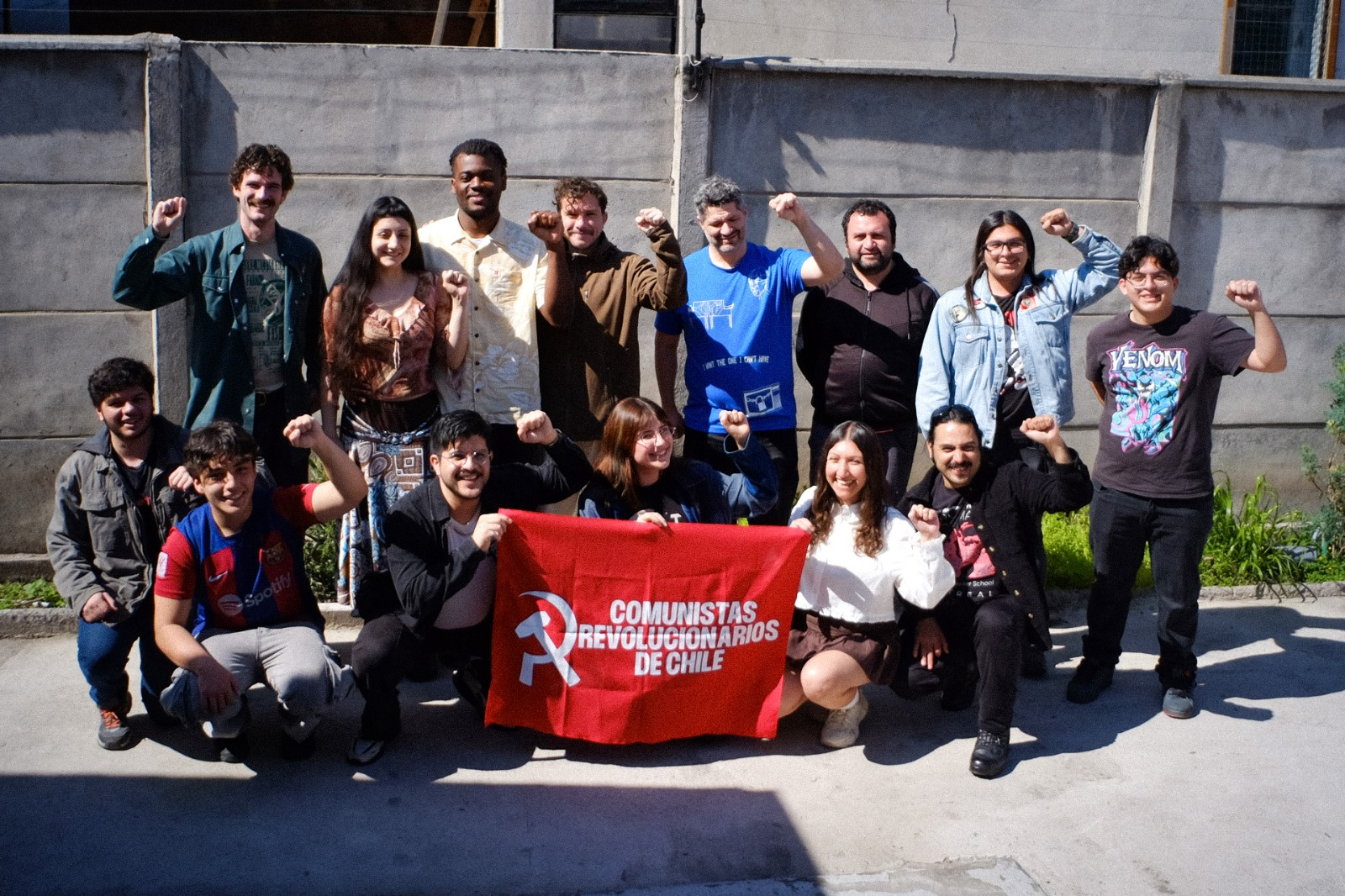
On 5 and 6 September, the 2nd Congress of the Revolutionary Communists of Chile was held in Santiago, with 17 comrades attending from Santiago, Coquimbo, and San Bernardo. This event took place during the strongest period of development that the Chilean group has ever experienced, and has prepared us to take a significant step towards building the forces of revolutionary communism in this country.
Against a backdrop of great turbulence, on the first day of the Congress we discussed the current situation facing the world in general and Chile in particular. Comrade Sylvia Léo, from the International Centre of the Revolutionary Communist International, introduced the discussion on the world today, focusing on the impact the crisis of capitalism is having on the consciousness of the masses.
We have witnessed, in one country after another, phenomenal revolutionary outbursts, led mostly by the youth, who feel as though their future has been taken from them. From Sri Lanka and Pakistan to Peru and Bolivia, masses of young people and workers have taken to the streets to express their rage and their disgust towards the system. The main limitation preventing them from achieving their aims has been the lack of revolutionary leadership – a party to show the way forward. This is what gives us a sense of urgency for our task of building a genuine revolutionary international.
Comrades discussed the relative decline of US imperialism and the decay of the European ruling classes, which find themselves threatened by emerging imperialist powers such as Russia and, in particular, China. The days of undisputed US domination are now over. Inter-imperialist squabbles are giving rise to fierce military conflicts, as we have seen in Ukraine and Iran; trade wars that particularly affect the most economically backward countries; and a furious struggle over the division of markets in every corner of the world.
This manifests sharply in Latin America. This region has been deeply impacted by the Trump administration’s ramping up of the Monroe Doctrine, with which it hopes to keep ‘non-hemispheric actors’ – that is to say, Chinese interests in the US’ ‘backyard’ – at bay.
This has taken the form of increasingly aggressive US intervention in Latin American countries, such as the scandalous subjugation of Venezuela following Maduro’s kidnapping, and the ongoing criminal blockade against Cuba. Other countries in the region are under increasing pressure to comply with US interests; punished with tariffs or manipulated through bailouts – as is the case with Argentina. At the same time, the US is also seeking the complicity of ideologically aligned governments, including the reactionary Kast government.
View this post on Instagram A post shared by Organización Comunista Militante (@org_comunista_militante)
Moving on to the perspectives for Chile, comrade Carlos Cerpa explained how the bankruptcy of reformism – which had emerged triumphant from the 2019 uprising – and the failure of the constituent assembly referendum, paved the way for a reactionary and demagogic government such as that of Juan Antonio Kast.
Gabriel Boric’s previous administration, in fact, paved the way for the right wing through a series of laws aimed at restoring bourgeois institutions that had been completely discredited in the eyes of the masses. The tools of repression – the police and the armed forces – were strengthened, protests were criminalised, the demands of the Mapuche people were repressed, and even high school students were subjected to heavy surveillance. At the same time, Boric consolidated the much-hated, starvation-level private pension system and decisively aligned himself with the US in its foreign policy.
With his path to power having been cleared, President Kast has doubled down. Like an obedient lapdog, he wasted no time in answering his master’s call to take part in the ‘Shield of the Americas’, alongside other subordinate American governments, such as Argentina, Bolivia, Peru, Ecuador, Colombia, El Salvador and Honduras. The Shield of the Americas is a charade organised by Trump which, under the pretext of combating drug trafficking and migration, forces these countries to establish intelligence cooperation and increase their military budgets to defend US regional interests. The US ambassador to Chile openly admitted that implementing the Donroe Doctrine “becomes very easy when we have administrations such as that of President Kast”.
However, Kast’s subservience was not enough to prevent the US from imposing a 12.5 percent tariff on a range of key goods in Chile, as a means of exerting pressure on the government to block the import of Chinese products and capital. This has created a rift within the Chilean capitalist class between those who benefit from trade with the US and those who benefit from China.
Subordination to US imperialism cannot offset the importance of economic relations with China, the main destination for Chilean exports. Moreover, as in other countries in the region, China has already begun to invest large sums in crucial sectors of the Chilean economy, such as lithium and rare earth mining, telecommunications, transport and energy.
Whilst Kast clumsily attempts to appease both factions of the Chilean bourgeoisie, the voracious imperialist powers are relentlessly preying on the Chilean working class. The projects pursued by the imperialists have damaged the environment and local communities across the country.
There is no doubt that the foundations for a new social explosion is being laid. The economic crisis has trapped the government in a dead end. On the one hand, public debt is at a record high and is rising, to which the government’s response has been a programme of unprecedented austerity.
On the other hand, the country is in a recession, with two consecutive quarters of zero economic growth, and unemployment soaring to almost 10 percent – over 20 percent among young people. With inflation at four percent, exacerbated by a sharp rise in fuel prices, the Central Bank’s room for manoeuvre is minimal; yet the government refuses to provide economic aid for the masses
Instead, it is seeking to encourage investors through a sharp reduction in tax rates, a relaxation of environmental regulations, a reform of the capital markets, and a labour flexibility plan.
The burden of the crisis is falling increasingly on the shoulders of workers, and this weight will be even greater once the austerity measures and the drive towards precarious employment come fully into effect.
View this post on Instagram A post shared by Comunistas Revolucionarios de Chile (@comunistas_revolucionarios_cl)
Anticipating a major mobilisation of students and workers, Kast is attempting to push through a package of repressive measures in parliament – where he lacks a clear majority – under the pretext of combatting organised crime. Faced with a rapid decline in his approval ratings, the government is seeking to galvanise its support base and capitalise on public perceptions of the security crisis.
These measures include a new state of emergency akin to martial law, the persecution of organisations arbitrarily labelled as ‘terrorist’, a “register of vandals and acts of incivility”, and the loss of social welfare for those who commit offences. These would be in addition to the Protected Schools Act, which allows educational establishments to search pupils’ bags and personal belongings.
It is the students who have taken the lead on the streets against Kast. Students, organised by ACES (Coordinating Assembly of Secondary School Students), have been at the forefront of the demonstrations since Kast took office. They have protested against cuts to public spending on education and the Protected Schools Act, but also against rising prices. Their programme aims to reach wider layers of the working class, and their slogans offer a class perspective: “Let Kast and the bosses pay for the crisis, not working-class families”.
They are a positive example of what a determined leadership can achieve. Now the Confederation of Chilean University Students (CONFECH) has joined this movement.
Resisting Kast’s attacks and organising mass mobilisations that pave the way for a major national strike could be the key, not only to the reawakening of the student movement, but also to for the working class to start moving, shifting the balance of forces in its favour.
In recent years, the masses of young people and the working class in Chile have demonstrated their capacity and willingness to fight to radically transform their living conditions. What has been lacking is a conscious revolutionary leadership, capable of leading them to victory through the working class taking power.
On the second day of the Congress, we discussed the development of our organisation and the challenges that lie ahead. Our group is in very good health. Over the course of a year, we have grown from four to 11 active members in Chile, and we have recently attracted a number of very promising school students.
That morning, we took part in the march to commemorate the coup of 11 September, proudly waving the RCI flag. The history of Chile is full of lessons learned through bloodshed and suffering. This makes the need for a genuine revolutionary leadership very clear, and makes our Congress very meaningful and concrete.
At the Congress, we formalised the major step of organising into three in-person branches: Santiago, San Bernardo and Coquimbo. We elected the leadership bodies that will bring cohesion and guidance to the group in this new phase.
The opportunities offered by this new period were highlighted by comrade Alejandro Spezia, from the Argentine section of the RCI, Organización Comunista Militante, who visited us and shared the experience of their recent growth.
The task of the Revolutionary Communists of Chile in the coming period is to train up cadres who can consolidate the organisation’s organic growth. We emphasised that we must reach out to fresh sectors of the youth who are seeking a revolutionary alternative, who are not weighed down or disheartened by the defeats of the previous period; we must train and educate them seriously in Marxist theory.
We must also participate, to the extent that our forces allow, in youth mobilisations, always looking to identify those more advanced layers of young people, who look beyond mere activism, who seek a revolutionary theory to understand the world and transform it.
We then committed to organise a bold recruitment campaign at the start of the new school term in March, planning a summer school to introduce new contacts and comrades to the fundamentals of Marxism, so that they can play a decisive role in the campaign.
Finally, this growth must be accompanied by a constant professionalisation of our various areas of work, including the quantity and quality of the articles we produce for our website marxista.cl – a necessary step towards eventually launching our own newspaper.
The Congress carried a strong emphasis on the revolutionary optimism amongst our comrades, an optimism that flows from our perspectives and our confidence in the ideas of Marxism. What we offer to Chilean youth and workers is the powerful legacy of Marxism and an international organisation with clear ideas and perspectives to navigate the turbulent capitalist crisis. It falls to each and every one of us to ensure that this work is carried out immediately, without hesitation and with the absolute conviction that we will succeed.
Forward with the building of the forces of revolutionary communism in Chile!
Read the full story at the source
Source: In Defence of Marxism