Politics de.indymedia
Do you remember October 17th?
Considerations and suggestions for the movement The blockades at high schools continue, despite the government's propaganda about the "declining of the movement" with which it wants to urge resignation
Deutsch (original) ·Auto-translated to English
 Symbolbild · Leonhard Lenz / CC0 · Wikimedia Commons
Considerations and suggestions for the movement
The blockades at high schools continue, despite the government's propaganda about the "weakening of the movement" to encourage resignation. In the week following the autumn holidays, dozens of high schools were blocked, despite the change in repressive policies aimed at lifting the blockades at any cost, intimidating students and despite the manipulations of the school authorities, who declare that a school is not considered blocked once there are 15 students in it. The practices that have characterized the radicalism of student struggles since September have not disappeared. As before the autumn holidays, which could have brought everything to a standstill, entrance gates burned, fireworks were set off inside the schools, school principals were attacked and schools were set on fire, as in Toulouse or Lyon. However, looking beyond the gates of the high schools, little has happened since October 17th - or rather, what is happening could, unfortunately, herald a slow death of the current struggle, which would be decided by the unions, content with the few concessions granted by the state, with everyone agreeing to defuse the conflict situation and "carry over" the revolt into the 2027 election campaign (that is, to go home and vote). to return to the deadly normality of before).
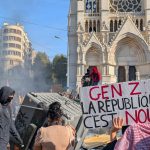
October 17th was the occasion for a huge escalation of the revolt and made it possible to expand the struggle to a certain extent on the question of everyday life under capitalist rule, which could be summarized as follows: more and more exploitation, more and more authority, less and less coal to live on. This day marked the entry of numerous people into the fighting, which gave a new dimension to the struggles initiated by the students, and witnessed a significant breach of the external (order forces) and internal (unions, parties, democratic peacemakers) framework conditions. Since then, on the days of mobilizations, it has been difficult to recapture the destructive energy of the 17th, which had then spilled uncontrollably onto the streets. The 24th and 31st gave the state an opportunity to flex its muscles and the left an opportunity to regain control of the movement as a whole by calling for calm and discipline from all. November 5th and 7th were no different. Apart from a few clashes and a few barricades that didn't really go beyond the usual, demonstrations across France were orderly or almost completely suppressed. It seems that October 17th was a turning point in dealing with the maintenance of public order. After the state initially tried to slowly fizzle out the movement through official closures of high schools and universities as well as scattered demonstrations, since then it has opted for brute force and is now taking an all-round repressive approach.In addition to the extremely harsh criminal law measures, numerous police officers are sent to high schools to break up blockades at all costs and to intimidate the demonstrators; Student occupations are evacuated very quickly, and the demonstrations serve as a show of force with mass arrests and beatings. The goal is clear, it is always the same: to scare everyone, create a feeling of powerlessness and drive everyone home. But it is clear that these obfuscation tactics, bordering on the Coué method (“only 20 blockaded high schools left in the entire national territory”, although each of us already knows about twenty), must only be effective in the short term and have an immediate effect on the return to normality, otherwise it will be noticed. The momentum of the student movement can easily defeat these tactics...but for that to happen it must endure and grow stronger.
Outside of high schools, most of the mobilization today takes place at union demonstrations, since the movement has been reduced to what is classically known from left-wing social movements. These demonstrations, which take place at set intervals, are closely monitored and effectively controlled by the police. Calls on social networks to gather at places other than the legally registered meeting places fizzle out. The student occupations largely take place in the form of “people’s universities,” which merely replicate the self-governing version of the university. October 17th is over and was a huge liberation from the sadness that this election year had put us in. But it is in vain to believe that we can revive this day out of nostalgia under the same conditions, because the state knows how to adapt its regulatory measures (and it has shown us this since then). The continuous expansion of the struggle only takes place if there is a constant reinvention and adaptation of fighting practices - as a counterweight to the equally constant adaptation of state repression and internal control. We must recognize that up to now the state has been able to adapt in the face of the recent mobilizations, while on the other hand, a large part of the struggle on the streets has calmed down and is obediently led by the reformists. In summary, apart from the protests in front of universities, it is really starting to look like a classic social movement led by the left-wing forces, and October 17th seems to be a long time ago... That is the state of things.
What can those who want to help overcome this situation do in the face of this relative impasse on the road?
If the history of struggles has taught us anything, it is that a standstill in the constant expansion of the struggle means the death of movements. It is also clear that, despite their collective determination since the end of September, students' persistence may be reaching its limits in the face of repression and pressure to return to normality (from parents, teachers, etc.). It is equally obvious that nothing can be expected from the demonstrations negotiated between the prefecture and the unions, since on each of these occasions the latter clearly show to what extent they are and always will be the defenders of the existing order. Now that the state has openly called on them to help control the demonstrations after the riots on October 17, the latest circus surrounding bans on demonstration routes can no longer fool anyone. Focusing on registered demonstrations or gatherings always means creating favorable conditions for maintaining public order. The diversification, the variety and the heterogeneity of the initiatives, on the other hand, make the work of the cops more difficult and make it possible to multiply the zones freed from their control, to tackle what suits us at the moment. The difference between October 17 and the mobilization days that followed is a glaring example of this. Everyone knows that, and everyone says that. Everyone also knows that orderly demonstrations are of no use except to foment discouragement, and everyone says so (in recent weeks there has been increasing criticism of the unions, which are accused of collaboration and of playing the role of auxiliary forces to the forces of law and order).However, given the failure of the rallies organized at random on social networks, quickly banned by the authorities and prevented by the police, many feel compelled to go to these trade union demonstrations every new day of action, and the dissatisfied are limited to trying desperate maneuvers with a few people to disrupt the start or divert the demonstration. So something else has to happen.
So something else has to happen other than the blockades (which of course have to continue!) and the orderly demonstrations if we want to hope that this phase will gain intensity. What could this “something” consist of? Here we can formulate some very general suggestions aimed at all those who wish to sharpen the existing contradiction between the tendency towards direct action and the sudden conflict with power, on the one hand, and the reformist tendency, its demands, its representations and its institutional structures, on the other.
Logically, the first concrete proposal that could be made to get out of the current situation would be to try to move the mobilization out of the orderly demonstrations - through occupations, blockades (the students have tried to block streets and arteries on several occasions in Paris and elsewhere), through flooding of public spaces, as well as through potentially smaller, undeclared but offensive demonstrations, and to try to reach the concrete apparatuses of power (and not the "symbolic places of power", which are inevitably overprotected). The specific power apparatuses mentioned above are those that contribute to the return to normality and the smooth operation of the repression: institutions of justice, public order, employment services and social inclusion, education, and many others. This would also go hand in hand with the perspective of not allowing the union leaderships to impose their pace on the movement and not to be guided by their schedule of sporadic struggles. Another proposal, which does not contradict the first, would be to take part in the mobilization days, but at the same time try to derail the demonstrations - either from the beginning, by preventing them from being peaceful, or during their course, by trying to create an alternative route and thus create a pull for all those who want to break out of the soporific framework of the announced demonstration.Or, as has already happened several times during demonstrations in Paris and elsewhere, staying near the end point of the demonstration and moving through the city in a disorganized procession at the appropriate time. How could these suggestions be implemented? It seems clear that some of these - unless one is under any illusions - are very difficult to realize by a few individuals alone. They require a kind of coordination, exchange, perhaps even broader organization in open and collective spaces to bring together all those who might be interested in such initiatives. In the current phase, however, it seems as if there are no or far too few spaces in which people organize themselves without leadership and with offensive goals.
Of course, as in any movement, there are organizational habits that have demonstrated their effectiveness to some extent in helping to bring about what we saw on October 17th and, to a very different extent, in the demonstrations that have followed since, whether these groups were people used to organizing together or spontaneously formed groups of students. There were also some fairly large gatherings or student gatherings on October 17th, which were, as usual, undermined by university management and by Trotskyist and union infiltrators. On the side of those who organized themselves outside the parties and unions, there was almost nothing, apart from the usual affinity structures. Given the situation we find ourselves in, are these enough to do anything other than reproduce the practices that already exist in the movement? The challenge of maintaining and expanding the window of freedom opened in the current phase is too important to be complacent.
To say that something needs to be done on a large scale, without making room for discussion and organization of the initiative, is often just a pious wish - a mere call into the void, hoping that what you are calling for will miraculously come true, like a prayer to the good Lord. Also the calls on social networks - "Tomorrow we have to redirect the demonstration, we won't let the unions lure us into a trap", "We have to form small, mobile groups, people, think about the 17th." – are nothing more than letters in a bottle that always go unheard. These calls are in no way sufficient for the experiment to actually take place, let alone for it to be successful. One cannot rely on a mythical belief in coincidence that on such a date a community of like-minded people would form to act in unison. We believe neither in magic nor in providence nor in superstition. Pure spontaneity is always mythologized. People act based on a wish, a plan or a consideration and organize themselves accordingly, although the form of organization can be very different depending on the case. It is impossible to pinpoint the reasons why the widespread rioting occurred on October 17th, other than in part due to the likely assessment of the law enforcement forces, who clearly were not present in sufficient numbers in the right places. But these law enforcement officers could just as easily have been completely overwhelmed without anything having happened. What is certain is that October 17th did not come out of nowhere.It was borne out of the weeks of unrest triggered by the struggle of students and all those who took part in the blockades and demonstrations (without all of them being students), and benefited from the organizational forms that were established, which were diverse (affinity-based organizations such as small or large snap groups, meeting-like spaces among students, coordination committees between several schools, etc.), the common denominator of which is: to be absolutely independent of union structures (in contrast to the students). These more or less organized forms met many others and also people who had perhaps originally come with a completely different purpose (to march or demonstrate without having very specific ideas), but who, given what surrounded them, changed their plans and joined everyone else in the happy chaos of that day.
Incidentally, it is not about opposing affinity practices to open organizational structures. Both can complement each other. As already mentioned, the diversity and heterogeneity of practices remain crucial, especially when they are interconnected and make it possible to combat the maintenance of public order more effectively. Collective and open organizational spaces can help create habits and trust between those who organize there; these can be used in affinitarian practices and vice versa - with the aim of not just finding three or four comrades-in-arms, but of raising the general level of practices across the entire struggle and helping to raise it to a new level of conflict intensity. However, without open and accessible collective spaces - especially in a simmering time like this, when many are looking for spaces to deepen their engagement after joining the struggle and many are disillusioned with the various leadership structures - and if only the affinity network remains, we are doomed to be just a few small groups here and there trying to open gaps that are very quickly closed again by the framework and repression. If we want to regain the freedom we had on the streets on October 17th, we will not do so by repeating exactly the same thing as that day - because the state has adapted since then.
This perspective of finding ways to continue and thereby overcome existing practices, although limited, remains crucial. Creating the possibility of creating open and accessible framework conditions in the course of the movement and at its destination is in itself a suggestion that we could obtain the means to implement. The first challenge is always not to allow ourselves to be kept on a short leash, not to become little soldiers of causes that are not our own, and not to settle for the militant rut that the leaders are pushing us into. The second challenge is that those who have proposals for engagement - for example the proposal we are talking about - do not subsequently become stewards of the place and of the discussions and the practical initiatives that might arise from them; otherwise we would simply reproduce authoritarian practices and consider ourselves to be a politburo that anticipates what the movement will become. One would therefore have to be able both to take the initiative to make this proposal possible and to enable those who would subsequently engage in it - that is, that hitherto dispersed offensive part of the movement that would find the opportunity to elaborate and put into practice the proposals put forward by one or another - to take on this task in a self-organized and autonomous way.Undermining the repressive measures and overcoming the union framework means gaining the means to self-organize against this framework in order to develop intervention proposals that can adapt to the developments of the offensive and repressive context in order to reinforce them and allow them to continue beyond the looming, pre-programmed end.
The revolution is far too ambitious and serious a prospect to be content with betting on a mythical, uncertain “Great Evening” in which everything would magically fall into place and the various frameworks would collapse by themselves – or almost by themselves. Organizing collectively to try to uncover the possibilities for breaking through this framework therefore seems to be the least we can do to hope for an intensification of conflicts in the near future, so that the struggle may never stop again.
As for concrete answers to reinforce the rupture in the current phase, these will be found (or not) in and through the struggle. This text is simply a contribution to stimulating the debates that will make it possible to find these answers.
This text was distributed as a brochure and also published online on sans contrôle. Bonustracks has translated the text into German.
https://sanscontrolerevolution.wordpress.com/2026/11/12/do-you-remember-...
https://kontrapolis.info/wp-content/uploads/2026/11/manifestation-17-oct...loading="lazy" decoding="async" src="https://kontrapolis.info/wp-content/uploads/2026/11/manifestation-17-oct...width="150" height="150" alt="manifestation-17-octobre-2026-7-1280x853.jpg" style="display:inline-block" />
web address: https://kontrapolis.info/18989/author/group: Anonymousfeed-date: Tuesday, November 17, 2026 - 08:15