
Politics Green Left (Australia)
Labor and One Nation compete to arrest their way out of a mental health crisis
More police is the one thing Victorian Labor and One Nation agree on. But it is a band-aid on a wound neither wants to acknowledge, argues Maharnav Bhuyan .
English (original) ·Read in Deutsch ⇄
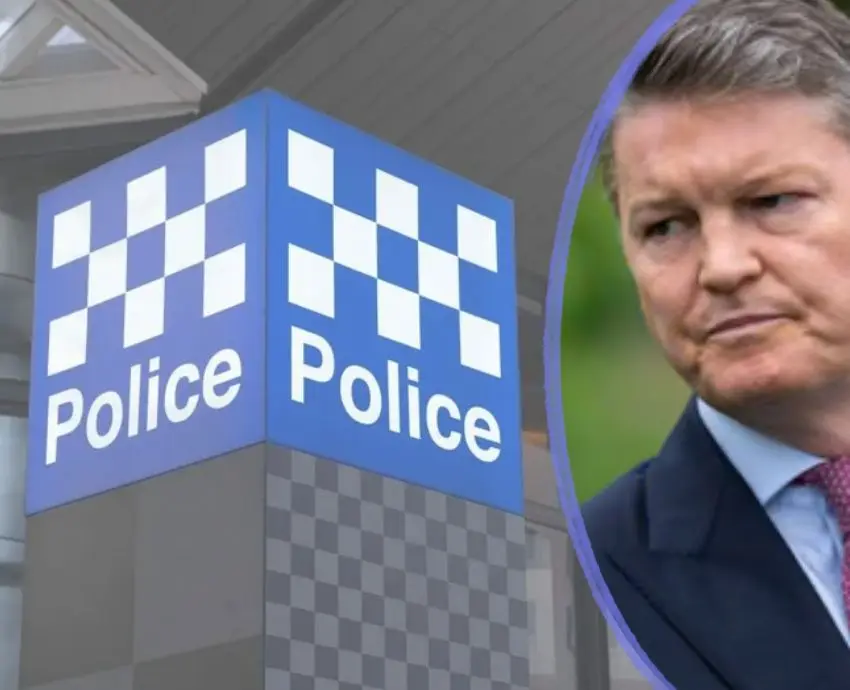
Labor and One Nation agree on almost nothing, with the exception being on crime, where they read from the same script.
Premier Ben Carroll wants 1500 more police. One Nation wants more police, harsher treatment of repeat offenders and a 24/7 bail court. Its campaign launch promised to make Victoria the toughest state on crime. The Coalition has simply raised the bid to 3000. Labor's Attorney-General insists “tough bail is working”.
Victoria has run this experiment before. Labor funded 3135 more police between 2016 and 2021. Over 2024-25, the number of criminal incidents hit its highest level since records began.
Ask Victoria Police what drives crime and the answer reads like a social policy brief.
In June, it named the cost of living, recidivism, organised crime and drugs. In September, it listed organised crime, recidivism, mental health and illicit drugs.
Who ends up on the inside? In the latest national survey of people entering prison, from last year, 51% had been diagnosed with a mental health condition and 73% had used illicit drugs in the past year. In the month before prison, 43% were homeless and 46% were unemployed.
These statistics show that rather than being hardened criminals, prisoners are people who have been failed by a squeezed economy, a broken health system and by communities with nowhere to turn.
When people do reach out, the door is often shut.
About 4550 Victorians were waiting for drug and alcohol treatment on any given day last year. In June 2025, 14 men sat in custody waiting for a bed at Thomas Embling, the state’s secure psychiatric hospital. Victoria’s own royal commission found the mental health system had “catastrophically failed”.
On November 6, HungryPanda rider Feng Jianming was stabbed to death near the Queen Victoria Market. He was 47, a father of two, and had spent nine years working here to support his family. A second rider was seriously injured.
Roberto Urbano, 51, has been charged with the murder. He is presumed innocent, but the court has already seen something every politician promising more police should think about. Urbano’s lawyer told the court that he experiences schizophrenia.
Appearing by video link from a police cell, in front of a magistrate, Urbano stood on a stool and exposed himself to the courtroom. Police custody, a camera and a magistrate; there is no more heavily-policed place. If the law cannot reach a person in that state, another 1500 police officers on the street certainly will not.
People in a mental health crisis need care; they need treatment before things fall apart. Was Urbano seeing a doctor? Did he have somewhere safe to live? Those are the questions this case should prompt every party running in the election to answer.
None of this means people with mental illness are dangerous; they are several times more likely than others to be assaulted.
The lesson is simple: A society where vulnerable people can ask for help and get it is a safer society.
Instead, the money flows to prison cells. Since Labor’s “toughest bail laws in Australia” began in March last year, the prison population has grown by about 19%.
This year’s state budget found $229 million for new prison beds and $43 million for programs that keep people out of them.
Each prisoner costs the public purse almost $600 a day and more than a third of those released are back inside within two years.
One Nation’s other big idea — tougher sentences — is weaker still.
The Coalition offers more of the same. Opposition Leader Jess Wilson’s 3000 extra police would include recruits from Britain, Ireland and New Zealand.
The Coalition also promises a “one-strike” bail rule for serious offences and has promised to expand Adult Time for Violent Crime from eight offences to 20. Youth diversion gets a mention after the police, bail and sentencing pledges.
The Victorian Sentencing Advisory Council found that longer prison terms do not produce a matching increase in deterrence. A longer stretch inside does not treat what it was that put the person there.
You cannot handcuff the cost of living. You cannot arrest a mental illness.
This is not a call on parties to be “soft” on crime. It is about being more serious about crime prevention. That means funding mental health and drug treatment until the queues disappear. It means building the forensic beds, called for by the royal commission. People leaving prison need secure homes to go to. Nationally, a third expect to be homeless on release.
There needs to be investment in the struggling suburbs and towns, where disadvantage and prison admissions pile up.
Before buying another 1500 uniforms, find out why people end up in a cell.
Victoria should fund an independent, ongoing study that asks thousands of people in its prisons what went wrong in their lives, and tie prevention budgets to the answers.
Communities have shown another way. In Bourke, in north-west NSW, the Aboriginal-led Maranguka project, guided by the Bourke Tribal Council, has spent more than a decade shifting the focus from punishment to community-led solutions.
Labor and One Nation are selling the same police band-aid, but in different colours. Until we ask why are people ending up in a cell, the public will keep paying for more cells and more cops, and there will be more grieving families.
Before November 28, ask your candidates one question: What will you do before the crime, not after it?