
World Green Left (Australia)
Doctor says Israeli cluster bombs, with Australian tungsten, are targetting Palestinian children
Dr Farah Abdul Aziz, Perth-based general and breast surgeon, who volunteered twice in Gaza, spoke to Cas Smith about the harrowing experience and Australia’s complicity in Israel’s genocide.
English (original) ·Read in Deutsch ⇄
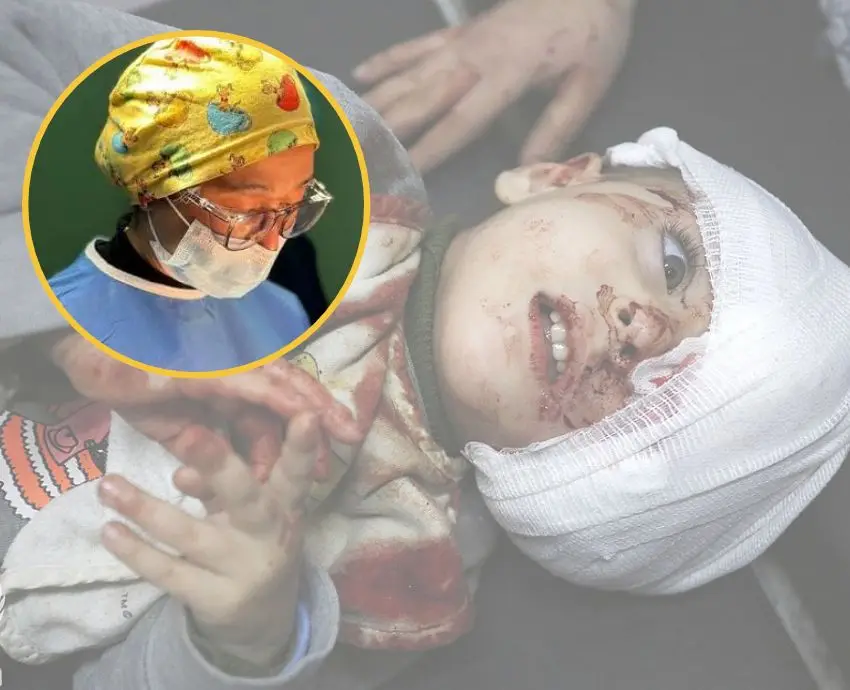
Dr Farah Abdul Aziz, Perth-based general and breast surgeon, volunteered twice in Gaza, including a harrowing period of service in the enclave’s “red zone” from December 2024 to January 2025.
Aziz told Green Left that working in the north of Gaza was “just awful”.
“There were just continuous attacks across the zone from sundown to sunrise, and even during the day. Medical staff could not go out of the hospital at all, because we could easily get bombed at any time.”
Aziz, a member of Palestinian Australian New Zealand Medical Association (PANZMA), was largely tasked with treating head, abdominal and chest injuries.
“The patients I received were the ones who had just survived the blasts that we were hearing all night. It was usually multiple shrapnel injuries, but they were still alive. Then, during the day, it would be single-shot bullet injuries.
“Because I’m not a neurosurgeon, I didn’t treat children who had received a single shot to the head, but I still saw them when my colleagues received them.
“Some had received a single shot to the abdomen or chest; these are little children, you can imagine snipers sniping them from two, three hundred meters away.”
The October protest against the Land Forces weapons expo in Perth condemned Australian governments for embracing the weapons industry and their involvement in supply chains connected to Israel’s genocide in Gaza.
But information about the specific weapons used, and Australian companies’ involvement their manufacture, is scarce.
Aziz said that because there is a significant proportion of children in Gaza, they made up 87% of her patients.
One particularly horrifying aspect was trying to treat children who had been targeted by cluster bombs as tiny, cube-shaped tungsten shrapnel was spread throughout their bodies.
“It’s well documented that these cluster bombs come from quadcopters, which are basically big drones that follow people around in Gaza,” Aziz said.
“This little kind of bomb cluster will actually open up and fire hundreds of little cubes. They’re about two millimetres small and they’re made from tungsten. Because of this they are very dense, but also high-velocity, because they’re so tiny.”
The latter factor meant that the shrapnel penetrated multiple organs and was extremely difficult to get rid of.
“I had one patient, who I remember really well, because the cubes just went every single angle of his bowel,” Aziz said. “Every single time, I would run the bowel from top to bottom to look for things that I had missed and I would find another hole and another hole.
“I had never experienced anything like that; usually, you have a bullet wound with an entry wound and an exit wound. Instead, this shrapnel would move in multiple tangents around the body. So, it’s obviously produced to cause maximum injury.”
Aziz said the tungsten making up this shrapnel was sourced from far north Queensland, and specifically the Mount Carbine Tungsten Mine. Activists say the wolfram ore concentrate from the mine is sent to US tungsten fabricator Elmet Technologies, where it is turned into warhead parts, tank parts and tiny tungsten cubes.
Speaking of the resilience of Palestinian people, Aziz noted that the majority of patients would carry information that enabled them to support doctors treating their illnesses, including cancer.
Many people had sought out Aziz’s expertise as a breast cancer surgeon. “They would come to me with a piece of paper with their history — their ultrasound, their mammogram, their biopsies — and they would show me their CT scan and their mammogram on their phone.
“Kudos to the local doctors as well; whenever they report a patient’s scan, they will get the family in to take a video of them scrolling down their scans, because they know that the patient has to move around from one place to another, seeking medical help.
“In spite of what’s going on, the [Palestinian patients] have a really good understanding of what they need to do. If they have a medical condition, they will go from one hospital to another, seeking help.”