
World · Green Left (Australia) · · 1h
Climate emergency: Nepal disaster is ‘showing us the future’
English (original) · Read in Deutsch ⇄
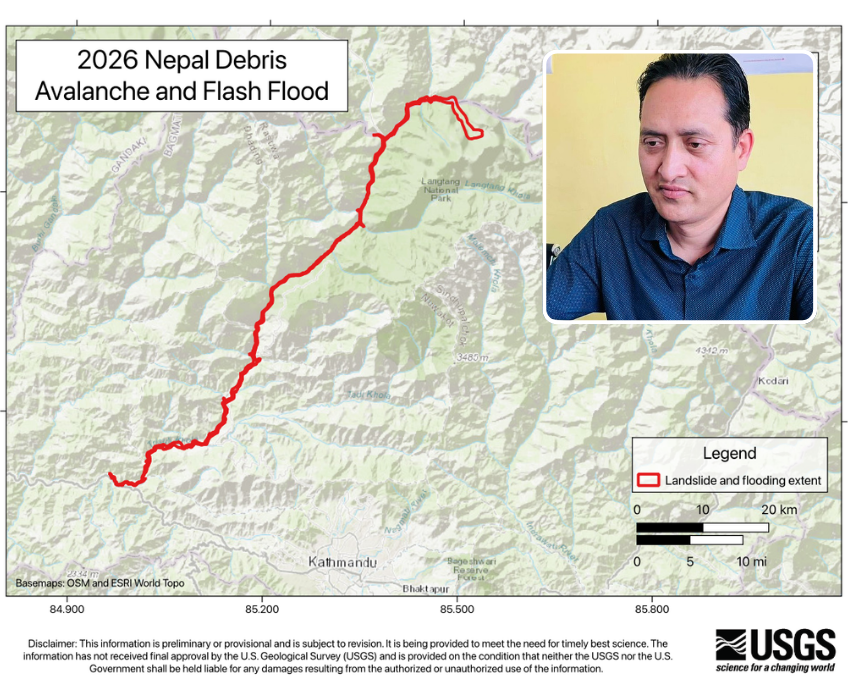
While the whole world is shocked and horrified at the scenes of the catastrophic glacial floods and landslides in Nepal and Tibet, this should be an international wakeup call, said Indra Raj Bhattarai, a social justice and human rights advocate, conservation educator and researcher from Nepal.
Speaking from Nepal’s capital, Kathmandu, Bhattarai told Green Left that despite several climate summits the international community has fallen far short of its targets for funding climate change frontline states such as Nepal.
“This is not only an issue of Nepal,” he said. “Nepal adds very little to the global greenhouse gas emissions and 46% of Nepal is forest.
“And it is not just Nepal that is affected. It goes to other countries also, because the river flows all the way to the ocean, past the boundaries of landlocked Nepal.”
Melting glaciers across the whole Hindu Kush Himalaya mountain system directly affect China, India, Myanmar, Bangladesh, Bhutan and Pakistan, Bhattarai explained.
“It affects these countries’ agriculture, the ecosystem and the economy of the whole region.
“Eventually the water from melting glaciers will raise the sea level and affect even more countries.
“We’ve talked about this problem for at least the past two decades in lots of international meetings. Day by day, our extreme weather patterns send us reminders.
“The devastating consequences are seen. The biodiversity is in decline, new diseases are emerging and lots of devastating effects remind us that this is the problem of the whole world.”
Bhattarai said that the international climate talks have focused on the “polluter pays” principle (PPP) which means that those responsible for environmental damage and greenhouse gas emissions should pay the cost of preventing, controlling and remedying impacts.
“What happened to PPP? Nepal actually increased its forested area by 10% in the last decade and a half, but we are facing the challenges arising from increased greenhouse emissions and forest clearing in other parts of the world…
“There’s a fund called the Green Climate Fund [which approved $36.1 million for Nepal in 2025] to reduce the risk of glacial lake outburst floods (GLOFs) and United Nations agencies are working on that, but Nepal still has no early warning system.
“That should be the first thing the fund is used for. If we had an early warning system, thousands of lives would have been saved.
“We still don’t know exactly how many people lost their lives but we can say that between 15,000 and 20,000 people have been directly affected.”
Read the full story at the source →
Source: Green Left (Australia)