
Labour Freedom News (UK)
General strike in Spain
A chronicle of pre-dawn picket lines, massive demonstrations, persistent rain, and sharply differing figures on participation The post General strike in Spain appeared first on Freedom Press .
English (original) ·Read in Deutsch ⇄
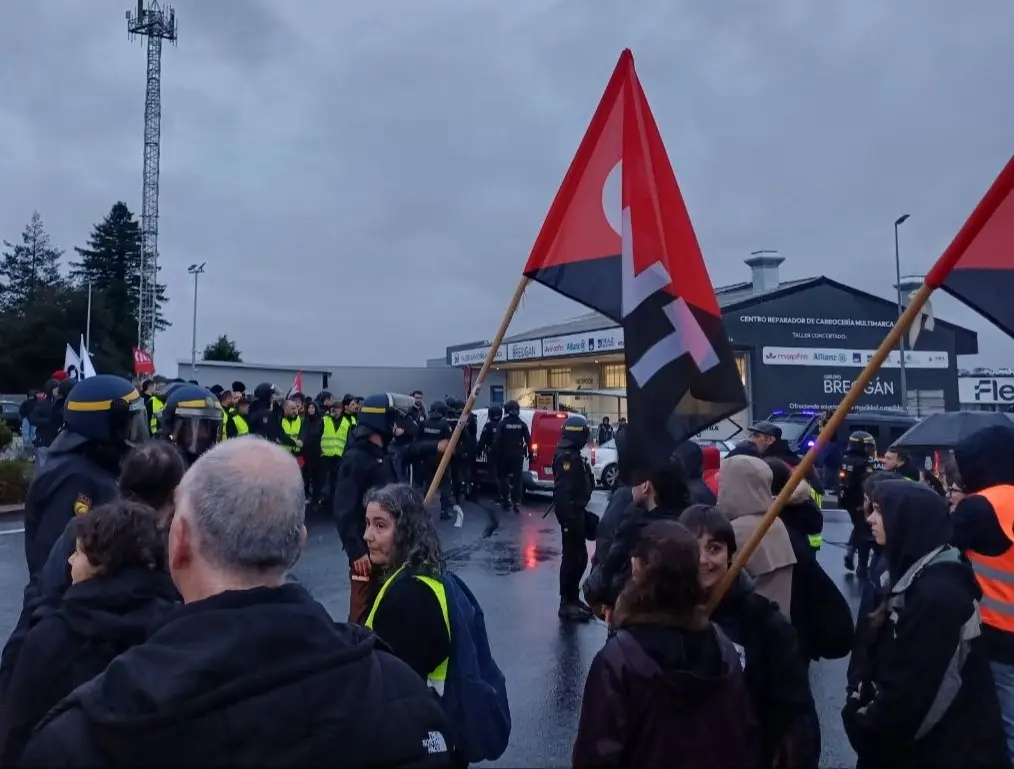
The strike began before dawn. By midnight, the first picket lines were already being organized. In Valencia, the CGT union had called for pickets at the Mercavalència wholesale market starting at 2:00 a.m., and at the EMT (municipal transport) depots in San Isidro from 5:00 a.m. Subsequently, access routes into the city—including the V-21 highway and the Ronda Nord—were blocked. The coverage in Valencia tracked the movement from the wholesale markets to the municipal transport network.
In Catalonia, actions were concentrated from the early hours at the Mercabarna wholesale market, various workplaces, and along roadways. According to updates published throughout the morning, more than thirty locations across the road network were affected by blockades. In Madrid, “informational” picket lines gathered at the EMT transport depots in Fuencarral and Carabanchel; the CCOO and UGT unions reported police charges and the use of pepper spray against participants.
At the Mercamadrid wholesale market, unions also reported police intervention. Reports concerning the Madrid transport depots include statements from the organisations involved. Tension spread to Málaga, where reports emerged of police charges near the EMT (municipal transport company) depots, and to Zamora, where early reports indicated two arrests and four people requiring emergency medical attention following an incident involving a transport picket line. In the Basque Country, the Ertzaintza (Basque police) reported thirteen arrests as of mid-morning, eight of which took place in Portugalete. These were preliminary tallies from different regions and points in time.
Manufacturing, transport, ports, and public services
Initial reports from labour unions indicated high participation in certain industrial sectors. CCOO and UGT estimated that 90% of workers in the automotive and port sectors, and 85% in the meat-processing industry, participated during the early shifts. The CGT also reported high levels of work stoppages and picket activity. These estimates come from the organisations themselves, refer to specific sectors and shifts, and do not, on their own, confirm the overall percentage of workers on strike. The initial industrial report provides further detail on its source.
In the Valencian Community, the figures varied significantly. UGT-PV reported over 70% participation in industrial firms with union representation, while the employers’ association, CEV, estimated a 2.57% participation rate across the region’s entire economic sector during the early hours. Later, CCOO and UGT reported an average participation rate of 60% in the region. These figures are not directly comparable, as they differ in scope, the population observed, and the timeframes considered. Examining both sets of figures helps to explain these discrepancies.
The strike also affected public media. Canal Sur Televisión interrupted its regular programming around 8:20 a.m. while the show Despierta Andalucía was airing. In Valencia, nearly fifty students staged a sit-in at the Faculty of Geography and History at the University of Valencia in support of the strike. Picket groups focused on commercial areas moved through the streets and neighbourhoods of various cities. In the Vila de Gràcia neighbourhood, the mobilisation coincided with the postponement of an eviction.
Rent and wages on the same banners
The struggle for housing did not emerge as an issue separate from working conditions. Tenants’ unions, labor unions, and neighbourhood assemblies brought demands against high rents to the picket lines, alongside the defence of wages, public services, and labour rights. In Bilbao, groups converged in front of the Arriaga Theatre before heading toward the Basque Government headquarters. In Pamplona (Iruñea), a protest in front of CaixaBank ended with one arrest, according to reports on the day’s events. In Barcelona, a main picket line moved through the commercial district; in Madrid, there were blockades on the Gran Vía and the Carrera de San Jerónimo.
By the afternoon, the strike had reached the major avenues.
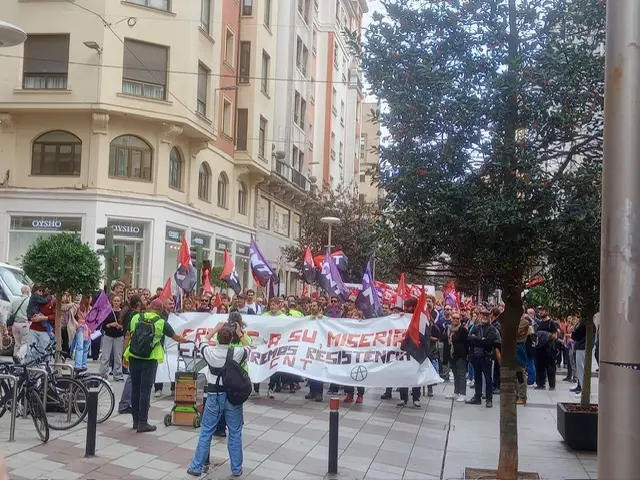
Barcelona saw one of the largest marches. Groups arriving from various neighborhoods converged at the Jardinets and the Passeig de Gràcia. The Tenants’ Union (Sindicat de Llogateres) estimated the turnout at 400,000 people, while the local police (Guardia Urbana) provided an estimate of 55,000. These figures come from different sources, with no …an independent assessment to resolve the discrepancy. After the march concluded, La Directa and El Salto reported that the Mossos (Catalan police) had carried out charges in the city centre.
In Valencia, a unified demonstration took place in the rain. The march moved along Calle Colón and reached the Plaza del Ayuntamiento, with participation from labour unions and housing advocacy groups. El Salto reported tens of thousands of participants, while other media outlets described thousands of attendees and a historic demonstration. The live coverage by Sindicalismo.org could not verify an exact figure provided by the organisers; therefore, that description is not translated here into a specific number. Levante-EMV and Europa Press published accounts of the march.

In Zaragoza, the National Police estimated 20,000 protesters, while the organisers claimed 60,000. In Lleida, the Guardia Urbana (local police) estimated 4,500 attendees, compared to 14,000 according to the unions. In Granada, El Salto reported two separate marches, estimating at least 8,000 people in each. Girona and Manresa also saw large-scale demonstrations, according to the organising groups. In Madrid, the march from Atocha toward Plaza de España proceeded through the rain, with housing issues serving as one of its central demands.
Severe weather impacted the day’s events in Andalusia. CCOO and UGT canceled their afternoon demonstrations in Cádiz, Huelva, Córdoba, and Seville as conditions worsened. However, a separate mobilisation took place in Seville, organised by housing groups and organizations such as the CGT, CNT, and USTEA. The cancellation of one event did not mean that all protests in the city were called off.
Police actions and the tally of arrests
Reports of police charges and the identification of individuals emerged alongside the strike, beginning with the very first picket lines. In Granada, the Andalusian Association for Human Rights (Asociación Pro Derechos Humanos de Andalucía) called for an investigation into police interventions near the Metro and the Alhambra, reporting a rib injury and difficulties in identifying the officers involved. In Madrid, *El Salto* reported the use of pepper spray and rubber bullets during an intervention that took place after the demonstration had concluded, in the area of Plaza de España. In Tarragona, *Alerta Solidària* reported that individuals were injured by foam projectiles during a protest near the Palau de Congressos. These are reported incidents and allegations attributed to specific sources, not judicial findings.
The tally of arrests published by *Sindicalismo.org* recorded 52 detainees and 919 incidents as of 5:00 PM, based on data available at that time from the Ministry of the Interior and regional police forces: 38 arrests by the National Police and Civil Guard, 13 reported by the Ertzaintza, and one by the Mossos. This figure superseded previous counts of 40 and 42 arrests; these numbers should not be added together.
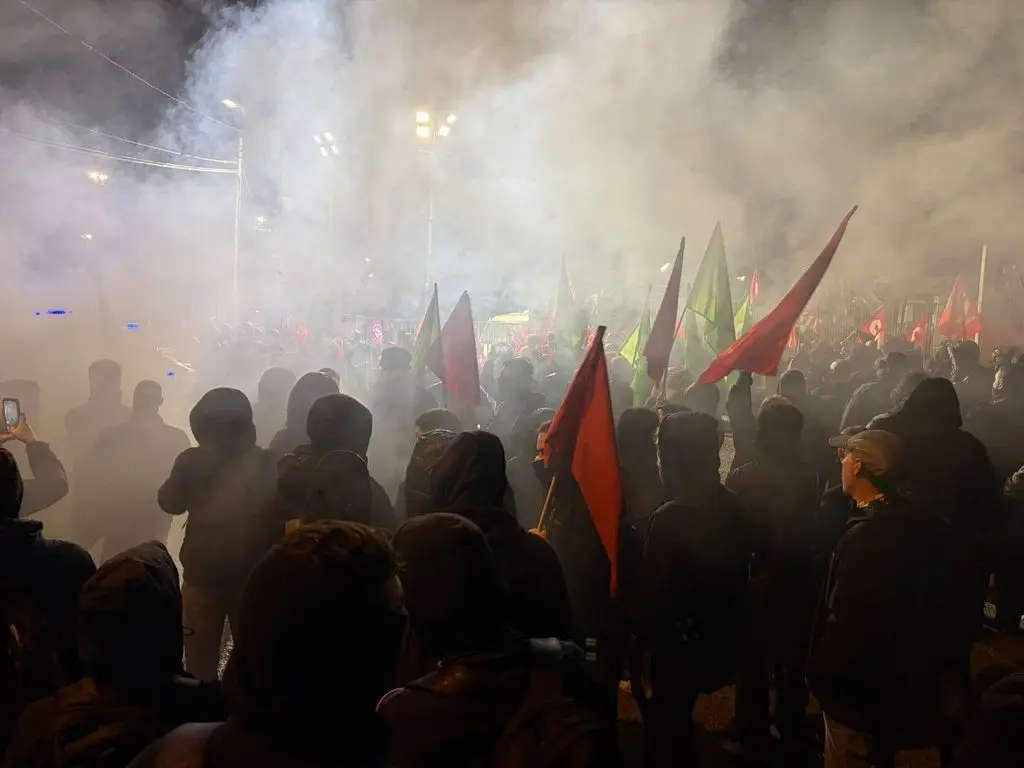
The figures shifted later that evening: at 9:45 PM, the Mossos reported 18 arrests in the center of Barcelona—a local figure that emerged after the 5:00 PM national tally. This cannot simply be added to the 52 without first verifying potential overlaps or the timing of the events. Trade unions and anti-repression organizations demanded explanations and defended the right to strike, while police forces justified their interventions by citing incidents they attributed to protesters. A final, definitive figure for the entire day was not available from the sources consulted for this report.
A long day, with no single set of figures
The strike concluded without a consensus on participation levels among trade unions, employers’ associations, and government authorities. Furthermore, there is no national count of protesters that can be derived by simply adding together figures published using different criteria. November 11th (11-N) was marked by an extensive day of mobilization across workplaces and neighborhoods, featuring significant work stoppages in specific sectors, numerous marches, and an open debate regarding police conduct and the restrictions placed on the right to strike.
In Barcelona, the Tenants’ Union (Sindicat de Llogateres), the CGT, the IAC, and other organizations announced their intention to continue mobilizing for housing and public services. Issues such as rental costs, wages, collective bargaining, and trade union freedoms remained unresolved by the end of the day. The account of 11-N also serves as the starting point for tracking these ongoing developments.
The post General strike in Spain appeared first on Freedom Press.