Germany · CrimethInc. · 1970-01-01
From Germany to Bakur
Deutsch (original) · Auto-translated to English
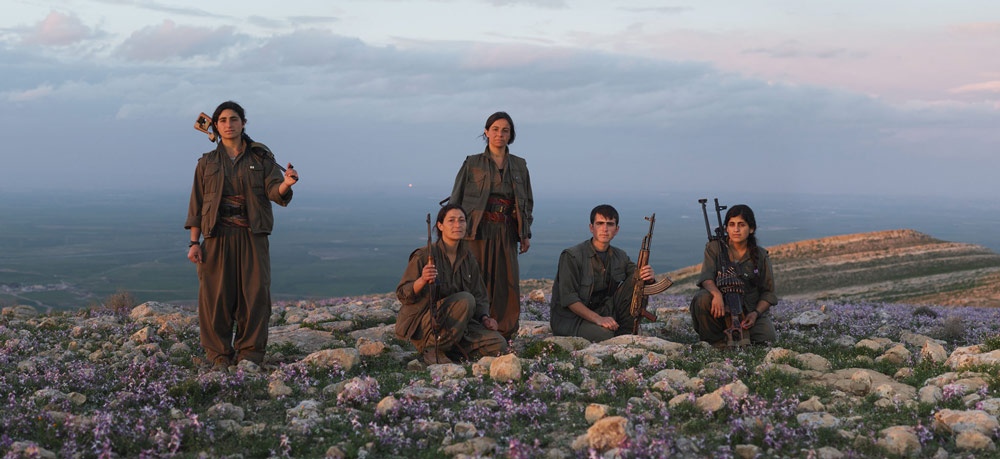
Since its successful defense of Kobanê against IS a year ago, the Kurdish resistance has attracted international media attention. Meanwhile, the experiments in building a stateless society in the autonomous cantons of Rojava have fascinated anarchists around the world. But to understand the Kurdish resistance in Rojava (West Kurdistan), we must broaden our focus to the struggles for freedom and autonomy in the region. We interviewed two members of an international anarchist network in Germany who spent time in Bakur (Northern Kurdistan) and learned from the struggles there. Drawing on a historical overview of the emergence of the Kurdish movement and the “new paradigm” of the PKK's most recent decade, they describe how their own experiences in Kurdistan reoriented their understanding of anarchist struggles elsewhere in the world.
In our “Understanding the Kurdish Resistance” feature and Ex-Worker podcast, Episodes 36 and 39, our discussion of the Kurdish struggle for freedom and autonomy focused on Rojava (West Kurdistan). Important battles are also taking place in other parts of Kurdistan, some of which have not received as much attention. Could you explain something about the historical background for the emergence of the Kurdish movement and describe the struggles unfolding in Bakur (Northern Kurdistan) today?
Okay, the story begins a long, long time ago with people sitting around a campfire in Upper Mesopotamia. Around 4,300 years ago, a new social structure emerged in the Middle East - a highly aggressive form of social organization that attacked the old communal structures: the Sumerian priestly state. The historical process leading to the revolution in Rojava cannot be understood without recognizing the long tradition of resistance and uprisings in the Kurdish regions of the Zagros and Tauros mountain ranges. This region may have been the first target of colonization of the emerging state system. Its roots lie in Lower Mesopotamia, today's northern Iraq. It is the predecessor of today's Western state system. The PKK and the Kurdish movement today locate themselves in this long tradition of anti-state resistance and see themselves as the 29th Kurdish uprising in history. The Kurdish regions have always been on the fringes of strong empires, having been attacked by pretty much every imperialist structure that has emerged in the region over the last few thousand years. Because of the mountainous terrain and the decentralized social organization of the Kurds in village confederations, these regions could never be fully conquered and assimilated. Looking back, they defied attempts by external powers to penetrate their territory for thousands of years - and these powers also repeatedly tried to cooperate with feudal Kurdish elites in order to ensure submission and prevent (or at least isolate) rebellion.
Fast forward to the 20th century and we can still see this dynamic emerging with the emergence of the modern regional nation-state system. The Turkish state was founded in 1923 after the collapse of the Ottoman Empire, which ruled the Turkish territories in the east but guaranteed them cultural and even political autonomy. During World War I, the Ottomans allied with the Central Powers, forging political and ideological ties with Germany that continue to this day. After the defeat of the Central Powers and the collapse of the Ottoman Empire, Turkish nationalists fought for their own state. From its founding, the new state's ideology was ultra-nationalist. The nationalists proclaimed Turkey as a state for all Turks and defined everyone within its borders as part of the great Turkish nation, not without linking their state to the idea of ethnic superiority. As a result, all those who claimed a different ethnic or national identity, be they Assyrians, Armenians, Kurds or others, were treated as traitors and separatist terrorists. Until the 1990s, Kurdish and other non-Turkish languages were officially banned in Turkey - not only in state affairs, but even in private use.
We talk about history because it is important to understand the harshness of the conditions in which the Partiya Karkeren Kurdistan (PKK), the Kurdistan Workers' Party, was founded. The contemporary Kurdish movement emerged during the 1968 youth revolt in Turkey, in which revolutionary unrest grew among socialist organizations, radical students, workers and small farmers. In the 1970s, a group of Kurdish and Turkish friends led by Abdullah Öcalan, Kemal Pir, Haki Karer and others gathered in Ankara and began to debate the Kurdish question from a revolutionary perspective. One of their central ideas was that Kurdistan was an internal colony and needed to be freed from colonial oppression in order to build a socialist utopia. So the PKK was founded in 1978 and began to organize itself according to the foundations of classical Marxist-Leninist theory. Under the "old paradigm," as they now call it, the PKK aimed to organize a political vanguard and launched a revolutionary war to liberate Kurdish territories and establish a Kurdish state, which would then be used to build socialism.
In Turkey's highly repressive climate in the 1970s, many were determined to fight for a different life and the PKK's strategy and beliefs spread rapidly. In 1984 they launched a guerrilla struggle that escalated into a brutal civil war. The guerrilla movement received significant support from society and in many regions could not be distinguished from the population at large. In response, the Turkish army, military police and secret service launched retaliatory campaigns to drive back the rebels and intimidate the population. Under the auspices of the NATO-sponsored anti-communist program “Gladio,” they destroyed around 4,000 villages and killed more than 40,000 people.
In the wake of this bloodshed, the Kurdish liberation movement began a process of reflection and self-criticism in the early 1990s. In addition to brutal state and paramilitary repression, the guerrilla movement was plagued by internal problems with some PKK leaders behaving like feudal warlords with a militaristic logic of blood revenge. It became clear that military combat alone would not solve anything. The old paradigm led to relentless war and hostility and failed to address social problems within the Kurdish areas or effectively protect them from external threats. The PKK declared a unilateral ceasefire in 1993, halting the civil war and making room for the formulation of a different paradigm for social transformation. The Kurdish movement overcame many setbacks and challenges during this process of reflection - repeated attempts by the Turkish state to provoke renewed outbreaks of civil war, the abduction and imprisonment of PKK leader Abdullah Öcalan, and the rise of antiquated feudalist Kurdish parties such as the Barzani clan in northern Iraq. Yet despite these challenges, between 1993 and 2005, the Kurdish movement developed what they now call "the new paradigm" and which profoundly changed the goals and strategies of the Kurdish movement.
A significant advance in this process of internal change came from the Kurdish women's movement. Thousands of women joined guerrilla forces during the civil war. They often found themselves in conflict with antiquated commanders who tried to keep them in their traditional gender roles and did not treat them as equals. In response, they founded completely autonomous female guerrilla units, which was a fairly revolutionary step in their cultural environment. They reclaimed the right to fight and organized themselves as part of the movement, although they made their own decisions autonomously. As our friends told us, they also fought differently: competitive behavior persisted in all-male or mixed units, a legacy of many generations of hierarchical social order that is still a problem today. The dynamic between the fighters was less competitive; this shows the number of fallen fighters. Most of the losses occurred during retreating actions, where cockiness and pride in victory were quite common among the male fighters. In contrast, attention in the women's units tended to be more long-lasting and their fighters appeared less prone to this potentially fatal presumption.
In addition to the autonomous military units, women also formed social and political committees to discuss the problems of patriarchal oppression. Today, the head of the women's movement is the Komalen Jinen Kurdistan (KJK), the Confederation of Women in Kurdistan, which is part of the KCK, the General Confederation, but makes decisions independently. In addition, the women's movement has the right to veto decisions made by men's groups in general meetings. Under their influence, the Kurdish movement has questioned traditional patriarchal and hierarchical patterns in its organizational model.
The process towards the new paradigm within the PKK was driven forward by an ideological wing around its leader Abdullah Öcalan, who formulated the idea of democratic confederalism after a deep historical analysis of the hierarchical system of the Middle East and beyond. Beginning with the ancient Sumerian priestly states, which represented the original challenge to the more egalitarian and often women-centered forms of social organization that preceded them, he emphasized that the problems of power, oppression, and violence developed from the historical process of civilization itself. The problems of oppression, war and the search for power are related to the institutionalization of patriarchal relationships in state structures and the priesthood. The capitalist system, the nation state and industrialism are concepts that developed from these hierarchical and male-dominated ways of thinking. Öcalan also drew on the ideas of American anarchist Murray Bookchin in his analysis of the utopian potential of democratic confederalism and emphasized the importance of embracing a new ecological, democratic and gender-liberating paradigm. Central to his conception of the PKK's "new paradigm" was the idea of communalism, according to which every part of society should organize itself and come together in decentralized, communitarian confederations.
Inspired by this new paradigm, the Komalen Ciwaken Kurdistan (KCK), the Confederation of Societies of Kurdistan, was founded in 2005. At its core is a system of councils of neighborhoods, villages and cities. This system serves as a strong countervailing force to support the development of autonomy from the nation state and capitalist economy. The KCK represents the general meeting of the council system in Kurdistan, attended by delegates from all the participating Kurdish regions. It elects a body with the mandate to deal with issues of importance to all regions, such as diplomatic representation at the global level, ideological and strategic proposals or defense issues. They also manage the People's Defense Forces (HPG), which includes all armed wings of all parts of the movement. Over the past decade, the movement in Northern Kurdistan has built structures for a democratic, ecological and gender-free society despite severe repression and a state of war.
Like the KCK, which encompasses the structures of democratic autonomy throughout Kurdistan, the Democrats Toplum Kongresi (DTK), the Democratic Society Congress, encompasses the council system in the Bakur region (or Northern Kurdistan), which lies within the borders of the Turkish nation-state. The federal structure of the DTK starts at the level of the village or urban neighborhood to the district, city and finally to the Bakur region. At the highest level of the Federation, the DTK Assembly includes all (revokable) delegates from more than 500 civil society organizations, trade unions and political parties, with a 40 percent quota for women and seats reserved for religious minorities in the assemblies and a dual assessor system that reserves one seat for a male person and the other for a female person. In classic grassroots style, participants strive to solve local problems at the local level and only when they cannot find a solution do they look for it at the next higher level. Non-Kurds, including the Azerbaijani and Aramaic communities, attend some of the meetings.Furthermore, young people are organizing both within and alongside these structures under the slogan "Capitalism is an old man - we are a movement of the United Forces of Women and Youth." This comparison emphasizes the need for organizing youth and women to overcome the established hierarchical legacy in Kurdish society and also reflects the philosophy that youth is not a question of actual age but rather an attitude similar to the Zapatista slogan "caminando prequntando", "Questioning we move forward".
This federal structure of councils and civil organizations was built to solve everyday problems through bottom-up democratic processes and to support the self-organization of the entire population. Therefore, the concept of democratic autonomy proposes local and regional structures through which cultural differences can be freely expressed, rather than simply defined in terms of ethnicity or territory. As a result, there is a colorful variety of educational institutions, cultural and social organizations and experiments in building cooperative economies in Northern Kurdistan. It is worth highlighting mediation committees that aim to create consensus between conflicting parties and thereby achieve long-term agreement, rather than simply postponing the problem through punishment. This often leads to long discussions, but shows a concept of collective responsibility in which the accused should not be excluded through punishment or imprisonment, but rather should be made aware of the injustice and damage that their behavior has caused. This has made state courts unnecessary in many strongholds of the Kurdish liberation movement. In addition to these mediation committees and other bodies, you will find social centers for youth and women at all levels of society, where activities range from Kurdish language courses and political seminars to music and theater groups.
This is the context in which we should understand the success of the ongoing revolution in Rojava. The Kurdish movement can look back on 40 years of radical struggle with its mistakes, reflections and progress. Although the construction of democratic autonomy in northern Kurdistan has proven to be much more chaotic, remaining entangled in the old state structures and caught up in a social and ecological rather than a military war, it is largely comparable to the processes in Rojava.
Turkish police prevent Syrian Kurds from fleeing IS.
One question anarchists are asking about this struggle is how much of the fresh anti-authoritarian orientation of the Kurdish struggle - including the structures of democratic confederalism, the principles of women's liberation and so on - come from the top down, from Abdullah Öcalan and the leadership of the PKK. It would seem like a contradiction if an anti-authoritarian revolution were directed from above! What is your perspective on the relationship between the ideology of the leaders in these organizations and the transformation of social conditions and structures in Kurdistan?
This is a rather difficult topic that we discuss quite often and that, at least in Germany, is linked to a certain fear that comes from bad experiences with revolutionary struggles. Certainly, the question of revolutionary leadership and initiative is one of the most difficult when we deal with self-organization and it is also for the Kurdish movement. The real questions are: How can there be a drastic revolutionary change in society? Who evaluates what is needed? And who decides in which direction it should go? The answer must be: everyone, for everything, always. Perhaps the development history of the Kurdish movement and the PKK can provide a useful example that has yet to be fully understood in the Western world. Öcalan and the PKK do not simply issue a fixed ideological scheme or a dogmatic system, such as the one and only true path of Marxism-Leninism claimed by the former socialist states. Perhaps the aesthetics of revolutionary socialism – the bearded leader and the gritty, selfless guerrilla fighter – are deceiving us if we don't look beyond the picture and investigate further.
What we see today in Kurdistan, both in Rojava and in the north, is a new method through which the entire society is becoming conscious. If we understand the persistence of the state and patriarchal oppression as a problem of people not being aware of their possibilities for resistance, we see the importance of raising social awareness. In all parts of Kurdistan where the liberation movement is organized, we find committees that form so-called academies. An academy can take many different forms, but we understand it most simply as a collective space for creating a shared consciousness. Some can simply be a discussion group that meets once a week, but there are also longer, more intensive ones in which all activists are involved (and for several years any society member has been able to join). The academies are always linked to other social organizations; the youth groups and the women's movement have their own academies, while other groups organize general academies for all. Each of them emphasizes self-empowerment and in these institutions the proposals that Öcalan and the PKK offer are intensively discussed and criticized. And these leaders are not the only ones making suggestions: every institution, every committee and every individual can spread their own ideas.
This practice developed from the process of political education within the old PKK, where it was common for all militants and guerrilla fighters to undergo both military and ideological training. With the emergence of the new paradigm it became clear: the goal would not simply be a well-educated philosophical elite, as in the old cadre system of Leninism, but the development of the consciousness of literally every person who takes part in the process of forming a new society. If you want to organize yourself, you have to think about your relationship to the world, which means devoting yourself to the study of philosophy.
A method often used in these academies is what we might call associative analysis. When a particular topic is discussed, everyone offers their own associations with it and through the process in which each person describes their impressions and experiences while the others listen carefully and seek understanding, a consensus can be reached. At a theoretical level, this approach negates the possibility of “objectivity” and replaces it with a method of multiple subjectivities. When you figure out your own position in a specific debate, by understanding both your own will to act and the fears that arise within you, what is strategically necessary becomes clear.
Today, the role and position of militants in the PKK and PAJK (the Women's Liberation Party) has changed compared to the 1980s and '90s. Her self-image has moved closer to what we might understand as a militant anarchist personality: fighting for self-empowerment and mutual aid. Under the old paradigm, militants had to be selfless and self-sacrificing. Although this conception has not entirely disappeared, it is changing as discussions in the movement reject dichotomies and support the struggle for both individual progress of self-transformation and collective beauty and strength. By changing the conception of the role of the militants, they rejected the outdated ideas of becoming a vanguard. Instead, it's about living a well-organized, secular, celibate lifestyle based on the idea that fighting for our friends and for the revolution is the best way to live a life.
What did you learn from your time in Kurdistan for radical struggles in Germany and beyond?
My engagement with the Kurdish liberation movement, as a historical struggle, as a society in rebellion, has actually allowed me to believe again - not only that this world is absolutely unacceptable, but also about the possibility of fighting for a different world. I would call this reclaiming the power of imagination, which has unleashed a huge sense of motivation and also a certain seriousness in many of our friends. It is overwhelming to see the huge collective consciousness raising in Kurdish society.
Looking back at Western metropolitan life, it seems so obvious how patriarchy and capitalism have spread into every corner of our lives. I think we have made huge leaps in our understanding of our own history and society through discussions with our friends in the Kurdish youth movement. In particular, their focus on philosophy and self-perception made it clear to me how much we as anarchists or radical leftists are handicapped by moralism. We have learned to align our behavior with these notions of good/bad, right/wrong, and guilt/pity that have been drummed into us by religion and academia and debate, rather than our actual shared ethical ideas and friendships. To begin the process of self-liberation, we must overcome our liberal bourgeois personality and our capitalist behavior in order to mentally defeat the internal state.
In contrast, in Germany and the West as a whole we are confronted with internalized individualism and liberalism, not only in society as a whole but also in our political "scene" - a scene with a general tendency towards a nihilistic lifestyle and identitarian politics. In my observation, most militants in our scene - like the majority of liberal youth - give absolute priority to the "freedom" of the individual by simply giving in to every urge and inclination that comes their way in an environment where everything is permitted. At the same time, there is a feeling of being at the mercy and therefore an acceptance of the given, unchangeable environment. On the one hand, this often leads to a pessimistic feeling of paralysis, hopelessness and depression, and on the other hand to a guilt-driven re-anchoring in identities that are derived from the power structures they criticize (white, middle class, privileged) and an immersion in various forms of commercialized lifestyle scenes (punk, hardcore, radical left, "anarchism"...), all of which arise from and lead to this omnipresent individualism. I think it would be interesting to analyze the influence of the 1968 youth rebellions, because they gave this development a lot of momentum. We are confronted with a mass of people around us who accuse the unconscious society, politicians, cops or fascists of being the enemy, but have completely lost their connection to reality and their own responsibility and ability to act.Instead, most of us continue to live the liberal fairy tale of economic success and a secure pension by taking refuge in studies, work, leisure, privatized political activism, vacations, parties, drugs and consumer suicide!
There is only a fine line between this contemporary Western conception of anarchism and liberalism. Although classical anarchists such as Emma Goldman recognized the need for positive freedom, "freedom to," liberalism focuses on negative freedom, or "freedom from," the idea that people are free in that they are not constrained by rules and laws. This understanding of freedom fits well into the ethos of individualism, private property and capitalism and completely denies the dialectical relationship between the individual and society and the fact that people have always lived as social individuals in communities and are connected by rules and values. We believe that human values are socially determined and that social rules and regulations to maintain them do not represent a restriction on a pre-existing freedom, but rather represent part of the conditions of a free life, which must include individual and collective freedom. As a counter-example to the liberal "freedom" of Western anarchist and radical left scenes, it is worth pointing out that the Kurdish youth movement takes very strict action against drug trafficking and abuse, as the Turkish state is obviously trying to destroy the movement not only with tear gas and imprisonment but with all available options for modern counterinsurgency, including support for drug trafficking and prostitution.We believe that there needs to be a collective reflection on how consumer mentality, individualism and other forms of liberalism act as a form of counterinsurgency and how much we have incorporated them into our thought structures and behavior. We must organize self-defense against the attacks of these capitalist ideologies, which reduce us to nothing more than consumers and "self-responsible" I-AGs/workers.
In contrast to these liberal illusions, our experiences with friends of the Kurdish movement have given us a perspective on the importance of resolving this polarization between the individual and society by focusing on collective values and ethics rather than political and identity standpoints. Inspired by the example of the Kurdish movement, I think we should study and re-appropriate our history as part of the process of developing the self-awareness that we will need to resolve the Western dilemma we face. By critiquing civilization and analyzing our communal and democratic heritage, we can develop historical awareness and confidence in what we do. In his prison writings, Abdullah Öcalan tried to research the historical background of the Kurdish struggle in great detail in order to have the opportunity to compare it with previous experiences of revolutionary struggles. Many in the PKK today draw on this history to critically reflect on their own ideology and strategies, weaving them into their process of self-questioning and forming their own philosophy of liberation - a revolutionary mythology, perhaps.
And at the same time, that means not getting caught up in nostalgia. Instead, inspiration can be drawn from the renewing power of youth, from constant, questioning progress. Don't be afraid of self-development; be open to criticism and learn from other people's mistakes. Let the process of revolutionary change begin with you. Maybe that's a pretty good thing for European anarchists to remember: the revolutionary process is never something outside of yourself; it must be identical to your own progress toward freedom, so that you become a symbiotic part of a free society. I think all militant anarchists should embrace our historical responsibility and the opportunity to rally our collective power and agency to build and defend a society based on creativity, diversity and autonomy. But that means having to live the way we think and talk. So let's throw our liberal ideas into the trash heap of history. Only then will we be able to move beyond the theoretical agreement to “change everything,” as you would call it!
Kurds in Turkey protest in solidarity with those fighting in Kobanê.
The connection between anarchists or the radical left and the Kurdish liberation struggle seems to be strong in Germany; many anarchists are active in solidarity structures and draw a lot of inspiration from Rojava and elsewhere in Kurdistan. Can you tell us about the history of this solidarity? What are some of the concrete forms that solidarity has taken?
Initially, solidarity groups from the squatting movement formed in Germany. Since the 1990s there have also been German comrades who took part in the guerrilla struggle. Some of them, like Şehîd Ronahi (Andrea Wolf), died in the war. She had to disappear because she was being persecuted by the German state for RAF actions, so she joined the ranks of the PKK and fought as an internationalist. There were several German militants who joined the Kurdish armed struggle, so there are a few older comrades who can share their experiences and reflect on the mistakes made at the time. In the '90s there were also many problems between the German left and the Kurdish movement from both sides. On the one hand, the PKK was still stuck in the old paradigm and was so focused on the fight in Kurdistan that everything else was ignored. This made it difficult to build a real friendly relationship. On the other hand, the Germans maintained our classic pattern and kept their distance, criticizing without understanding out of the arrogance of the metropolises. When Öcalan was imprisoned and the movement fought hard for its survival, this weak solidarity collapsed.
Fortunately, when the new paradigm emerged, a new, albeit very slow and timid, learning process began. German comrades visited Kurdistan again and established contacts with diaspora groups, while others rejoined the guerrilla struggle. The PKK sees itself as internationalist and it is of great importance for both sides if international ties are strengthened. It has always been difficult to organize together with the Kurdish communities in the diaspora and, to be honest, this is still a problem. Although there are quite a few Kurds living in Europe, the connections between them and other European radicals are not very strong. There are various reasons for this: One of them is the fact that German society is quite racist and many migrant communities only organize themselves with their own people as a kind of self-defense mechanism. Furthermore, nationalism tends to be more pronounced among Kurds in the diaspora and society in the diaspora is often still organized along feudal lines. But in the 1990s there were joint demonstrations and today German and Kurdish groups are demonstrating together again. But at the level of shared self-organization we are still weak.
After the attack on Shengal and the siege of Kobanê last year, attention suddenly increased and the entire radical scene in Germany woke up. Things have slowly changed since then; more and more people are trying to find their way down to Rojava and some are joining the YPG/YPJ.
What suggestions would you make to anarchists in North America and elsewhere on how they can learn from the Kurdish liberation struggle and show solidarity?
We think anarchists should understand the Kurdish liberation struggle as their own, as an internationalist struggle. Honoring the comrades in Kurdistan can help us overcome the liberal illusions we spoke about. There must be a recognition, an awareness of responsibility for the dilemma in the Middle East. Intellectual openness and the willingness to educate ourselves philosophically and theoretically on the ideology of the movement is important so that we can grasp the possibilities in many languages and colors. This requires that we also support the fight in terms of reporting, which can be part of various support options. Furthermore, there has always been a warm invitation to actually go to Kurdistan to learn, critique and refine ideas about local and international organization. And as our Kurdish friends have repeatedly emphasized, it ultimately depends on us living in western cities to build our own revolutionary movements - that would be the greatest help we can offer them, because this creates the possibility of mutual defense. Also, from what we've heard, practical help is needed at various points: technical know-how, medical stuff, and all kinds of practical things can be helpful.
Can you give us an update on the recent wave of state and other anti-Kurdish repression in Turkey? How does the Kurdish movement react to this violence?
At the moment we are in an escalating situation. In response to his party's massive loss of votes in the June 7 parliamentary elections, Turkish President Erdogan declared war on the Kurdish population, ending the peace process started by Öcalan in 2013. Since the massacre in the border town of Suruç, which took the lives of 34 young Kurdish and Turkish radicals on their way to Kobanê in late July, there have been thousands of detentions and bombings on PKK guerrilla camps both in Bakur (Northern Kurdistan/Southeastern Turkey) and in the Medya Defense Zones in Bashur (Southern Kurdistan/Northern Iraq). While pogrom-like attacks have been taking place against Kurds and other social movements in northern Kurdistan and across Turkey for weeks, the military conflict has escalated, with many militants and civilians being shot dead by the state. Recently, the Turkish army besieged the town of Cizre for a week, while Turkish ultra-nationalists attacked Kurds and offices of the HDP (a Kurdish party) across the country. Many Kurdish shops were burned by supporters of the AKP, Erdogan's conservative Justice and Development Party, and members of fascist organizations such as the Gray Wolves, the youth wing of the Fascist Nationalist Movement Party. Similar attacks against Kurds and other opponents of the war have recently been carried out in Europe, and while the German state remains silent about these attacks by Turkish nationalists, Kurdish militants have been criminalized and imprisoned.
Kurdish civilians killed by Turkish airstrikes.
Racist Turkish nationalists attack the headquarters of the Kurdish HDP.
In the face of this violence, the movement developed a model called the “Theory of Legitimate Self-Defense,” or “Theory of the Rose.” This is a metaphor based on the idea that every living creature must defend its own beauty while fighting for survival. All living beings must develop methods of self-defense that suit their way of life; to grow and ally with others - not with the aim of destroying the opponent, but rather forcing him to abandon his intention to attack. Guerrilla fighters discuss this as a defensive strategy in a military sense, but it also works in other contexts. Basically we can understand it as a method of self-empowerment. For a long time, provided the Turkish government continued negotiations, the PKK guerrillas did nothing because they knew they could not win militarily. If you are strong enough and go your own way, there will be no need for violence; it simply becomes a question of organization. This understanding of self-defense is also part of the new paradigm.
[More information about current developments: ISKU, ANF – translator’s note]
Given the complex geopolitical context of the Kurdish struggle – surrounded by various hostile states and armed forces – what do you think it will take for a truly anti-authoritarian revolution to consolidate and prevail in this region?
Well, as we have learned from our study of other revolutions throughout history, the only way for a revolution to survive is to spread, expand its horizons, and overcome all the limits set in place to contain it. As our Kurdish comrades explain, there are two pillars of revolutionary struggle. The first and most important is the process of forming democratic autonomy; In the end, it's simply about how we want to live, how we want to organize our daily lives. It is difficult to focus on this question right now because the entire region is burning and at war. Therefore, the second pillar is self-defense using all necessary means. Both are essential and must be applied at different levels. Revolutionary uprisings throughout the history of Europe and elsewhere that neglected one of the pillars were inevitably crushed.
It is really important to strengthen the revolutionary position in Kurdistan - not only militarily, but also by building connections with comrades around the world. As the revolutionary uprising in Turkey spreads and support from the West grows, it will become more difficult for regional powers to attack the Kurdish movement. Furthermore, we should recognize the enormous potential that the experiences of this movement offer us for broadening our own perspectives. They organized themselves in a situation that was far more desperate than ours from the start and still succeeded. I would say it is a certain way of dealing with a specific danger that has made her so strong. Also, sharing experiences would be quite productive. When it comes to specific questions about self-organization, the methods and tools of anarchist movements in the West are quite creative and could offer a lot of support.
Right now we have an extraordinary situation of relative balance of power in the Middle East - and Rojava is in the eye of the storm. There is the grand vision of political Sunni Islam, pushed primarily by the governments of Türkiye and Saudi Arabia. There are also the Shiite states of Iran, Iraq and the remnants of the Assad regime in Syria. In addition, NATO, to which Turkey belongs, but which also enforces its own interests. In between we also have the Islamic State (IS), a zombie army that no power can no longer control, although it may have been originally built and supported to crush the Kurdish resistance and the regime in Damascus. So in this chaotic situation, Rojava is still necessary for NATO. For example, as the only reliable option in the region capable of defying IS. Yes, in that sense Rojava is somehow caught between all these military powers. But as we have learned from many revolutions, war is not simply a matter of mathematics. It's more a certain kind of struggle and a question of consciousness. We should learn from this.
Can you explain what you mean by this “kind of struggle” or the special form of consciousness in armed struggle that defines the Kurdish resistance?
Let me recount a story a friend once told me. He took part in the 2011 Qandil War. At that time there was a pragmatic alliance between Turkey and Iran: both had a problem with the Kurdish movement and were afraid of the military options that the guerrillas had. Kandil is at the southern end of the Mediya Defense Zones, the guerrilla-controlled mountains in the border regions of Iran, Iraq and Turkey. He told me about a situation when one and a half thousand Pasdaran, the Iranian infantry regiments, tried to storm the hill where the guerrillas were entrenched. There were only about 30 comrades defending their mountain. He explained that what the Iranian army tried to use against them was only their bullets and their fear of punishment from their leaders. They ran blindly up the mountain and were repulsed. They had no conviction, no strength and no friendship among themselves. On the other hand, when his comrades defended their position, they did not just use their weapons, as he said. They fought for their plundered villages, for their torn families, with their fallen friends in their hearts, with the certainty that the invading army would burn the mountains and forests behind them and destroy the nature of their land. They fought for those who were too weak to do it themselves, for all the parts of society that stood behind them and supported them. Maybe it's hard to understand if you don't feel it yourself. But their strength was strengthened by many friends, the historical experience of oppression, mutual protection - a love of life and a belief in themselves.
All of these things, he said, are paramount as you sit at your post next to your friends and raise your weapons in defense: your trust in your comrades, your gratitude for those living in the valleys who believe in a liberated society, who till the fields from which you live, your sadness at the horror that the state has brought upon your friends and families. And at the end there is the bullet that you shoot at those who stumble in your direction. How could they ever win, he asked, smiling.
Even the fighter who is objectively the weakest can summon great forces if he fights for their sake and for those to whom his heart belongs, without being pushed in a direction or ideology or forced to do anything he does not want to. Those who fight for their society and the symbiotic relationships that have protected and nurtured it will always beat conventional methods based on sheer destruction, hegemonic interests and strategies of hostility. This reminded me of the words that some Western philosophical friends once said: connecting reality with your own desires has revolutionary meaning. When you truly know what you are fighting for, when you understand the essence of the situation you are in, you can combine that with your will to live, which gives you beauty even beyond death. These guerrillas explained to me that they see themselves as protectors of life, using their own skills to protect the lives of their communities. That impressed me very much.
This also raises the question: Where will the revolutionary energy for the West come from? We barely understand our own situation; forced into pragmatic decisions in a complex system of dependencies. Perhaps this is the lesson we ourselves have to learn: What is the truth in our shared situation that we need to understand to begin? This is the same reason why no other army can currently push back the IS forces in Syria. In the defense of Kobanê, the YPG/YPJ based its defense on precisely this awareness. Who could believe that they would liberate their city; this goes beyond rationalism. It has more to do with trusting yourself and your revolutionary power that comes from your passion to live. This is what was almost beaten out of you if you grew up under Western capitalism.
Another friend added that if you really want to build a new society based on non-oppressive relationships, you are trying to create something that doesn't already exist. This creates part of a new world, a different world. How could you ever rationally understand that from your current perspective? It's not in the books. You have to go crazy to overcome what exists; you have to be convinced by your imagination and your passion. This is your problem in Europe, he concluded: you have forgotten how to do it.
A Video and Poster Campaign to Counter ICE Recruitment
An Incomplete Biography and Translation of His Work
Read the full story at the source →
Source: CrimethInc.