World · anarchistnews.org · 1970-01-01
On what anarchist symbols mean
English (original) · Read in Deutsch ⇄
From Debate Me, Bro by MK Zariel
Q: What do elements within the anarchy symbol mean? what does the ancom flag mean?
A: This is a great question, and thank you so much for opening the conversation—a lot of non-anarchists see these symbols in the wild without knowing the history, and it creates fear and negative stereotypes. So many of us have seen a circle-A at some point without knowing what it means, and as a result, we’ve assumed it’s an empty attempt to be edgy or a symbol of punk subculture. While anarchism and punk certainly overlap, and edginess is not something to stigmatize, there’s a broader history there. Let’s do a deep dive.
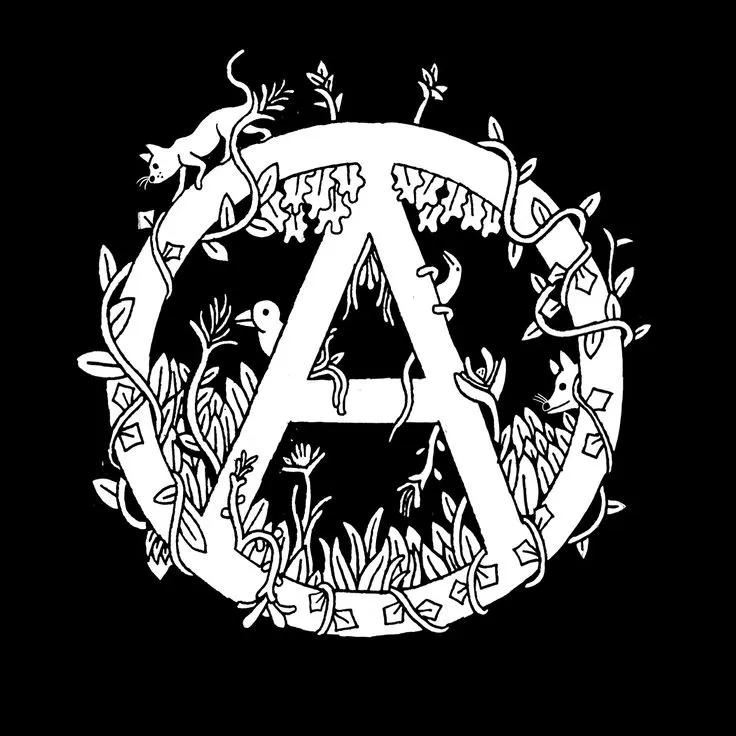
The circle-A, or “anarchy symbol,” includes an afor Anarchy and an o for order. This combination is intended to name that anarchism actually isn’t antithetical to organization or coordination (in fact, the anarchists in my life are often the most Type A people alive, but that’s beside the point); decentralization does NOT mean people’s needs are neglected or that strategic planning doesn’t happen. The symbol is also an accessible one; the majority of people can easily draw or use it, and it shows up often in street art and graffiti.
That said, the “anarchy symbol” isn’t just one thing; some anarchists (including me at book signings, lol)
use a heart shape rather than a circle to make the symbol look cuter and more personable, some Jewish anarchists use the circle aleph to show the intersection between their politics and their culture, and visual artists have all kinds of interpretations. Cindy Barukh Milstein’s anthology Try Anarchism For Life shows twenty-six different takes on the circle-A by artists in the anarchist community. Like everything in anarchist spaces, this is NOT a monolith and is defined by what the community needs and values.
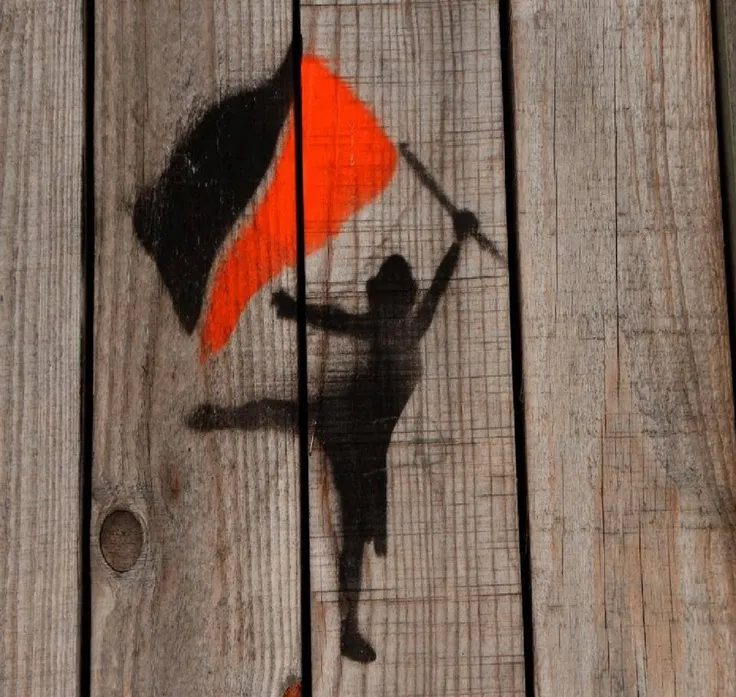
The ancom flag is a riff on the traditional anarchist black flag—a symbol originally popularized by anarchafeminist organizer Louise Michel around the time of the Paris Commune. The black flag primarily symbolizes anti-statism; rather than raising the flag of a specific country, anarchists who use the black flag are showing their loyalty to themselves and their community rather than the state. Contrary to (apparently) popular belief, wearing black is not an inherently anarchist symbol; the black flag is primarily meant to subvert and challenge the common use of flags to represent state power.
The red section of the ancom flag is used to symbolize anarchist positions that overlap with communism—it does not imply possible state communism, as a solely red flag might, but instead points to the longstanding literary and activist tradition of anarchist communism. With the usual disclaimer that labels mean different things to different people and asking ten anarchists about their anarchism will yield eleven different opinions, this tends to mean a belief in mutual aid, gift economies, and the abolition of private property (but not personal property), without overruling people’s autonomy about how they distribute resources. As usual, Emma Goldman described it best in Anarchism And Other Essays:
That being the ideal of Anarchism, its economic arrangements must consist of voluntary productive and distributive associations, gradually developing into free communism, as the best means of producing with the least waste of human energy. Anarchism, however, also recognizes the right of the individual, or numbers of individuals, to arrange at all times for other forms of work, in harmony with their tastes and desires.
Got more questions about anarchist symbolism—or any other topic within anarchism? Let me know in the comments or my DMs!
Read the full story at the source →
Source: anarchistnews.org