
World Africa Is a Country
Nigeria's petrol subsidy was also an electricity policy
When the grid fails, a fuel subsidy can double as an electricity policy. What happens to the people who rely on it when the state removes it before building anything to replace it?
English (original) ·Read in Deutsch ⇄
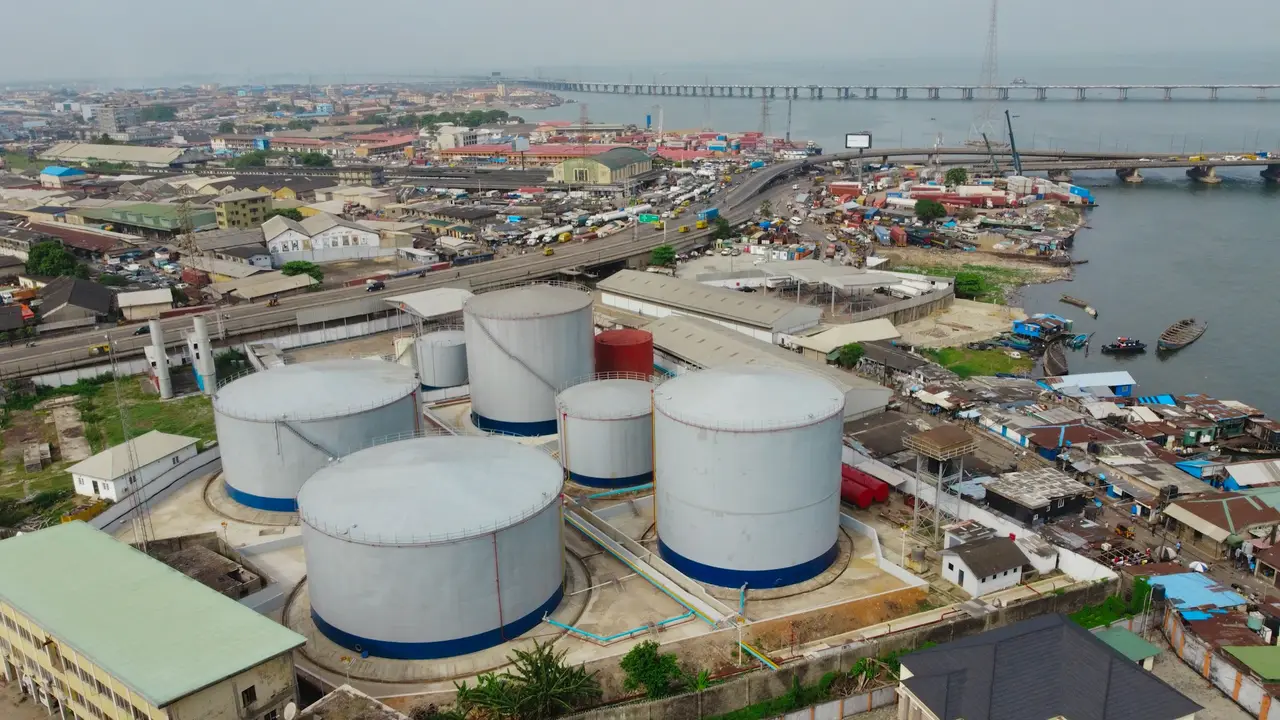
As long as households and businesses in Nigeria depend on generators and cannot rely on the grid for electricity, some form of fossil fuel subsidy will always be necessary. Despite the costs, and despite what the World Bank, the International Monetary Fund (IMF), and the climate research community say. This is because fossil fuel subsidies, in my opinion, are the country’s largest and most decentralized electricity access program, and any attempt at reform without explicitly accounting for this will fail. This essay explains why.
As a starting point, I need everyone to read Dr. Neil McCulloch’s book Ending Fossil Fuel Subsidies. The book explains how subsidies are effectively a political prosthetic. Imagine you run a developing country with weak administrative capacity. You cannot reliably deliver schools or clinics, but you need to give citizens something that shows you are on their side and ensures you stay in power. Cheap energy through fossil fuel subsidies is the one thing you can deliver somewhat easily. Weak states, like Nigeria, lean on subsidies because a subsidy is a substitute for the public goods the state cannot otherwise provide.
Citing a Nigerian study, he shows that the subsidy mostly benefits the rich — the bottom 40 percent of households consumed only 3 percent of petrol, while the richest fifth captured around 27 times more benefit than the poorest fifth. By 2018, Nigeria was spending roughly $300 million a month on the petrol subsidy, more than its entire budget for basic education. Considering all of this, anyone can see that the subsidy is a bad political and economic deal.
Beyond the numbers, there is the climate change literature. McCulloch notes that fossil fuel subsidies are sometimes a key blockage to the wider development of renewable energy. Cheap petrol and diesel weaken the incentive to switch to cleaner alternatives. The reformist logic follows rationally — remove the subsidy, allow prices to reflect the true cost of fuel, and households and businesses should begin moving toward cleaner energy. And this logic from the literature is intuitive. But it makes assumptions that anyone who truly understands Nigeria will tell you just do not apply.
It assumes grid electricity already exists and the question is simply how it should be generated. But for many Nigerians, electricity means a petrol generator. Remove the subsidy and the choice is not necessarily dirty electricity versus clean electricity; it is instead between some electricity versus none.
The reformist logic also assumes a certain level of demand elasticity. The assumption here is that people can meaningfully reduce their demand when prices rise. But if petrol is running the generator that powers your home or business, there is only so much consumption you can cut before you have a bigger problem. It also assumes a substitute is readily available. A higher petrol price only pushes someone toward solar and electric vehicles if solar and electric vehicles are actually affordable, available, and accessible. It assumes subsidy removal mainly hurts a powerful fossil fuel industry. In Nigeria, it also hurts households and small businesses that rely on petrol generators because the grid does not work. And probably most importantly, it assumes a state government capable of capturing the savings from subsidy removal and redirecting them transparently, efficiently, and effectively into the transition.
If the assumptions do not hold, how exactly is the price signal of subsidy removal supposed to work? Post subsidy removal, what was the immediate short-term plan for providing electricity? If you make petrol for running generators more expensive, yes, the price signal should move people to cleaner sources, but are the cleaner sources within a price range that allows everyone to make the switch?
As someone who has lived in Nigeria, sat through more blackouts than I care to number and then gone on to do a PhD on this topic, I think that there was a key part of this debate that analysts, international financial institutions, and policymakers did not seem to fully reckon with. And it is this — on a not insignificant note, Nigeria’s subsidy was about generating electricity just about as much as it was a fiscal matter. Effectively, Nigeria’s petrol subsidy was a key part of its electricity policy.
And recommending and enacting its removal without explicitly accounting for this made the average Nigerian’s life worse. I say the average Nigerian because following the subsidy’s removal, some people did make the switch to solar. But it was mostly the wealthy households and larger businesses concentrated in wealthy urban areas with poor grid access.
Removing the subsidy in May/June 2023 did not end a regressive transfer. It sorted the country by those with enough wealth to exit a failing system by going solar and stabilizing their costs and those without who were left with neither cheap fuel for their generators nor the means to replace them. The subsidy removal worsened energy inequality/poverty.
Yes, the subsidy was terrible for the budget and for the country’s long-term prospects and it benefited mostly the rich. But it was all most people, especially the poor, had. The grid reaches too few and works too rarely, and the generator economy — the so-called “shadow grid” — grew in the gap. Expensive, dirty, and improvised, but a system that tens of millions got their power from. The subsidy for the most part held it together. Removing it the way it was done broke the system further, and the breakage fell hardest on the people the subsidy reform claimed to be for.
On page 98, Dr. McCulloch writes, “the trick is not to stop subsidies — it is to swap them for something people value more.” And yes, this is the way successful subsidy reform happens. But it exposes the Nigerian problem. The swap only works if there is something people value more than what the subsidy was giving them. So what do Nigerians want more than electricity? Cheaper food, maybe, or cash. But every one of those runs into the same wall: the state has to be able to deliver it. A swap is only as good as the government’s capacity to hand over the other side of the trade. Could the Nigerian government reliably hold up its end of the subsidy removal deal per assumption?
The answer is a resounding no. Per the government’s own numbers, the conditional cash transfer scheme reached only 5.5 million households, about 37 percent of the 15 million it targeted. The Auditor General of the Federation later reported that ₦33.75 billion paid to 3.29 million households in 2023 could not even be authenticated. So it is not just that the amount was too small, it is also that part of what did go out cannot be traced.
A state that cannot transparently deliver targeted transfers is not in a position to remove a subsidy that only targeted transfers could soften. A state that is not actively investing in improving the grid and public electricity supply should not be removing the subsidy that allows the people to self-supply their electricity.
The IMF said the subsidies “are costly, and do not reach those that most need government support.” The World Bank, in the December 2022 Nigeria Development Update, called the subsidy “unsustainable, opaque, wasteful and regressive expenditure on the premium motor spirit, PMS or petrol, subsidy” and said “richer Nigerians benefit significantly more from it than poorer Nigerians.” Both institutions are right on these counts. They go on to recommend the phase-out of the subsidies. Each institution is careful to say that there must be compensation. Both institutions asked the government to remove the distortion caused by the subsidy but to make sure to protect the poor. In fact, the IMF asks that the safety net should be built and working before the subsidy is removed. There are two problems with this.
First, both institutions are assuming a level of state capacity everyone knows the Nigerian government does not have. In the same December 2022 Update, the World Bank refers to Nigeria’s “legacy of weak governance and poor track record of macroeconomic policies” twice. In the June 2022 Update, the World Bank, using Afrobarometer data, concludes Nigerians do not trust the government to use any resources saved from removing the petrol subsidy for causes that would benefit the population at large. How can we ask a distrusted state with a “legacy of weak governance and poor track record of macroeconomic policies” to credibly deliver this kind of reform?
It should shock no one that the government appears to have done the opposite of what the IMF recommended. It removed petrol subsidies in May 2023 and the safety net still had not reached most of its targets years later.
Second, both institutions, in my opinion, insist on seeing the subsidy mainly as a fiscal problem. The World Bank estimated that keeping the petrol subsidy will cost Nigeria ₦4.8 trillion in 2022, equivalent to roughly 2.5 to 2.7 percent of gross domestic product in forgone government revenue. They argue that money spent keeping petrol cheap was money not going to schools, clinics, or roads.
But this framing misses something important because it does not replace the electricity the subsidy was helping people produce for themselves. Because like I keep explaining, the petrol subsidy in Nigeria is also an electricity subsidy.
You can see the gap in the IMF’s own language. In its 2024 Article IV Consultation it refers to “fuel and electricity subsidies” as two separate items on three occasions. And on paper they are, but in everyday life, they are not. Millions of Nigerians rely on petrol generators because the grid is unreliable or unavailable. To the IMF’s credit, they recognize the need to protect electricity access, including through a “lifeline tariff” for poorer consumers. But that only helps people who have a working grid connection. What is the equivalent for the 85 million Nigerians without grid electricity access, or for households that get only a few hours of grid power a day?
So what should have been done to remove the subsidy without worsening energy poverty? Before there was even talk of removing the subsidy, there should have been a focus on bringing down the cost of household and business solar power and financing it for people who cannot pay cash, getting installers and supply chains into the regions that have none, and setting up the payment and identification systems and proving they work at scale for cash transfers to poorer households. There should have been significant investment in the grid to replace privately generated electricity with public supply.
Instead of this, the government went the other way. In March 2025 it announced plans to ban the importation of solar panels, arguing this would build up local manufacturing. The problem is that local production can meet only a small share of national demand, so the practical effect of a ban is scarcity and higher prices. Analysts warned it could push the cost of a solar installation up by as much as 150 percent. The subsidy that made generators affordable was mostly gone, and the state’s response to the alternative that could have filled the gap was to make it more expensive.
Despite how it is titled and how it reads, this essay is not a defense of fossil fuel subsidies. The subsidy in Nigeria is regressive, corrupt, expensive, and overdue for reform. This essay is instead asking that before we talk about reforming the subsidy, we need to do a better job of understanding what exactly the subsidy is doing and the ways government failure makes it a necessary evil.
Any attempt to reform the subsidy that does not start by accounting for its role in electricity generation is most likely to fail. It is Nigeria’s largest and most decentralized electricity access program, delivered through the pump thanks to a failing power sector.